








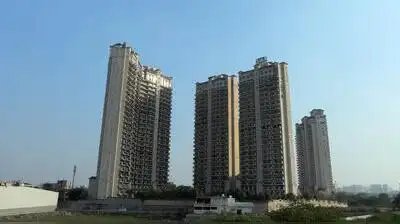
Gurgaon: Haryana Electricity Regulatory Commission (HERC) has ordered a comprehensive audit of power bills at a group housing society in Sector 104 since May 2019. HERC has directed the developer of ATS Triumph and its maintenance agency to refund excess charges identified in the exercise.The commission, in its Oct 8 order, also held Dakshin Haryana Bijli Vitran Nigam (DHBVN) accountable for failing to enforce electricity infrastructure and billing requirements. HERC has forwarded the order to the department of town and country planning and Haryana Real Estate Regulatory Authority for further action.The audit is expected to establish the extent of excess recovery. The order does not specify a final refund amount. Once excess charges are quantified, the developer and associated entities must refund them under DHBVN’s supervision.HERC also directed the developer and associated entities to comply with the earlier consumer grievance redressal forum (CGRF) order within 90 days. If they fail, DHBVN’s executive engineer must encash the developer’s bank guarantee of around Rs 8 crore and arrange permanent 33 kV infrastructure, releasing the full sanctioned load of 3,895 kW within a further 90 days. The society, which has more than 300 occupied flats, has been operating on an 11 kV supply with a connected load of just 500 kW against the sanctioned 3,895 kW, seven years after its occupation certificate was issued in May 2019. “The commission held that while the developer was primarily responsible for constructing the permanent infrastructure, DHBVN also failed in its duty to ensure an efficient distribution system by not acting on the prolonged default,” said Navdeep Singh, a resident of ATS Triumph, who became a lawyer to take up the legal fight.HERC has separately directed DHBVN’s sub-divisional officer and IT wing to complete onboarding on the unified billing system within 30 days, enabling direct domestic-tariff billing and ending manual billing. The commission said the delay in operationalising unified billing breached the applicable regulatory framework. It also flagged the absence of a dedicated meter for common-area electricity consumption.The commission’s directions follow allegations that residents were charged above the notified domestic tariff, rebates were not passed on and commercial or construction-related consumption was met through the society’s residential connection. HERC held that these practices amounted to illegal, unjust enrichment and ordered DHBVN’s chief auditor to conduct a society-wide revenue audit, reconciling master-meter and individual-meter readings, rebates and alleged commercial diversions. Excess charges established by the audit must be refunded by the developer and associated entities under DHBVN’s supervision.The single-point supply connection is also to be transferred to the registered apartment owners’ association after the electrical infrastructure is erected. Rejecting objections over delay and the petitioner’s authority to approach it, the commission held that continuing overcharging, incomplete infrastructure and failure to implement unified billing constituted recurring causes of action. It also recognised the petitioner’s independent standing as a directly affected occupant.Singh said the order underscores that developers cannot treat single-point electricity supply arrangements as a substitute for regulatory compliance, while distribution companies cannot disclaim their enforcement and oversight responsibilities. “For residents of other group housing societies, the case highlights the importance of transparent tariff-based billing, reconciliation of common-area consumption and rebates, and timely transfer of electricity accounts to residents’ associations,” said Singh.