







Picture an entire village standing silent above a river, its houses empty, its school without pupils and its bar without customers. Now picture an American couple walking through it and deciding to bring it back to life. That is the story of Salto de Castro, a settlement in western Spain that stood abandoned for more than three decades before a Californian entrepreneur bought it. Here’s how the purchase happened, what the village contains, how much money is involved, how residents might fit into the plan, and what the proposed project could mean for the future of rural Spain.
How Jason Beckwith went from running guesthouses in California to buying an abandoned Spanish village
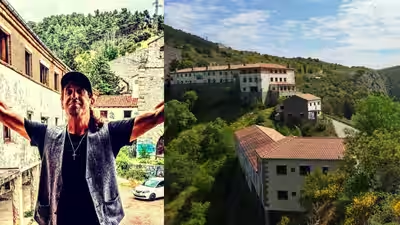
Beckwith told El País that he opened a guesthouse, sold it five years later, took a sabbatical year and then decided with his wife to open another, which is when he found Zamora. Medium, in an interview with him, reports that in spring 2024 he and his wife, Ana Cristina Machado, were looking for a new hospitality project when he read that Salto de Castro was for sale. Despite speaking no Spanish and knowing no one locally, he flew to Madrid that summer, took a fast train to Zamora and drove to the village. Beckwith told Knauss, “Something in me has been chasing something like this all my life.” He also told El País that he bought an apartment in Zamora and hopes to live full-time beside the Douro.
What Salto de Castro contains, from 44 homes, a church and a school to a bar, former barracks and a swimming pool
According to the Idealista real estate listing, as described by El País, the village includes homes, five of them stand-alone, plus a bar, a church, a school with several classrooms, a laundry room, a former Civil Guard barracks, a swimming pool and sports facilities. The listing also notes a guesthouse with up to fourteen rooms approved for building. Polsat News, citing the Spanish newspaper El Cronista, counts 44 homes in total. El País reports that the electricity company Iberduero, now Iberdrola, built the village in 1946, and that it was abandoned in 1989 after the last power station workers and Civil Guard officers were transferred out. Ángel Encinas, who spent his early years there, told El País that the school was his first and is very well built.
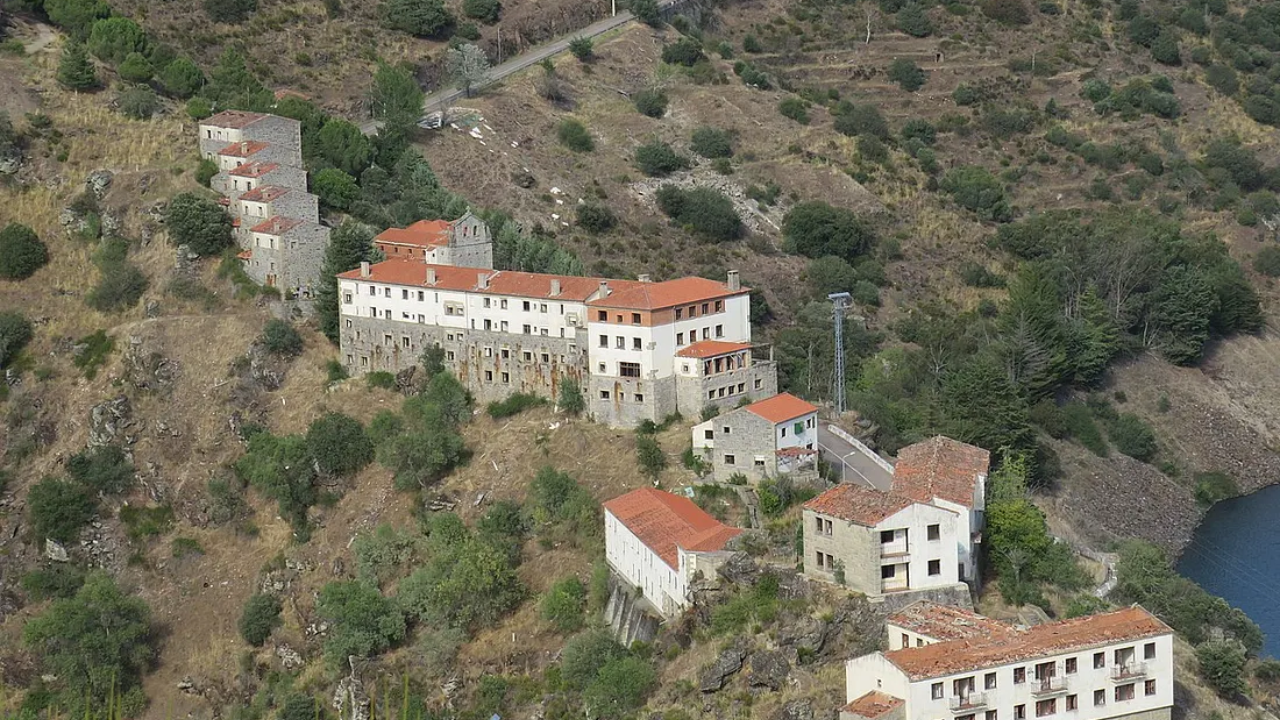
Aerial view (Image: Wikipedia)
How much the village cost and what a full restoration could total
Medium reports the price as 310,000 euros, which at recent exchange rates is roughly $363,000. He paid half up front, with the rest due when the sale is final. El País says earlier owners estimated restoration at two million dollars. In contrast, Beckwith told the newspaper it can cost as high as seven million euros, with a detailed budget due after the summer. As per Medium, investors are offered half a per cent of equity for every 50,000 euros and are promised thirty-five jobs. Beckwith also told El País that he is seeking investors worldwide and subsidies because he believes the Spanish government and the European Union want to repopulate deserted regions.
What Beckwith plans to build, from a vacation complex and long-term rentals to weddings in the church
El País reports that Beckwith envisions a large vacation complex, either a hotel or a hostel, together with long-term rentals for people who want to live in the village full-time. Inside the church, he intends to hold weddings and concerts as well as religious services. He hopes the first phase will open within two years, with a main building of accommodations, a multi-level restaurant, a space for vendors, a welcome centre, a pool and recreation area, and a barbecue and picnic area. Beckwith told El País that local families will be able to swim and picnic there, adding, “Everyone will be welcome in my village.” He rejects the idea of a glass-and-steel luxury development and describes a gradual ten-year plan.
Why Salto de Castro remains uninhabitable in 2026 as the mayor, a former resident and ecologists react
Sergio López, mayor of Fonfría, told El País in May 2025 that no formal request had yet been filed, though he welcomed the plan with great excitement and open arms. Ángel Encinas told the newspaper he supported slow, sustainable tourism within the limits of the natural park, while Ecologists in Action Castilla y León told El País a tourist complex conflicts with conservation goals. A Men’s Journal report, dated 29 August 2026, says Beckwith still has not moved into the village while restoration is being planned. He and his wife live in an apartment in Zamora, though they are officially registered as residents of Salto de Castro, the first in decades. Men’s Journal adds that he intends to relocate there and that environmental groups are watching closely.