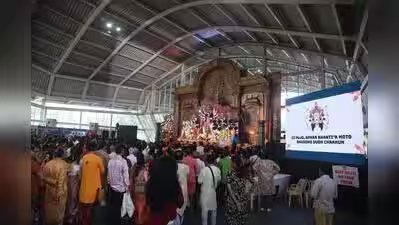









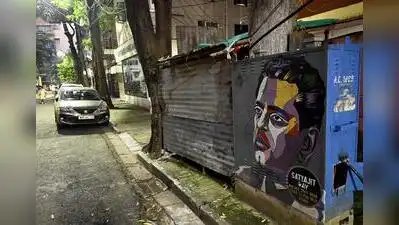
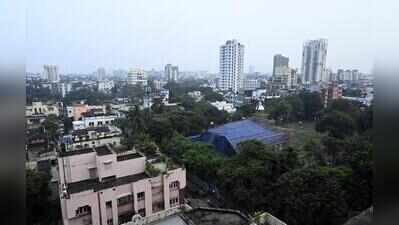
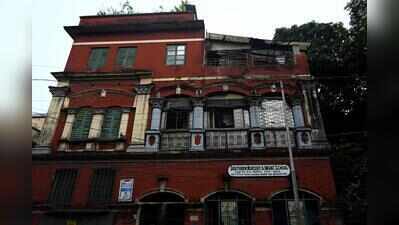

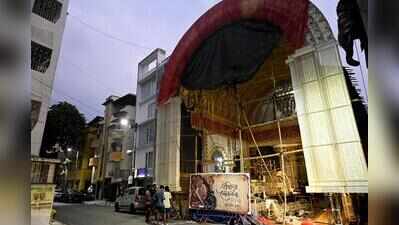
Kolkata: Maddox Square and Mudiali are 3 km apart but both south Kolkata neighbourhoods are steeped in history, evoking a deep sense of nostalgia among generations of residents. Both are also linked to two enduring icons of Bengal — Durga Puja and Feluda.Even in the age of theme pujas, Maddox Square has stuck to tradition in its pandal and idol, yet has remained immensely popular among both old and young. Mudiali is the para where Feluda lived. It is also where his creator Satyajit Ray lived for many years, and where the actor who brought Feluda to life on screen, Soumitra Chatterjee, lived.Feluda’s para‘Rajani Sen Road’ strikes a chord with most Bengalis. In Feluda stories, Rajani Sen Road is established as the private detective’s address. “I still see so many people walking down the road trying to locate Feluda’s home. Feluda is an emotion for Bengalis,” said a resident.Some call it the Feluda circuit. Lake Temple Road, a short walk from Rajani Sen Road, is where Ray and Chatterjee lived. Ray lived at 3, Lake Temple Road. “The previous owner of the property sold it and the new owner is repurposing the property. But the good thing is that he is not changing the exterior of the building,” said Partho Ghosh, a 76-year-old resident who has lived here all his life. Ghosh said that once Ray moved to Bishop Lefroy Road, Chatterjee moved into where Ray lived. “I have heard that Chatterjee found it impossible to come out of his home on Southern Avenue because there were always people walking around. He was looking for a quieter place, for his privacy,” said Ghosh.The single theatre, cinema para and SarobarOne of the last surviving single theatres of Kolkata, Menoka Cinema, is located near Mudiali and is still running full-house shows. The neighbourhood was also home to actor Rabi Ghosh, composer Raichand Boral and film director Debaki Kumar Bose. Singer Hemanta Mukhopadhyay lived in a building right across Menoka Cinema.Mudiali is also a nature lover’s paradise. A walk from the neighbourhood, and one is transported to the serene tree-lined walkway of Rabindra Sarobar.Durga Puja, true to tradition“We are a 91-year-old Durga Puja, but we have always stuck to tradition. Our idol is still an ‘ekchala thakur’. The pandal has always resembled the thakurdalan of an old Bengali household and the immersion is always completed on Dashami,” said Ranajit Chakraborty (Rana), one of the secretaries of Ballygunge Durga Puja Samity which organises the Maddox Square puja.“Maddox Square is one of the most popular meeting places during Durga Puja. There is no restriction on entry to the park and people love this openness and spend hours sitting on the grass,” said Chakraborty, a resident of the area for over six decades.Historian Sugata Bose, son of Netaji Subhas Chandra Bose’s nephew Sisir Bose and parliamentarian Krishna Bose, still remembers the popularity of Maddox Square. “We moved to our Cooper Lane home near Maddox Square in 1974. Even then it was a popular yet traditional puja,” Bose said. “During that time, it was a residential para. Nowadays, a lot of commercial enterprises have opened,” he added.A walk around the park showed that designers have set up their studios in some of the old houses, repurposing the structures.Old bungalows, heritage buildings and a century-old dhobikhanaThe row of houses surrounding Maddox Square is also an architectural delight. Quaint bungalows with lawns or gardens in front add character to the streets.The bright red 42/1, Ritchie Road, located to the east of Maddox Square is a Grade I heritage building. A blue plaque adorns it. The KMC’s list of heritage buildings says the house’s architectural style helped it get on the list. Ritchie Road is now named Pankaj Mullick Sarani, after the famous resident of the area.A minute’s walk from Maddox Square is South Dhobikhana at 62, Ritchie Road. A board at its entry mentions that it was established in 1902. A peek inside shows hutments alongside ropes from which clothes have been hung to dry.