









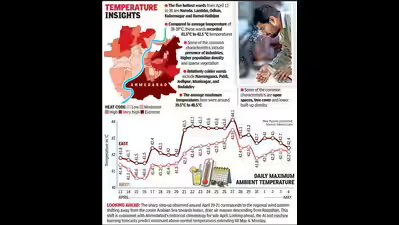
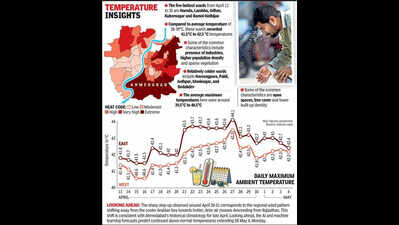
Ahmedabad: The city has been baking under relentless heat, but a closer look shows the burden isn’t evenly shared. Over the past fortnight, the eastern parts of the city have been around two degrees hotter than the western side, according to an analysis by city-based spacetech startup SatLeo Labs, which provides ambient heat forecasts to the Ahmedabad Municipal Corporation (AMC) under its Heat Action Plan (HAP).Ahmedabad crossed the 40°C mark on April 11 and, by May 1, had recorded 21 consecutive days with maximum temperatures above 40°C. The peak came on April 26, when the temperature touched 44.8°C, the highest of the season so far. “Around April 20-21, temperatures jumped by nearly 1.5 degrees within a day and stayed elevated through the latter half of the month, with another peak of around 44°C recorded on April 27,” said a senior SatLeo Labs official.Unlike IMD readings, which rely on standard thermometer stations, SatLeo Labs tracks ambient temperature — the actual heat experienced across different parts of the city. This data shows a consistent east-west divide, with eastern neighbourhoods staying significantly hotter. Experts attribute this to a mix of urban and industrial factors. Areas such as Naroda, Odhav and Lambha have dense industrial clusters with corrugated metal roofs and asphalt-heavy infrastructure that absorb heat during the day and release it slowly at night. This creates what experts describe as a “localised industrial heat engine”, adding one to two degrees to surrounding temperatures.The Pirana landfill site also plays a role, acting as a thermal source that radiates heat and traps it in nearby eastern and southern zones. In contrast, western parts of Ahmedabad benefit from relatively more open spaces and greener pockets, which help moderate temperatures.A senior AMC official said that the forecast helps in strategising for the HAP, including where to deploy ambulances, water supply points and other emergency resources during extreme heat.