








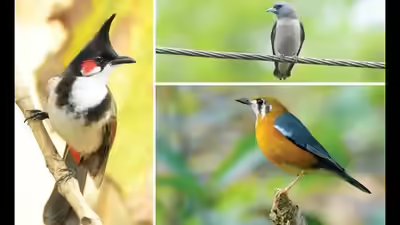
Panaji: The 2026 edition of the Campus Bird Count (CBC), a growing citizen-science initiative conducted as part of the annual Great Backyard Bird Count (GBBC), recorded an impressive global turnout this year, with 395 participating campuses, 2,382 eBirders, 558 bird species and 20,874 checklists submitted.In the state, 12 institutions took part in the exercise, collectively recording 110 bird species, contributing nearly 40% of the state’s overall GBBC total of 278 species documented during the broader GBBC period.“Campuses often host a mosaic of habitats with a network of trees, gardens, abandoned corners and sheltered ledges that sustain biodiversity amid growing urbanisation, acting as important biodiversity refugia,” scientist Pronoy Baidya, who coordinated the event in Goa, told TOI.The initiative engages educational institutions, govt departments, research stations and biological parks to explore their respective campuses for biodiversity documentation.Leading the tally for Goa was Carmel College, which recorded the highest number of species at 71. Goa University followed with 60 species, while Govt College of Arts, Science and Commerce, Quepem, logged 41 species. Other participating campuses included Goa Institute of Management (31 species), BITS Pilani Goa (33), Shree Mallikarjun College, Canacona (36), and several others contributing between 17 and 33 species each.Three species — brahminy kite, red-whiskered bulbul and oriental magpie-robin — were recorded on all 12 campuses, reflecting their adaptability and the presence of suitable habitat patches even within developed landscapes.At the same time, 35 species were reported only once, pointing to the presence of localised or less common species that might otherwise go unnoticed without sustained monitoring.“Inculcating an interest in birding and nature watching among college students goes far beyond listing species. It nurtures ecological literacy, sharpens observation skills and also fosters a sense of environmental responsibility at a formative stage of life,” Baidya said.