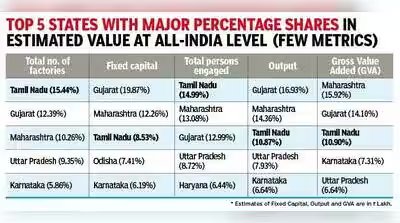









Tamil Nadu’s forging industry grew on a simple logic: where there are vehicles, there will be forged parts such as crankshafts, gears and axles, among others. That formula served the state well as its automotive cluster grew into one of India’s largest. But the road ahead is beginning to look different. Electric vehicles are eroding demand for some traditional components, even as aerospace, defence, energy and industrial equipment open a new opportunity: to forge beyond the automobile.Several forging companies have upgraded their tech and invested in forward integration, moving into machined parts, finished products and sub-assemblies and building capabilities to serve non-auto applications. Yet the industry’s presence in higher-value segments such as aerospace, defence, energy, railways and specialised industrial equipment remains limited.Arathi Krishna, MD of Sundram Fasteners Ltd (SFL), sees diversification beyond automotive as an important direction for TN’s forging industry. The expertise developed in serving automotive customers provides a foundation to tap opportunities in emerging segments.She expects the next phase of growth to come from emerging mobility applications, non-auto sectors such as wind energy, aerospace, railways and industrial equipment, and greater value addition.About 70% of the Chennai forging cluster’s products go into auto applications, with the remaining 30% going into non-auto areas. Defence, aerospace, railways and energy, however, remain a small share for most players.TN is a key forging hub, anchored by the Chennai-Bengaluru cluster and a strong MSME base in Chennai and Coimbatore. Its strengths now include precision components, cold and warm forging and engineering skills.S Ravishankar, vice-president of the Association of Indian Forging Industry (AIFI) and MD of Super Auto Forge, said the Chennai-Bengaluru cluster compares strongly with other major Indian forging centres in terms of product sophistication and value addition. “A lot of high-end precision forgings are made in the state. Cold and warm forging are concentrated mostly in the Chennai-Bengaluru cluster,” he said.“The engineering capability exists in the state. What has slowed faster diversification is the certification, metallurgy and patient capital that these sectors demand,” says Vidyashankar Krishnan, CMD, MM Forgings.For companies such as MM Forgings, the shift is from supplying forged blanks to delivering finished components. Machined products now account for about 67% of the company’s sales, while realisation per tonne has increased from 1.93 lakh to 2.02 lakh over a year.At SFL, the shift beyond automobiles is already evident. Krishna said non-auto businesses, including wind energy, aerospace, industrial equipment and railways, currently account for about 35% of the company’s revenue. This share is expected to rise to 50% over time. Its precision-parts business is projected to grow at a CAGR of 20% over the next three years, she adds.“This reflects our focus on building a broader business base while continuing to strengthen our automotive business,” she adds.The policy ecosystem also offers a platform for the industry’s transition. The state’s defence industrial corridor has five nodes — Chennai, Coimbatore, Hosur, Salem and Trichy — intended to build an aerospace and defence manufacturing ecosystem.Krishnan said companies would need expertise in special alloys such as nickel-based alloys, titanium and high-alloy steels, supported by advanced laboratories and metallurgical capabilities. They would also need sector-specific certifications, traceability systems, non-destructive testing, specialised heat treatment and multi-axis machining. “Aerospace and defence, in particular, involve low-volume, high-mix production and long qualification cycles, requiring patient capital and specialised engineering teams,” he adds.Meanwhile, EV adoption has also accelerated the transition in the industry. Unlike conventional vehicles, EVs have fewer moving powertrain components. Engine and transmission-related components — traditionally major consumers of forgings — face a structural reduction as battery vehicle penetration rises.“EVs will be a net challenge for the forging industry since engine and powertrain parts constitute a big portion of forging industry production. Comparatively, motors and batteries have very little forging content,” Ravishankar says.Automation will be critical, particularly for smaller companies facing labour shortages and rising quality requirements. Ravishankar said automation was becoming a necessity irrespective of company size, helped by the growing availability of local robotic and automation integrators.While value addition will drive competitiveness, scale will still matter. “Scale keeps us cost-competitive globally, but profitability will come from what we do with each tonne — precision machining, complex parts, better materials and demanding applications,” says Krishnan. The opportunity for the industry is about building a broader industrial base around the precision-engineering capabilities that the auto industry has helped create.