









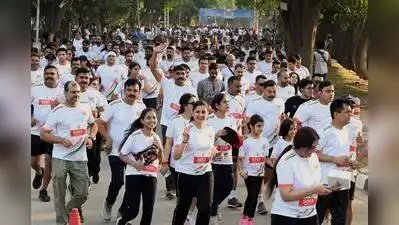

Chandigarh: In Dec 1971, Flying Officer Nirmal Jit Singh Sekhon fought the battle of his life in four minutes over the Srinagar airbase. In Chandigarh’s Sector 1 on Sunday, thousands of feet hit the tarmac to extend that same spirit of grit across a morning of relentless endurance. In the cockpit of a Folland Gnat, time collapses into milliseconds of instinctive, life-and-death decisions; on a marathon course, time expands into a slow-burning test of the human heartbeat. Yet the underlying frequency remains the same: a refusal to yield when the air grows thin and the lungs begin to burn.Organised jointly by the Indian Air Force (IAF) and the Chandigarh Administration, the Sekhon IAF Marathon 2026 brought together over 5,000 participants, ranging from elite athletes and youngsters to serving personnel, veterans, and families carrying infants in baby carriers. Flagged off by Kargil War veteran and Param Vir Chakra awardee Honorary Captain Yogendra Singh Yadav (Retd), alongside Air Marshal George Thomas, Air Officer Commanding-in-Chief, Western Air Command, the event honoured the supreme sacrifice of the IAF’s sole Param Vir Chakra recipient while promoting the Fit India movement.The psychological bridge between a dogfight and distance running lies in the mastery of focus under pressure. While a fighter pilot confronts overwhelming odds with high-stakes clarity and razor-thin margins for error, a long-distance runner faces a similar trial upon hitting the physical wall, when oxygen depletion sets in, the legs grow heavy, and discipline alone overrides the impulse to quit. That mental fortitude echoed strongly along the course, reflected in participants such as Junior Warrant Officer Sanjeev Kumar Goyal (Retd). Having lost both legs in a road accident in 2019, Goyal said marathons build mental strength alongside physical endurance. Senior officials, including UT home secretary Mandip Singh Brar and deputy commissioner Nishant Kumar Yadav, also joined the event, reinforcing civil-military synergy.With categories ranging from 3km and 5km races to the 10km run and the demanding 21.1km half-marathon, the roads of Chandigarh became a kinetic monument. Rather than honouring history through static bronze or stone, Sekhon’s legacy was carried forward through rhythm, sweat, and collective momentum.As runners crossed the finish line in Sector 1, gasping for breath, thighs burning, and eyes fixed on the clock, the event bridged the gap between extraordinary military sacrifice and everyday human resilience. The marathon proved that heroes do not merely inspire us to look up at the sky; they show us how to keep moving forward, step by step, here on the ground.