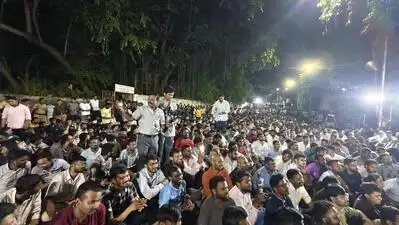









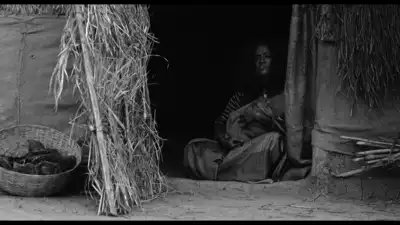
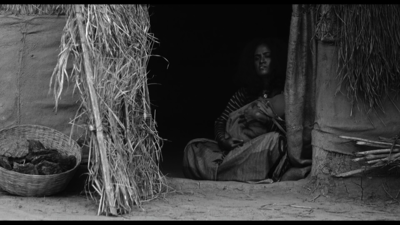

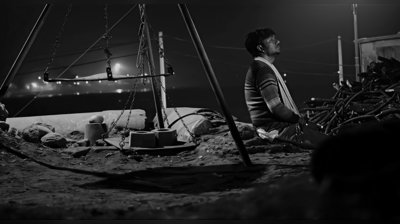
Pune: Pictures paint a thousand words, even if those words aren’t in a language one understands.India’s cinematic tapestry is vast, extending beyond Bollywood and South Indian cinema. And now, a growing cohort of independent directors is turning away from dominant languages, choosing instead to tell deeply localised stories in lesser-known, indigenous, and regional languages. Such films struggle among mainstream audiences, but have found a niche — watched by film students, critics and industry insiders at home, and world cinema aficionados abroad.A spotlight was cast on this movement during ‘Cinemas of India’ showcases, jointly organised by International Federation of Film Critics-India (FIPRESCI-India) and cultural organisations in Delhi, Kolkata, Bengaluru, and Pune.Films like Khanjan Kishore Nath’s Karbi feature ‘Kangbo A Loti (The Lost Path)’, Abhilash Sharma’s Magahi title ‘Swaha: In the Name of Fire’, and Jayanta Madhab Dutta’s Mising narrative ‘Yakasi’s Daughter’ are some examples of how vernacular speech preserves cultural nuance while lending cinema a fresh canvas.For critics and festivals, this upwelling of local language cinema represents an evolutionary leap in form and subject matter. “In the past three or four years, we found many films made in small, lesser-used languages coming into the top 10, surpassing mainstream films,” Premendra Mazumder, film critic and senior member of FIPRESCI-India, said.This formed the bedrock of FIPRESCI-India’s national festival network, set up with National Film Development Corporation (NFDC), Federation of Film Societies of India in Kolkata, NFAI in Pune, and other cultural centres.Mazumder said such films captivate viewers fatigued by urban narratives by offering an unfiltered gaze into unfamiliar lives. “When a story comes from a region not very popular, we don’t know the lifestyle or specificities of the people, and that draws us in as the audience.”Improved access to film education has certainly helped, he said. “Many film schools are coming up in small towns. Students from remote areas study at national institutes like FTII, return to their hometowns and make films about their world, their communities, their lives,” he explained. “People watching Salman Khan and Shah Rukh Khan films are not the same people watching these films. These films are niche and so is the audience — mainly film students, critics, and industry insiders,” he said.Another important benefit is the exposure to different filmmaking styles and voices.“Big budget films look similar because they have to cater to mass audiences, sponsors, and have commercial value. But filmmakers have much more space to experiment in the indie or small-budget space. To see something new and innovative, you watch these films,” said Piyush Mehta, a cinematography student.These films also strongly resonate with international audiences, as the line between major and minor Indian language films is erased. “For audiences abroad, any Indian language is as foreign to them as Hindi. When they watch foreign films, they must do so with subtitles. So there is an audience for these films abroad.”For director Abhilash Sharma, setting ‘Swaha: In the Name of Fire’ in the Magahi language was never in doubt. The film, which won best director at Shanghai International Film Festival in 2024, is set in Gaya, Bihar, and follows a mother from the Musahar community. “A film must come from the soil it is set in, and for ‘Swaha’, that soil speaks Magahi,” Sharma said. “Magahi has a music of its own… When the character of Swaha sings, it sounds like a gust of wind; when she cries, it feels like fire in a forest. That texture could only come from Magahi.”Khanjan Kishore Nath’s Karbi-language feature ‘Kangbo A Loti (The Lost Path)’ is about a young militant sent to a remote village. It draws directly from Nath’s upbringing in Karbi Anglong, Assam. “Telling this story in Karbi was not simply a creative choice; it was essential to its authenticity. If I had made the same film in another language, it would have lost an important part of its essence,” Nath said.Film critic and FIPRESCI-India member Latika Padgaonkar said this trend serves as a counterweight to homogenised state identities. “When we think of a big state, we tend to think of its dominant language… But beneath that, there are dialects,” Padgaonkar said. “Language gives you to show the diversity of India that we otherwise may not know.”This global potential was recently underscored when the Manipuri film ‘Boong’, directed by Lakshmipriya Devi, received this year’s BAFTA for best children’s and family film.However, filmmakers choosing local languages face structural hurdles, such as economic disparity between regions. “Magahi has close to 20 million speakers, but we lack a cultural phenomenon like cinema. The Malayalam film industry (35 million speakers) earns more than Rs 10,000 crore a year. Magahi has nothing like this,” Sharma said. “Without government support, it’s very difficult to bring a film in such a rare language to a wider audience.”Nath recalled a screening of his film in Delhi earlier this year, when 20 Karbi residents came to him and said they had never before experienced a feature-length film in their language. “Seeing Karbi audiences, especially students, connect with their own culture on screen has been deeply encouraging as we prepare for our mid-October release,” he said.