








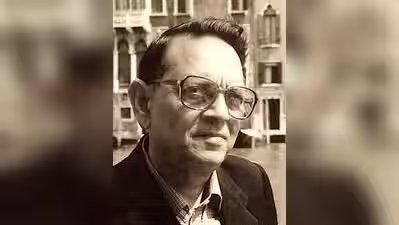
New Delhi: What happens to a poem when it leaves the language in which it was born? For Kunwar Narain, the journey from Hindi to various other languages has extended the life of his poetry. Ahead of his birth centenary year, translators, scholars and literary circles are examining how his layered, philosophical and deeply human poetry continues to find new readers.For Apurva Narain, translating his father’s poetry was not simply about transferring words from Hindi to English. It involved engaging with the silences, memories and multiple layers of meaning embedded in the original.Apurva has translated two major selections of his father’s poetry, No Other World and Witnesses of Remembrance along with co-translating The Play of Dolls. The book Witnesses of Remembrance brings together around 100 poems drawn from different periods of Narain’s work. Apart from English, Narain’s literature has been translated into French, Estonian, Russian, Italian, Spanish, Polish and a dozen of Indian languages.Translation was also a subject that interested Narain himself. His long poem Kumarajiva centres on the Buddhist scholar and translator Kumarajiva, whose work carried Buddhist thought into a different linguistic and cultural world. Narain saw translation as more than a mechanical transfer of words—it could give ideas a new life in another time and place.Dr Rekha Sethi, author, translator and professor at Indraprastha College for Women, said this understanding of translation was integral to Narain’s literary outlook.Speaking to TOI, she adds, “Narain was also a translator himself. He translated Mallarmé, Cavafy, Brecht, Borges, Różewicz, Herbert and Świrszczyńska, which places him within a multilingual, world-literary community. He is also among the few Hindi poets translated widely abroad. To translate Narain, one must first understand his writerly self: his ethos, philosophy and creative process. His silences, layers and unspoken meanings ask the translator to become a co-voyager with the poet.”Narain’s own literary world was similarly expansive. His poetry drew on Indian traditions, including Sanskrit and Urdu, as well as Western literature, history, mythology and philosophy. Yet, Apurva notes, these influences were rooted in a sustained engagement with Indian thought.“Kunwar Narain’s legacy rests, above all, on his refusal of binaries. He never reduced experience to black-and-white frames, and nothing was a monolithic absolute for him. His writing opens up a wide world that is deeply philosophical yet rooted in Indian thought and everyday life. It offers new ways of responding to one’s milieu and, in doing so, changes how we perceive the self,” adds Dr Sethi.That quality also contributes to the continuing relevance of his work. His poetry brings together seemingly opposing ideas—self and other, past and present, individual experience and larger social consciousness—without reducing them to simple absolutes.“Narain’s poetry is not restricted to Hindi literature. He remains a relevant Indian poet whose body of works has been taken up by various researchers across the globe since they are deeply rooted in Indian philosophical temperament,” adds Dr Pankaj Kumar Bose, former DU professor, researcher and a long-term associate of Narain.For readers discovering him today, Sethi recommends beginning with the English selections No Other World and Witnesses of Remembrance. Hindi readers can explore collections such as Koi Doosra Nahin, Apne Samne, In Dinon and Hashiye Ka Gawah. His longer poems, including Atmajayi, Vajashrava Ke Bahane and Kumarajiva, offer another route into his engagement with death, life, Buddhism, history and time.As the centenary year creates another occasion to revisit Narain’s work, translation offers more than a route into his poetry for readers who do not know Hindi. It allows his questions about memory, humanity, history, time and the relationship between self and other to continue travelling across languages and generations. This month, Delhi’s literary circle came together to remember the legacy of Kunwar Narain with two dedicated events. Many such events will continue to mark his birth centenary year in 2027.