







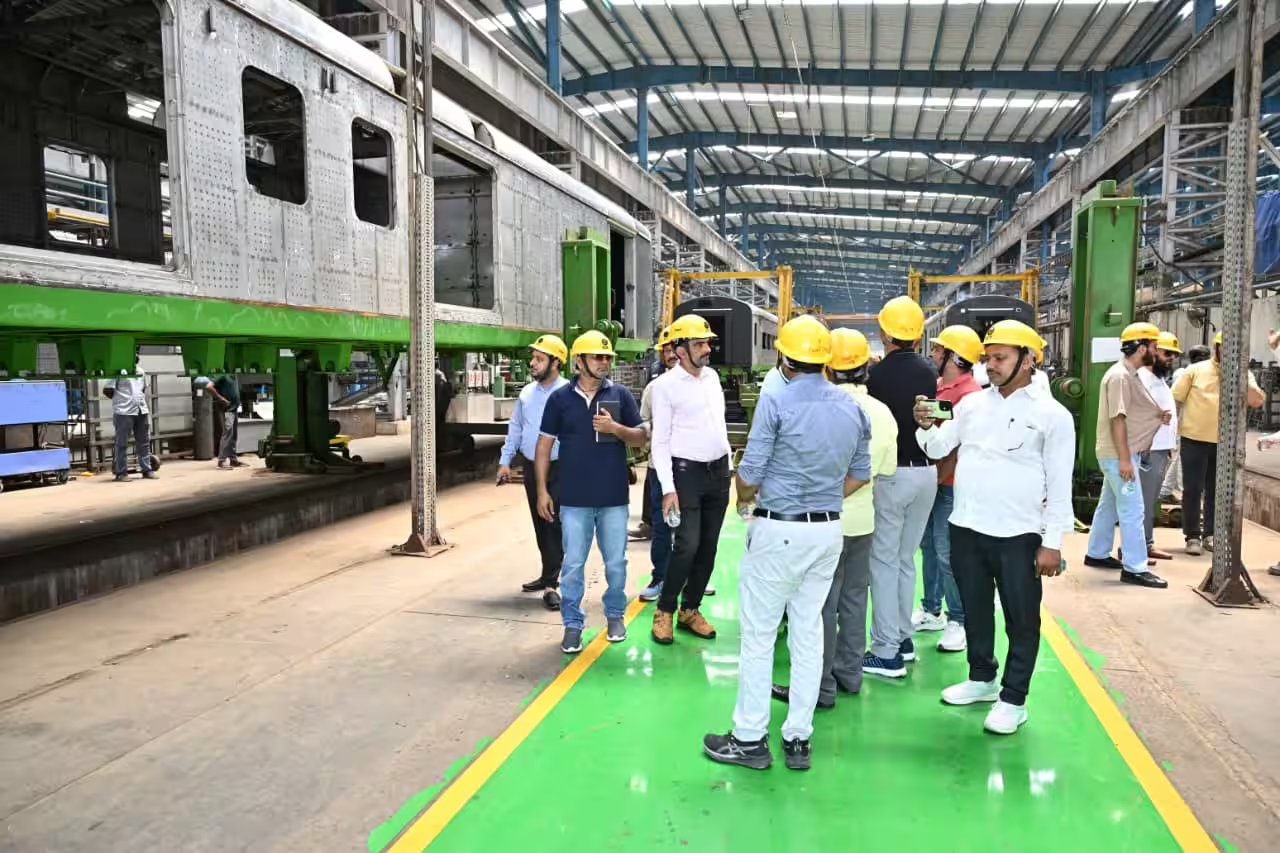
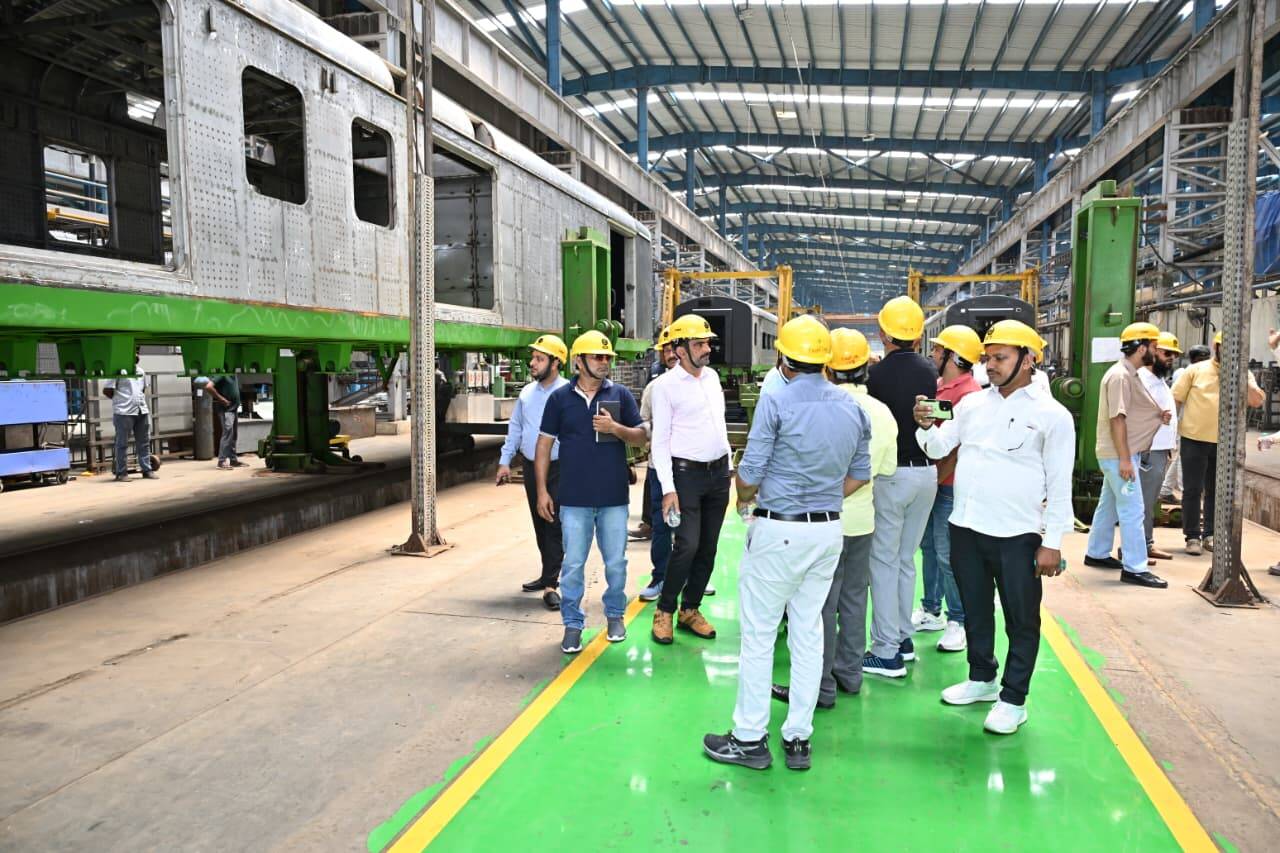
Varanasi/Chennai: Chennai’s cultural ties with Varanasi are complemented by a strong technological connection through the Vande Bharat Express, India’s first semi-high-speed train manufactured at the Integral Coach Factory (ICF) in Chennai.The first Vande Bharat Express was introduced on the New Delhi-Varanasi route and inaugurated by Prime Minister Narendra Modi on Feb 15, 2019. The train operates between New Delhi and Varanasi via Kanpur and Prayagraj. At present, seven Vande Bharat services either originate, terminate or pass through Varanasi.A group of journalists recently visited ICF Chennai during a press tour organised by PIB Varanasi. They observed the factory’s modern coach manufacturing processes and were briefed on the production of Vande Bharat trainsets, Amrit Bharat coaches, Kolkata Metro coaches and other railway coaches.ICF chief workshop engineer Anupam Chauhan said the factory is continuously working on technological innovations to make train journeys safer, more comfortable and convenient for passengers.He said ICF is focusing on next-generation trainsets and coaches to meet the changing needs of rail transport. Work on the sleeper version of the Vande Bharat platform is progressing, with production and testing being carried out in phases at ICF and other institutions.Chauhan said efforts are also underway to adapt the Vande Bharat platform for freight transport. The factory is working to strengthen indigenous capabilities in high-speed train technology.The Vande Bharat trainset is one of ICF’s major achievements. Designed and manufactured in India, it has a high level of localisation and offers modern passenger amenities, including automatic doors, bio-vacuum toilets, CCTV cameras, passenger information systems, improved ride comfort and advanced safety features.ICF received the National Energy Conservation Award in 2024 for energy efficiency and sustainable manufacturing in the production of Vande Bharat trainsets.The factory’s contribution goes beyond Vande Bharat. It has played a key role in manufacturing modern Linke Hofmann Busch coaches. In the financial year 2025-26, ICF manufactured 1,659 LHB coaches till November 2025. Indian Railways produced more than 42,600 LHB coaches between 2014 and 2025, marking a major shift towards safer and more modern passenger transport.ICF is also using its manufacturing capacity to produce AC EMU rakes for Mumbai’s suburban rail network. Improvements continue in seating, air-conditioning, safety systems, passenger information systems, cleanliness and ride quality. From Vande Bharat trainsets to high-speed rail technology, ICF has emerged as a key centre of Indian Railways’ modernisation and domestic manufacturing capability.