









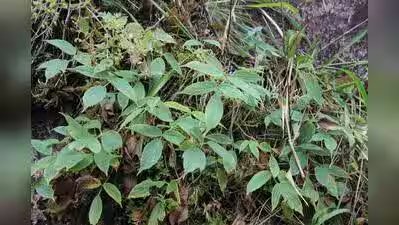
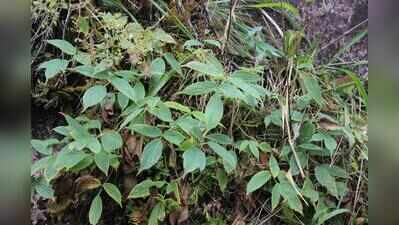
Chennai: Researchers from Tamil Nadu have discovered a new plant species, a wild coriander, in the Western Ghats in the Munnar hills of Idukki district in Kerala. The plant is named Tetrataenium munnarense. It belongs to the Apiaceae family, known for aromatic and medicinal plants such as coriander, cumin, and parsley.The species was collected from Lockhart Gap in the Devikulam Range at an elevation of 1,719m. “It grows on rocky slopes together with a diverse range of grasses, herbs, ferns and other montane plants,” said S Karuppusamy, associate professor of botany at The Madura College in Madurai.He, along with P Bharath Simha Yadav and V Ravichandran from the Botanical Survey of India, Southern Regional Centre, Coimbatore, recently published a research paper about the discovery in the Journal of Japanese Botany.Although the genus Tetrataenium is represented by several species in the Western Ghats, the researchers said the new species is being recorded for the first time. “The wild coriander has long-petioled leaves, ovate-lanceolate leaflets, 6cm-10cm long peduncle, and white petals,” the researchers said in the paper.The researchers recorded only 40 to 60 mature plants at the location. “Its restricted occurrence makes the protection of its natural habitat particularly important. High-altitude grasslands and rocky slopes of the Munnar region are exposed to several ecological pressures such as dry-season fire and grazing,” Karuppusamy said.“The members of Apiaceae include numerous aromatic species whose essential oils have applications in traditional medicine, food flavouring, cosmetics, and fragrance industries. So, the new Tetrataenium munnarense can be a possible subject for future phytochemical and essential-oil investigations,” he added.Researchers said the discovery shows that the Western Ghats still contain undocumented plant diversity. They suggested botanical exploration, habitat mapping, seed and germplasm conservation, and ecological studies to conserve narrowly distributed species.