








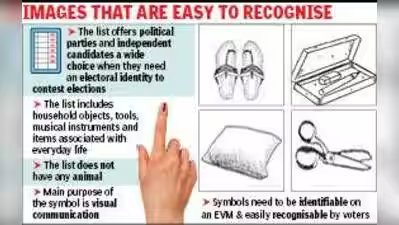
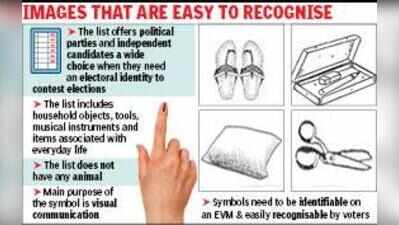
Kolkata: Pillow, whistle, air-conditioners, pressure cookers, refrigerators, blackboard, almirahs, scissors, flutes, microphones and Kolhapuri chappals: the election commissioner’s list of free symbols reads more like a catalogue of household and school essentials.“For candidates entering an election without an established reserved symbol, the choice of an image can be almost as important as the name printed on the ballot or EVM. A symbol has to be simple enough to be recognised quickly, easily reproduced on campaign material and should be distinct from other symbols in the contest,” a senior EC official said.With 184 free symbols on the menu, the EC’s list offers political parties and independent candidates a wide choice when they need an electoral identity to contest the elections. The list, ranging from familiar household objects to tools and musical instruments, include chairs, sofas, pressure cookers, refrigerators, dustbins and even road rollers, apart from a traditional rubber stamp and a contemporary computer mouse.But the EC has ensured not to include on the free symbol list the image of any item or object that could lead to a controversy. “The inventory also does not have the image of any animal. Things or objects, which may be internationally famous, but Indians are not very familiar with, are also not included. Visual communication between candidates and electors is the main purpose of a symbol,” another official said.Some of the symbols are particularly striking because of their potential for visual communication. A flute, for instance, was instantly recognisable and could be reproduced without much detail, said the EC official. A microphone carried an obvious association with public speaking, while a telescope could lend itself to themes of looking ahead or exploring new possibilities, he added.A pair of scissors are another visually distinctive symbol, the shape of which is easily identifiable even at a glance, while a computer mouse represents a more contemporary object and could appeal to campaigns seeking a technology-oriented visual identity. “The EC has its own experts reviewing the symbols from time to time,” a senior official said.Among the 184 symbols, not every symbol can be chosen by any candidate from any state. Certain symbols are subject to restrictions in particular states. The availability can also depend on whether a symbol is already being used by a recognised or registered party as well as the circumstances of an election. The commission has to consider whether allotting a particular symbol could create confusion among voters or not.Candidates and parties usually submit several preferences rather than relying on a single choice. The EC then considers the rules, availability and the possibility of confusion before making the final allotment.