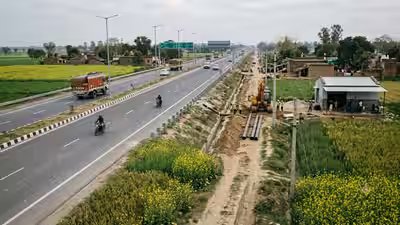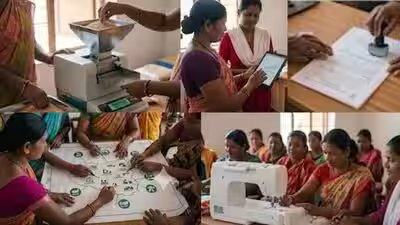









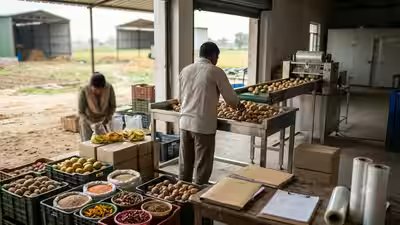
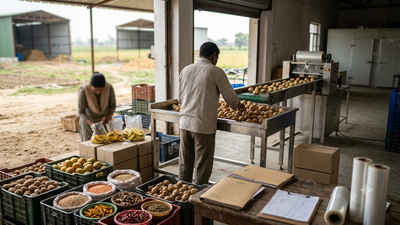
Uttar Pradesh is steadily emerging as one of India’s most promising destinations for food-processing investment. The transformation is significant because the state’s strength is not merely its huge agricultural production, but its ability to increasingly convert that produce into processed, packaged, branded and marketable products.Since 2017, the state government has sought to create an ecosystem in which farmers, entrepreneurs, Farmer Producer Organisations (FPOs), Self-Help Groups (SHGs), MSMEs and large food companies can participate in the same value chain. The approach has combined investment-friendly policies, infrastructure development, credit support, One District One Product (ODOP), cold-chain facilities and Central schemes such as PM Kisan SAMPADA Yojana (PMKSY) and PM Formalisation of Micro Food Processing Enterprises (PMFME).The scale of the opportunity is enormous. Uttar Pradesh is a major producer of foodgrains, milk, sugarcane, potato, mango and other agricultural and horticultural commodities. The state government’s investment portal identifies food processing as a major opportunity because of the availability of raw material, a large consumer market, relatively low production costs and an extensive workforce. It identifies mango, turmeric, aonla, cereals, garlic and chilli among the promising processing opportunities.A policy push that began in 2017The foundation for the present food-processing ecosystem was laid with the Uttar Pradesh Food Processing Industry Policy 2017. The policy explicitly aimed to ensure remunerative prices for growers, increase value addition to agricultural produce, promote food-processing industries, make processed food available to consumers at competitive prices and generate employment.The policy introduced a range of incentives to make setting up processing units more commercially viable. These included a 25 percent capital investment subsidy, up to Rs 50 lakh, along with interest subsidy of 100 percent for five years for micro and small food-processing industries and 7percent interest subsidy for five years for larger establishments. Support was also provided for reefer vehicles and mobile cooling vans, export promotion, quality certification and patent registration.The importance of this policy was that it recognised food processing not merely as another manufacturing activity, but as a bridge between agriculture and industry. A potato farmer, for example, could potentially gain more from a value chain producing chips, flakes or other processed products than from selling only raw potatoes. Similarly, mango, guava, aonla, dairy and cereal production could be connected to processing, packaging and marketing enterprises.From policy to an integrated ecosystemThe next phase of the transformation has been the development of infrastructure. The state’s investment portal currently lists 15 agro and food-processing parks/clusters, including facilities in Varanasi, Barabanki, Saharanpur and Gorakhpur. It also highlights cold-chain infrastructure, regulated and rural markets, e-NAM mandis and other facilities supporting agricultural marketingThis infrastructure is crucial because food processing cannot succeed on the strength of factories alone. Fruits and vegetables are perishable. A processing unit needs reliable access to raw material, collection centres, grading and sorting facilities, cold storage, transportation, packaging and markets. Consequently, the state’s policy emphasis has increasingly shifted towards the entire value chain.The Uttar Pradesh Food Processing Industry Policy 2023 represents this second-generation approach.Food Processing Policy 2023: making investment easierThe Uttar Pradesh Food Processing Industry Policy 2023 substantially strengthened the incentive framework. Under the policy, a new food-processing unit can receive a capital subsidy of 35 percent of eligible expenditure on plant, machinery and technical civil work, subject to a maximum of Rs5 crore. Expansion and modernisation projects can receive capital subsidy subject to a maximum of Rs1 crore.The policy also addresses one of the major barriers to industrial investment—land and infrastructure costs. It provides 100percent exemption from stamp duty on land purchased for establishing food-processing industries, along with concessions relating to land-use conversion and external development charges.Another important measure is the treatment of agricultural raw material. The policy provides exemptions from mandi fees and cess in specified cases, including agricultural produce procured from other states for processing in Uttar Pradesh and produce sold directly by farmers to processing units. The state is also treated as a unified market for food-processing industries for specified mandi-related purposes.These measures are intended to make the economics of a processing unit more attractive while also making it easier to source raw material.Cold chain: the missing link is being strengthenedOne of the biggest challenges facing Indian agriculture has historically been the gap between harvesting and consumption. A farmer may produce a high-quality crop, but if it cannot be stored, transported or processed quickly, a large part of its potential value is lost. The 2023 UP policy therefore gives considerable importance to cold-chain and value-addition infrastructure. It provides 35percent subsidy for eligible cold-chain and value-addition infrastructure and 50percent subsidy, up to Rs10 crore, for specified frozen-storage/deep-freezer, value-addition and processing infrastructure.The policy also supports reefer vehicles and mobile pre-cooling vans through interest reimbursement for five years, subject to the prescribed ceiling. This has particular significance for districts producing potato, mango, vegetables, dairy and other perishables. Better cold chains allow farmers and processors to extend marketing periods, improve quality and reach distant markets.Agro-processing clusters create economies of scaleAnother major feature is the promotion of agro-processing clusters. Under the state policy, a cluster with at least five food-processing units and the prescribed minimum investment can receive a grant of 35percent of eligible project cost, subject to a maximum of Rs10 croreThe cluster model is especially relevant to MSMEs. A small entrepreneur may not be able to afford an independent laboratory, cold store, packaging facility or specialised logistics network. Common infrastructure allows several enterprises to share facilities, reducing costs and improving competitiveness.The policy also provides support for backward and forward linkages, connecting processing units with farmers on one side and markets on the other.PM Kisan SAMPADA strengthens the infrastructure backboneThe state’s policy works alongside the Central government’s PM Kisan SAMPADA Yojana, which supports integrated cold chains, food-processing and preservation capacity, agro-processing clusters and other food-processing infrastructure.This convergence has helped move the state’s approach beyond simply providing subsidies to individual factories. The objective is to build an ecosystem in which agricultural produce can move efficiently from farm gate to processing facility and ultimately to consumers and export markets.As of December 2025, Uttar Pradesh had 99 projects approved under PMKSY, according to data provided by the Ministry of Food Processing Industries.PMFME brings processing to the grassrootsPerhaps the most visible transformation has occurred at the micro-enterprise level through the PM Formalisation of Micro Food Processing Enterprises (PMFME) scheme. Unlike large industrial projects, PMFME focuses on small entrepreneurs who may be operating informal food-processing businesses or want to establish small processing units.The scheme provides credit-linked capital subsidy and also supports SHGs, FPOs, producer cooperatives, common infrastructure, branding and marketing. The results in Uttar Pradesh are substantial. According to the Ministry of Food Processing Industries, 20,575 beneficiaries in Uttar Pradesh had been sanctioned loans for credit-linked subsidy for setting up or upgrading micro food-processing enterprises by October 31, 2025.A later Central government release recorded 3,650 micro food-processing enterprises formally established in Uttar Pradesh under PMFME as of December 31, 2025. Nationally, 59,202 enterprises had been formalised under the scheme by that date. The figures demonstrate an important aspect of the state’s food-processing story: the transformation is not confined to large corporations. Thousands of small entrepreneurs are becoming part of the formal food economy.Districts are becoming centres of entrepreneurshipThe district-level spread of PMFME provides another indication of the change. By August 2025, Prayagraj had emerged as the leading district in Uttar Pradesh under the scheme, with 798 entrepreneurs, followed by Sultanpur with 688 and Fatehpur with 582. Kanpur Nagar, Siddharthnagar, Amethi, Rae Bareli, Mirzapur, Ambedkar Nagar and Varanasi were also among the leading districts.This district-level spread is important because it means food processing is increasingly becoming a rural and semi-urban enterprise opportunity. A farmer, retailer, SHG member or small entrepreneur can move from selling agricultural commodities to producing flour, spices, pickles, processed fruits, packaged foods, dairy products and other value-added goods.The ODOP framework further strengthens this process by encouraging districts to build enterprises around products in which they possess a natural, agricultural or traditional advantage.Women and FPOs are entering the value chainThe decentralised nature of food processing makes it particularly suitable for women-led enterprises and SHGs. The UP Food Processing Industry Policy 2023 provides assistance for decentralised processing and storage by SHGs, FPOs and farmers, subject to the prescribed ceiling of 50 percent of project cost or Rs50 lakhThe policy also provides a higher subsidy for solar power projects serving eligible women-owned and operated food-processing plants in rural areas.This is potentially transformative. Food processing can be established close to farms, allowing women and farmer groups to participate in activities such as cleaning, grading, processing, packaging and branding rather than remaining confined to primary agricultural production.Large companies are also expandingThe transformation is occurring at both ends of the spectrum. Alongside micro-enterprises, established food companies are investing in Uttar Pradesh. PepsiCo, for example, has described Uttar Pradesh as strategically important for food manufacturing. Its Kosi Kalan plant, spread over 29 acres, has capacity to produce more than 45,000 tonnes of potato chips annually. The company initially invested Rs 830 crore and subsequently added another Rs186 crore to support Lay’s, Uncle Chipps and Doritos production.Such investments demonstrate the advantage of locating processing facilities close to agricultural raw materials and large consumer markets.Technology and exports: the next frontierThe state is now attempting to take the sector beyond conventional processing. The 2023 policy provides support for food-processing startups using modern technology for agricultural value-chain development, production and productivity estimation and evidence-based decision-making, with support up to Rs5 crore under the prescribed provision.The policy also provides a 25percent freight subsidy for exports, excluding Nepal, Bangladesh and Bhutan, subject to the prescribed conditions This reflects a larger ambition: Uttar Pradesh should not merely process agricultural produce for its own huge domestic market; its food products should increasingly reach national supermarket chains and international markets.A new agricultural-industrial relationshipThe most important achievement since 2017 is therefore not simply the number of factories established. It is the gradual creation of a different relationship between agriculture and industry.The policy framework also creates opportunities for ancillary businesses—packaging, transport, warehousing, cold storage, machinery maintenance, testing laboratories, logistics, branding and digital marketing. Thus, a food-processing unit can become the anchor for a much larger local economic ecosystem.A sector moving from potential to performanceThere is strong evidence that Uttar Pradesh’s food-processing sector has moved substantially forward since 2017. The state began with a dedicated Food Processing Industry Policy in 2017; strengthened its investment ecosystem through industrial policies; expanded food-processing parks, clusters and cold chains; introduced a more comprehensive Food Processing Industry Policy in 2023; and leveragedCentral schemes such as PMKSY and PMFMEThe numbers underline the scale of the transition: 99 PMKSY projects approved in UP, more than 20,500 PMFME beneficiaries sanctioned credit-linked subsidy by October 2025, and 3,650 micro food-processing enterprises formalised under PMFME by December 2025.For Uttar Pradesh, however, the direction is clear. A state known primarily for the scale of its agricultural production is increasingly seeking to become a state known also for the value it adds to that production. The food-processing sector is emerging as a bridge between the farm and the factory, between rural enterprise and organised industry, and between local produce and global markets.The larger promise of the food-processing revolution is therefore simple: produce more value from every kilogram of agricultural produce, create more income opportunities in rural areas, and ensure that the farmer becomes an important participant in the value chain rather than merely the first supplier in it.