








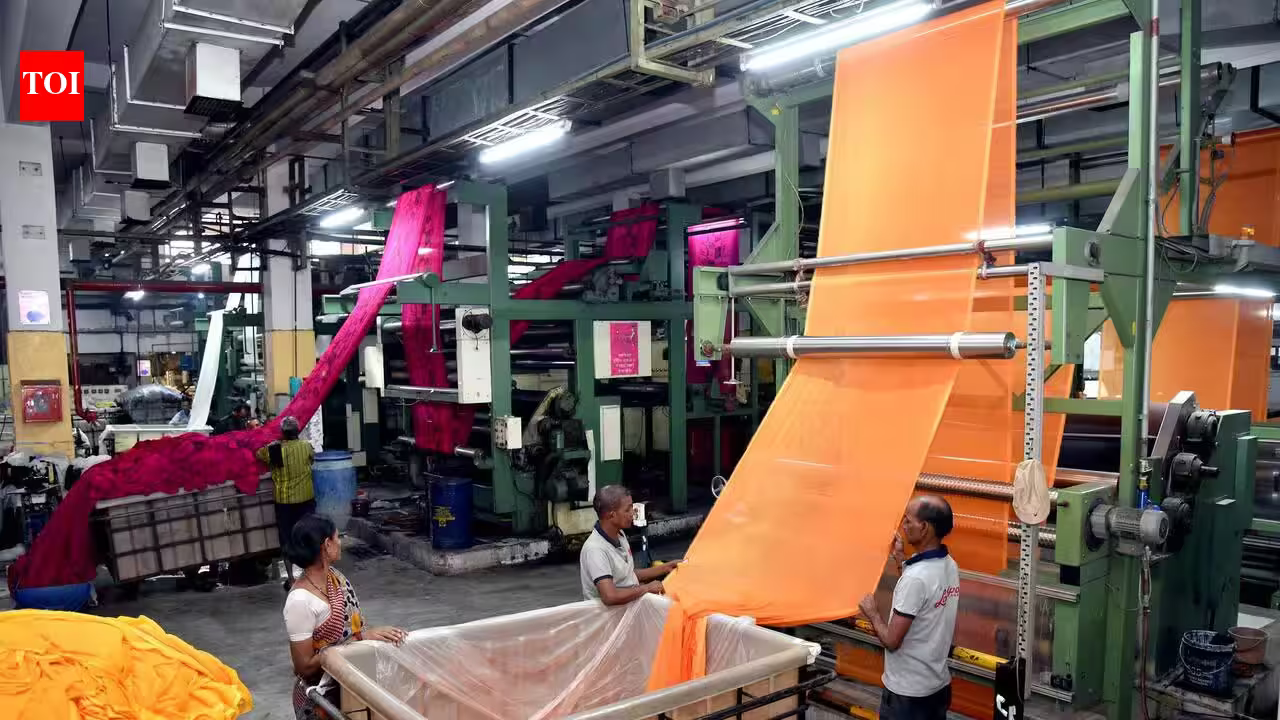
Surat: Rising raw material costs are triggering a fresh round of price rise across Surat’s textile value chain, with thread, embroidery and processing segments now passing higher input costs on to buyers.In the country’s largest man-made fibre (MMF) textile hub, greige fabric prices have steadily increased in recent months due to higher raw material costs. The latest pressure is now being felt in the value-addition segment, with manufacturers and service providers announcing higher prices.Secure Embroidery Thread and Jari Association (Setja) has announced an increase in the prices of embroidery thread and related materials. The extent of the hike will vary across different product categories.“Surat’s thread market is witnessing sharp price pressure as viscose embroidery yarn has become about 12% costlier over the last four months. The rise is being driven by a steep increase in input costs, with prices of key raw materials used in viscose yarn production climbing by as much as 40% during the same period,” said Tushar Kuvadiya, president of Setja.According to thread manufacturers, the increase is not limited to viscose. Prices of polyester and spun embroidery yarn have also risen by up to 35%, adding to the cost burden across the thread and embroidery supply chain.With input costs rising faster than selling prices in several segments, producers and traders are facing tighter margins and greater uncertainty over forward orders.The continued rise in raw material prices has raised concerns across Surat’s thread market, a major national hub for embroidery thread. Setja officials said the association would make representations on behalf of industry stakeholders and seek measures to safeguard the interests of the sector.Embroidery, another major segment of Surat’s textile value-addition chain, is also preparing for a price revision. The city is estimated to have around 40,000 embroidery units. The Textile Embroidery Jobwork Association of Surat (Tejas) has called a meeting on Sep 21 to discuss issues affecting the embroidery industry.“There has been a consistent rise in the cost of raw materials for embroidery over the past few weeks. Prices of some products have increased by up to 20%, forcing us to increase our prices as well,” said Hitesh Bhikhadiya, president of Tejas.Several embroidery units have already started passing on the higher costs to their textile trader clients.The pressure is also extending to textile processing units. Processing houses have recently increased charges by up to 15%. Textile traders have objected to the hikes, particularly ahead of the festive season when manufacturers and traders are working to fulfil existing orders.Processors, however, have maintained that the higher charges are necessary and have indicated that rates could rise further due to increasing coal prices.