









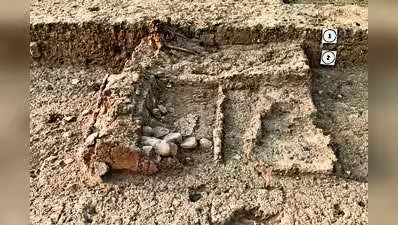
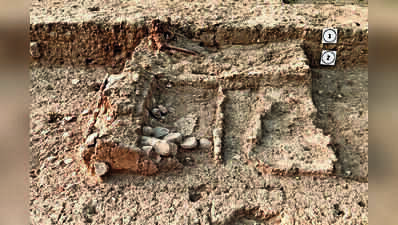
Ahmedabad: How did the famed structure at Lothal, long believed to be a dockyard for small ships, become part of the Harappan-era trade routes, though it was 20km away from the seashore? Archaeologists have for years debated the presence of a palaeochannel, an ancient river stream that has ceased to be part of an active system.The ongoing excavation has indicated such a river channel near the town. Currently, Bhogavo river flows about 5km west and south of the site.Dr Y S Rawat, director general of the Archaeological Survey of India (ASI), said, “A team has found sand in the soil as a sediment layer, indicating that a river, or a channel of a river, flowed near the town, helping connect the structure as an all-season docking facility with the larger riverine system connected to Arabian Sea.”Another aspect is the town planning and design. “The excavation is taking place in the northeast of the remains of the Harappan-era town,” Rawat said. “The artefacts and built material found from the site present a picture of a thriving industrious town.”Dr Shubha Majumder, superintending archaeologist with the Vadodara Circle of ASI, said that the layout of the lower town is clearer, with some structures having hearths and furnaces, pointing to their usage as workshops. A major zone in the excavated area is believed to be a designated area for the production of various goods.“The layout is well connected to the dockyard. Systematic planning ensured that a sort of assembly line was prepared to handle everything from raw materials to finished products, keeping in mind the eventual destination of the dockyard,” Majumder said. “A continuous row of structures is found from one end of the town to the dockyard.”
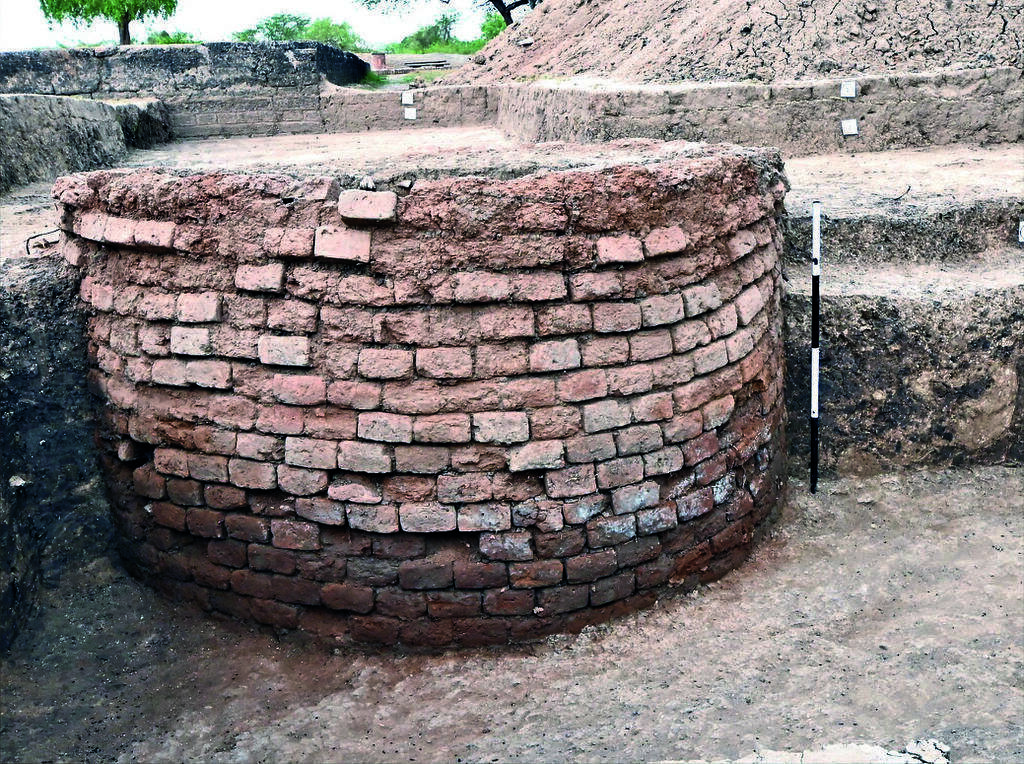
Lothal well
Some artefacts found by the team include stud-handled bowls, fishhooks, seals, black slip jars, storage pots, terracotta animal and human figurines, steatite and terracotta buttons, and weights.Majumder said the structures signify water conservation and a system of using water for different parts of the town.“The layout and town planning indicate changes over the centuries based on the change in population and dominant trade,” he said. “The site shows signs of Sorath Harappan characteristics in the context of artefacts found.”The town is believed to have existed between 2400 BCE and 1900 BCE and is seen as an important Harappan-era site primarily due to the presence of the dockyard.The site was first discovered and excavated in the 1960s, and after over 60 years, ASI began excavations to gain a new perspective on the town and create an experiential museum to showcase how Harappans lived 4,000 years ago. The experiential site will become an attraction along with the upcoming National Maritime Heritage Complex in Lothal.BOXBoundary wall foundA major boundary wall has been found near a warehouse adjacent to the dockyard in Lothal. The wall, made of bricks, is likely to have been constructed to safeguard against wear and tear and provide shelter to stored goods, said officials. The wall runs from south to north and turns eastwards, added officials. Officials found a passage that may have been used as a movement area.