









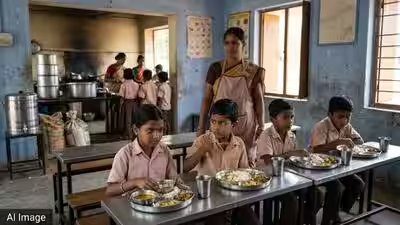
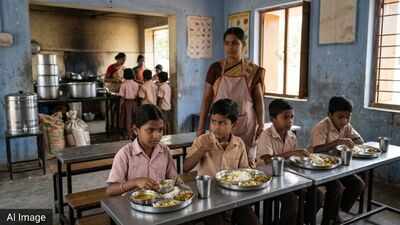
A school lunch must be the most secure meal for a child, but in several instances witnessed in India lately, the case was anything but safe; children after having school-had lunch had to vomit, black out, get treated in hospitals while parents were looking for clarifications.Incidents from both Bihar and Rajasthan to Himachal Pradesh have once again given rise to questions about the safety of food served in schools. In yet another case in the capital city of Delhi, the girls staying in Jamia Millia Islamia’s Jammu and Kashmir Girls Hostel claimed they saw insects and other strange things in their food and even protested in the streets.The reasons of these incidents may differ and still need investigation, but the pattern raises a bigger question of concern – when school meals are eaten by children, how sure parents can be about their safety?
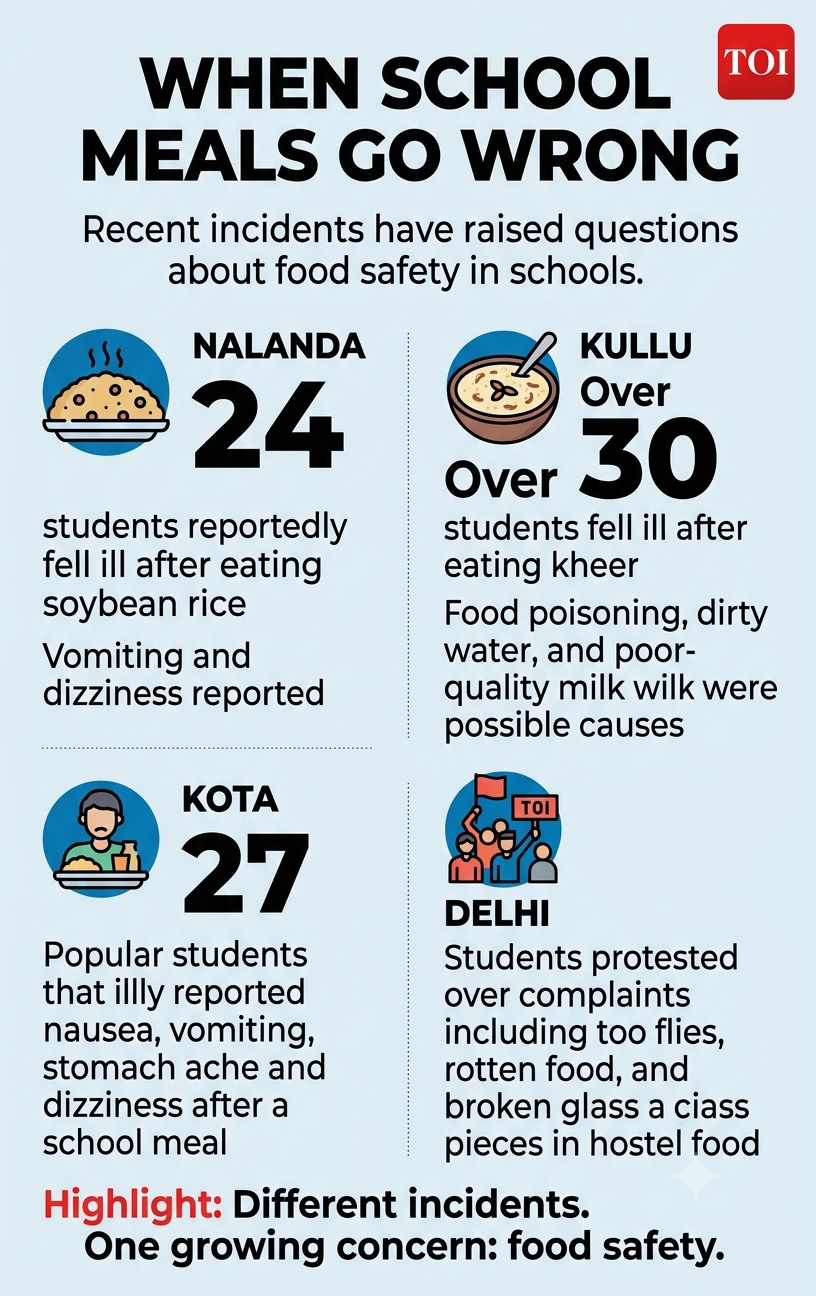
Recent incidents in Indian schools have highlighted serious food safety concerns for children
Several incidents, one growing concern
Nalanda: A probable kitchen error
In Bihar’s Nalanda district, at least 24 students reportedly got sick after consuming soybean rice prepared for the midday meal. Few of them show symptoms of vomiting and dizziness and needed medical attention right away at the Biharsharif Sadar Hospital. Fortunately, doctors reported that the lives of the children were no longer in danger.Some locals alleged that salt and detergent powder were stored in the same area of the school kitchen, and thus the cook used detergent instead of salt. Although the allegation has not been verified yet, it raises the following fundamental question about kitchen safe practices: how come the massing of various food substances and cleansing items took place in such a way that such a mix-up happened?
Kullu: Is food poisoning the reason or contaminated water?
Kullu district in Himachal Pradesh was hit with bad news as over 30 students fell ill after their school provided them with kheer. Some students were said to be semi-conscious and were taken to a health centre.Doctors think food poisoning might be the cause of the illness but also say that infection could come from dirty water and bad quality milk. Parents want food, milk and water to be tested. What exactly occurred is bound to become clear after an investigation.
Kota: 27 students fall ill
At least 27 students in Kota district of Rajasthan suffered from the symptoms of nausea, vomiting, stomach ache and dizziness after consuming their school meal. Some of the children were later taken to hospitals.Authorities have not attributed the illness to the meal as hot weather, humidity and even water contamination could be to blame, but such caution is necessary as sickness from eating does not necessarily mean the meal was responsible.
Delhi: Students protest due to persistent food issues
At the Jammu and Kashmir Girls Hostel of Jamia Millia Islamia, students resorted to protests over what they labelled as recurring complaints regarding the food served in the hostel mess. They stated that meals contained items such as flies, rotten food and broken glass pieces.The university has questioned the protest, however, finally agreed to dismiss the mess contractor. The incident is indicative of how students are made to take to the streets to make their complaints about food heard.
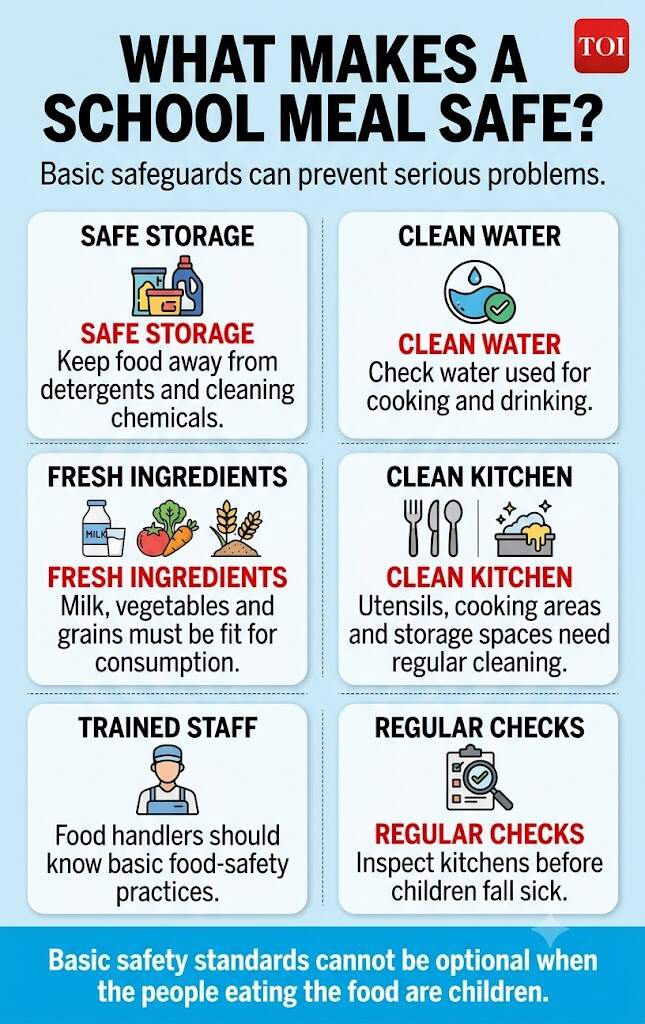
School meal safety six safeguards that matter
Contaminated meals
The purpose of the school meal is very clear – that it provides proper nutrition for children to ensure that hunger does not stop them from getting an education. Unfortunately, as soon as one meal becomes contaminated or poorly prepared, the whole essence is lost. A child does not have the possibility to examine the kitchen before eating. They are not able to check the freshness of the milk, cleanliness of the water and whether the ingredient is stored properly. Hence, children are forced to trust those who prepare their food.
What can go wrong?
Food safety in schools depends on several basic things working together:
- Proper storage: Food ingredients must be kept separately from detergents and other cleaning chemicals.
- Safe water: Water used for cooking and drinking must be regularly checked.
- Quality ingredients: Milk, vegetables, grains and other ingredients need to be fresh and fit for consumption.
- Kitchen hygiene: Cooking areas, utensils and storage spaces need regular cleaning.
- Trained staff: Cooks and food handlers should know basic food-safety practices.
- Regular inspections: Authorities need to inspect kitchens instead of waiting for children to fall sick.
- Quick testing: When an incident occurs, food, water and other samples should be collected immediately.
- Complaint mechanisms: Students and parents should have a clear way to report problems without being ignored.
These may sound like basic precautions. That is precisely the point.When the people eating the food are children, there should be no excuse for basic safety standards being treated as optional.
The issue is more complex than the actions of one cook or one contractor
Every case may perhaps have different causes. Case A can be due to poor storage of food, case B due to polluted water, and case C may have nothing to do with food at all. However, considering these incidents as independent events leads to overlooking the serious matter. The essence of the issue is that it is worth evaluating whether good preventive mechanisms are developed. The investigation is required after children got to the hospital. But if prevention happens, accountability is unnecessary.If there are hygiene problems in the kitchen, they should be discovered during an inspection.If the means of storing the foods are not appropriate, the problem should be solved before the cooking process starts.If students complain about their meals repeatedly, the authorities should intervene before protests arise.
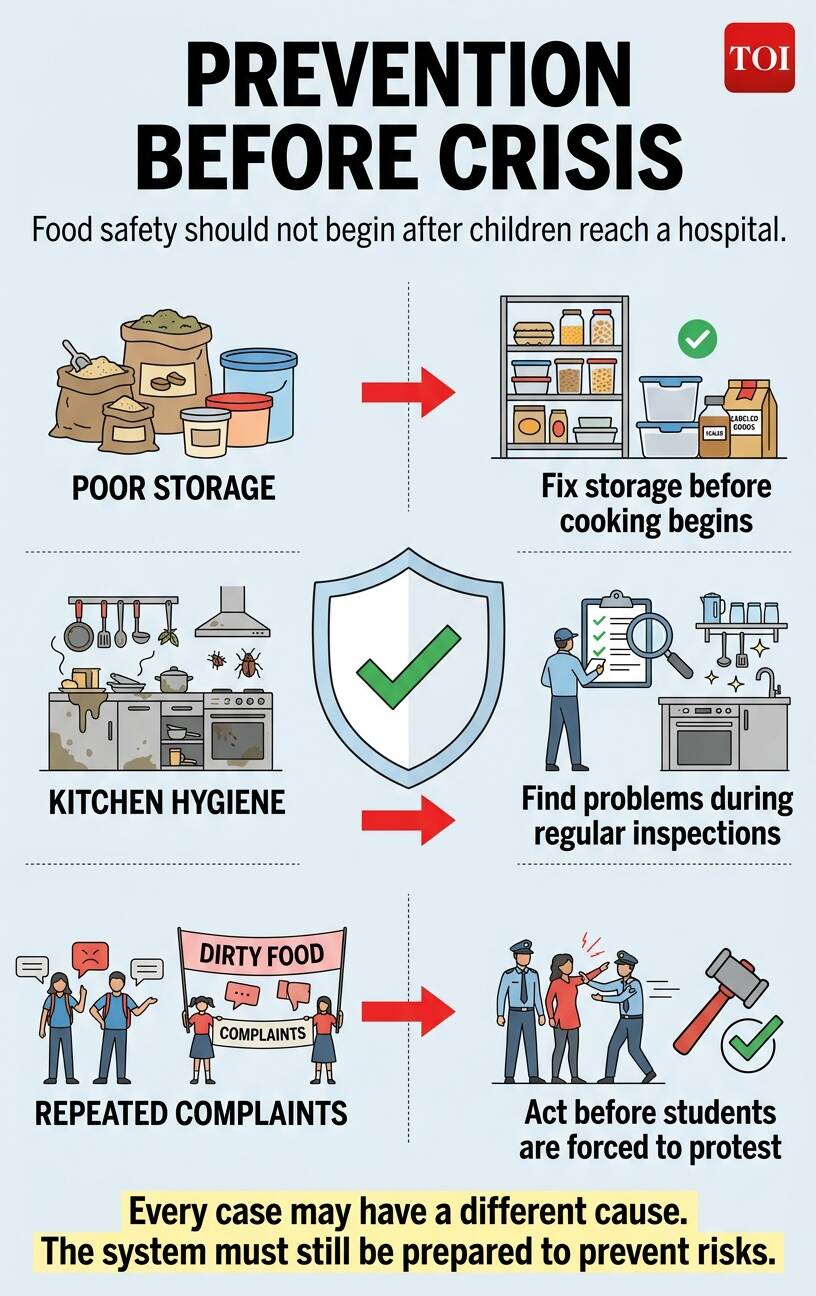
Prevent food safety risks before they become a crisis
For some kids, it’s the most important meal of the day.
The mid-day meal is especially crucial because it caters to kids who don’t have many alternatives. For those families facing financial difficulties, a school lunch can be a vital part of the daily diet. Children cannot just avoid it and get lunch elsewhere, which raises a concern of food safety in connection with inequality. The kids relying the most on school meals are often those who don’t really have many options. The programme has been designed to address hunger issues and improve child welfare, and should never create additional problems.
Parents should not need to worry about the lunch bell
There is a human side to these occurrences that often becomes obscured in official statements and numbers.”27 students got sick.””30 students were sent to the hospital.””More than two dozen students reported symptoms.”With every number, there is a child. A child who should have been going back to class after lunch but is instead lying in a hospital bed. And behind this child is a concerned parent rushing to the hospital, asking a simple question: What did my kid eat? This is a question that should never be difficult to answer.
The answer is not to remove school meals
The mid-day meal programme itself is not the problem.A nutritious school meal remains an important support for children, particularly those from disadvantaged backgrounds. The solution is not to take that meal away. The solution is to make sure that every meal served meets basic standards of safety and hygiene.That requires:
- stronger inspections,
- better kitchen infrastructure,
- proper storage facilities,
- regular water and ingredient testing,
- trained food handlers,
- transparent investigations,
- and, most importantly, accountability when rules are ignored.
Food safety cannot begin only after an ambulance arrives at a school.
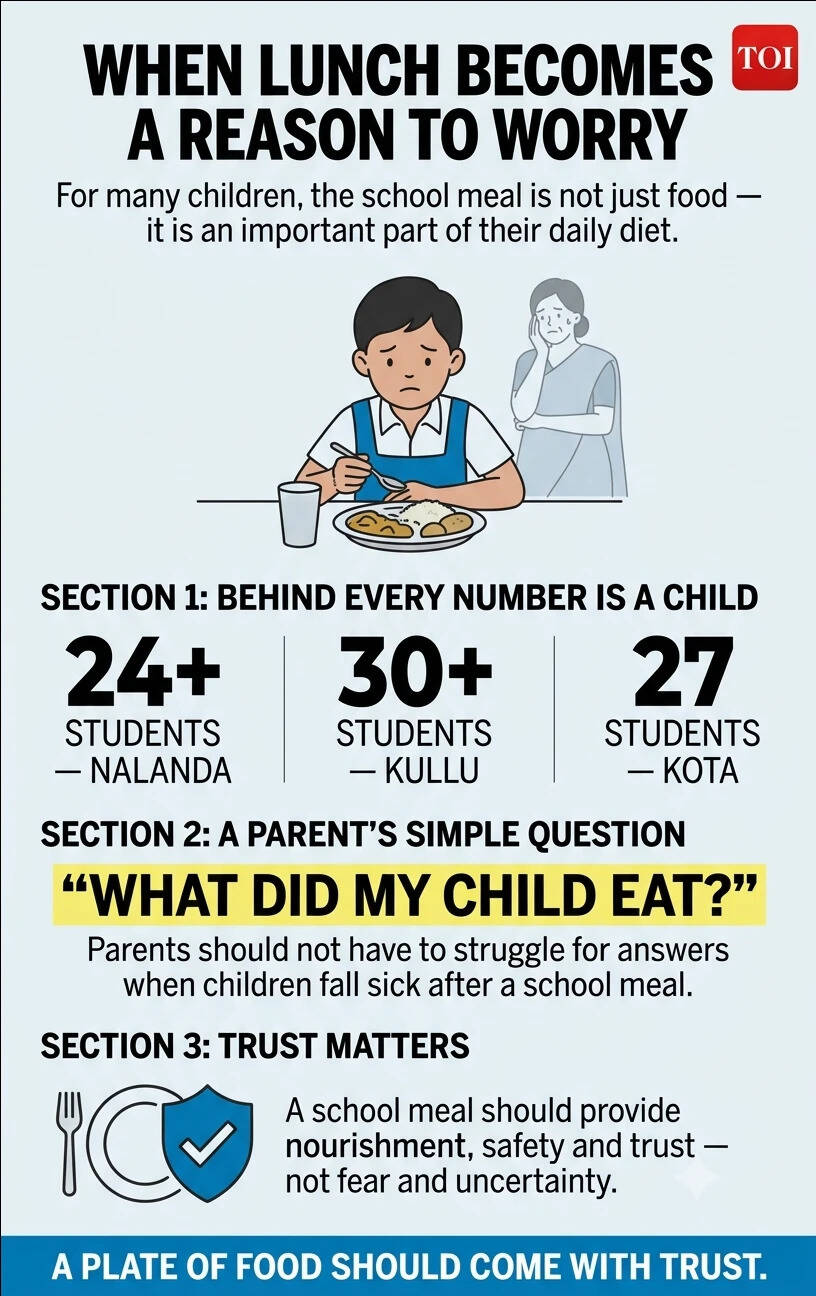
School meals should nourish children, not cause worry.
A plate of food should come with trust
Recently in Nalanda, Kullu, Kota and Delhi, some incidents occurred where school meals were consumed and it could not be said that every school meal in India has been deemed unsafe. It is vital to examine each case separately to establish the causes according to the evidence and facts. However, the incidents do act as a warning. A school meal is more than just food on a plate – for a child it means something trusted from an institution. This trust should not be violated because of negligent storage, food hygiene, food quality, or disregarded complaints. The scheme of mid-day meal was initiated to ensure that children do not remain hungry in the classrooms. The promise should stay a promise, and not become a source of fear.