








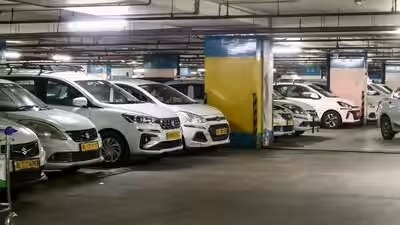
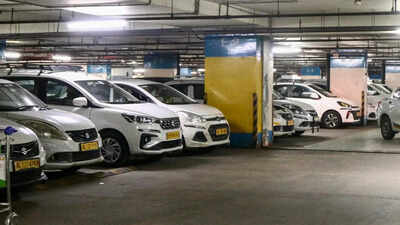
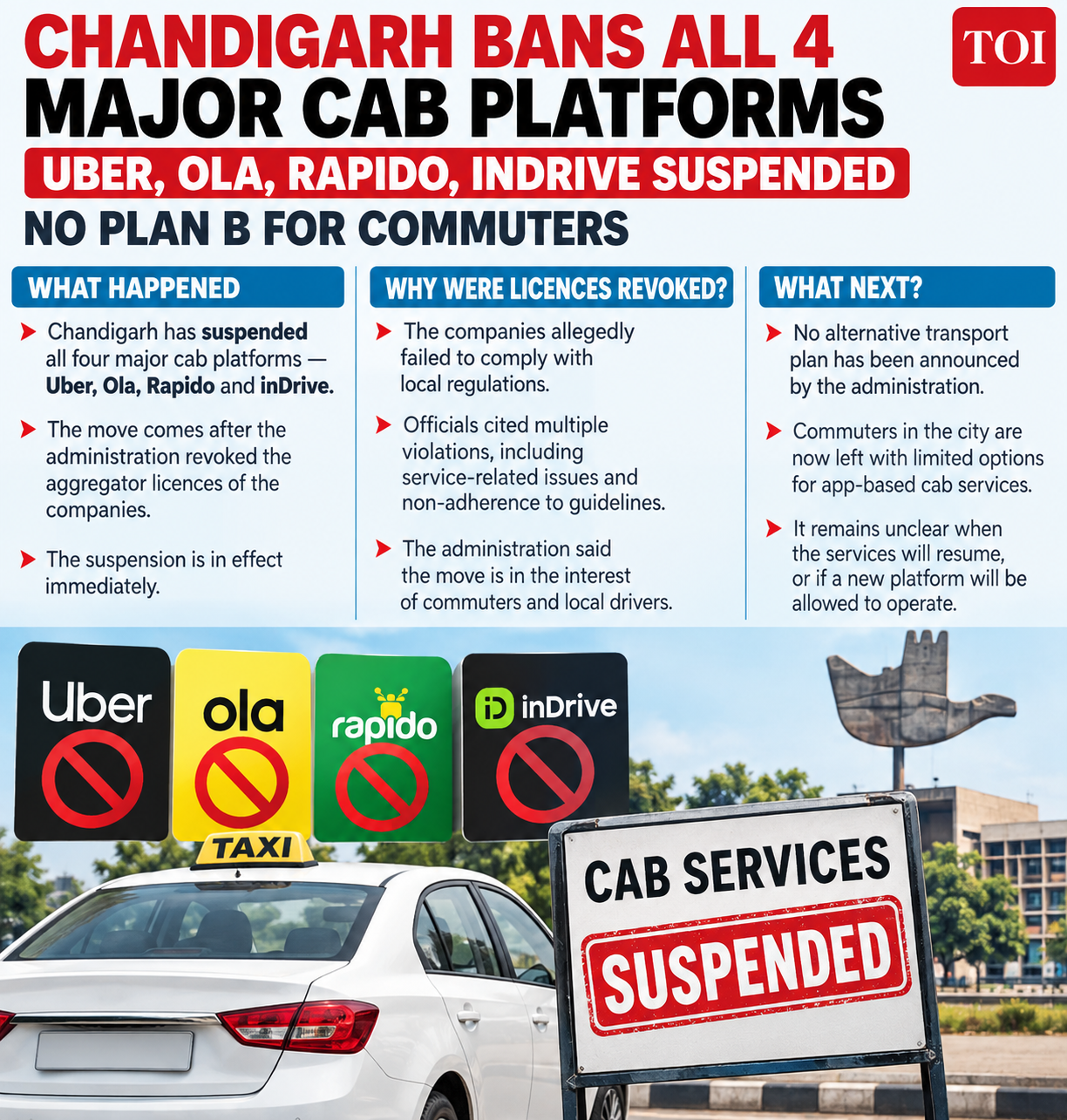
Nikhil Verma doesn’t own a car. For years, that wasn’t a problem — Uber, Ola, Rapido and inDrive made sure of it. This week, all four stopped being an option – a city built around private mobility but still without a reliable mass-transit alternativeFor a city celebrated for its carefully planned roads, open spaces and relatively easy movement, getting from one place to another could soon become a lot harder.The suspension of the four major app-based cab aggregators — Uber, Rapido, Ola and inDrive — has suddenly exposed a vulnerability that has been building for years: Chandigarh has become heavily dependent on private and app-based mobility even as its public transport system struggles to keep pace with demand.For commuters travelling between Chandigarh, Panchkula and Mohali, the problem is not simply that four apps have disappeared from their phones. It is that there is still no comparable, city-wide alternative capable of absorbing the demand if app-based cabs vanish from the roads.More than 25,000 aggregator cabs operate in the Chandigarh Tricity, with most vehicles registered in Punjab and Haryana but operating across the three-city region. Under the suspension orders, however, these cabs cannot ply in Chandigarh, irrespective of where they are registered.For daily commuters, that could turn a regulatory action into a daily logistical headache.
‘A cab was not a luxury — it was the practical option’
For Ritika, a Chandigarh-based working professional who travels between Panchkula and Chandigarh, the concern is straightforward: Public transport may exist, but it does not always fit the realities of a daily commute.“The cab ban could make commuting from Panchkula to Chandigarh quite difficult. Public transport is already quite inconvenient and time-consuming, especially for daily commuters. Cabs are much more convenient, particularly during the rainy season or bad weather, so this could make the daily commute even more challenging,” she said.For students, the problem can be even more pronounced because their schedules often begin early or end late.Pratibha, a Panjab University student who travels from Panchkula to the university every day, said app-based cabs had provided an important option for early-morning and evening travel, as well as during the rainy season.The immediate question for thousands like them is simple: If the cab disappears, what replaces it?
Bharat Taxi becomes the only major aggregator option
With the four major platforms out of the picture, Bharat Taxi is effectively the only prominent aggregator option left for commuters in the material provided.That creates another concern: Whether a single platform can absorb the demand previously distributed among four major services.If supply does not rise proportionately, commuters could potentially face longer waiting times and higher fares during peak periods, particularly when demand spikes because of rain, late-night travel, airport or railway transfers and office rush hours.For people without their own vehicles, the dependence is even greater.
With the four major platforms out of the picture, Bharat Taxi is effectively the only prominent aggregator option left for commuters in the material provided.
The impact may also extend beyond individual commuters. Companies that use app-based aggregators for employee transport could have to look for alternate arrangements, while drivers attached to suspended platforms face uncertainty over bookings and earnings.
Why did Chandigarh suspend the aggregators?
The administration’s action did not come overnight.The regulatory dispute has been building for more than a year, with complaints from drivers and other sources relating to health and term insurance, driver training, fares and other requirements under Chandigarh’s Motor Vehicles Aggregators Rules, 2025.The State Transport Authority says the companies were repeatedly given opportunities to comply.Inspections of their local offices, show-cause notices, meetings with officials and requests for compliance reports followed.
The State Transport Authority says the companies were repeatedly given opportunities to comply.
According to the administration, responses remained deficient, while subsequent inspections also raised questions over adherence to the notified fare structure and the subscription and prepaid-recharge models used by platforms.Insurance emerged as another major sticking point.The authority found that insurance offered by one company to bike-taxi captains covered accidental death and injury but did not meet the insurance requirements prescribed under Chandigarh’s rules. The STA also found non-commercial vehicles among vehicles attached to the platforms, which are not permitted to operate under aggregator licences in Chandigarh.The administration’s argument, therefore, is that the suspensions are not arbitrary but the result of prolonged regulatory non-compliance.
But drivers say their own demands remain unresolved
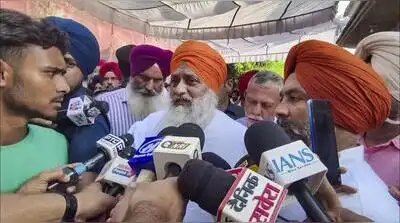
The other side of the dispute is equally important.The cab drivers’ protest has entered its 100th day, with the union saying several of its demands remain unmet. Drivers have been seeking health and term insurance benefits, among other facilities they say are required under the rules.Cab union president Amandeep Singh said the drivers had been demanding ₹6 lakh medical insurance and ₹10 lakh term insurance, along with other measures. The protest had also included a hunger strike.So the regulatory crackdown has produced an unusual situation: Drivers are protesting against the aggregators, while commuters are now worried about losing the very service those drivers provide.For drivers, meanwhile, suspension could mean fewer bookings and greater uncertainty over income.Tricity Cab Drivers Welfare Association president Vikram Singh Pundir acknowledged that drivers would suffer but maintained that the aggregators had been violating regulations.
The bigger problem
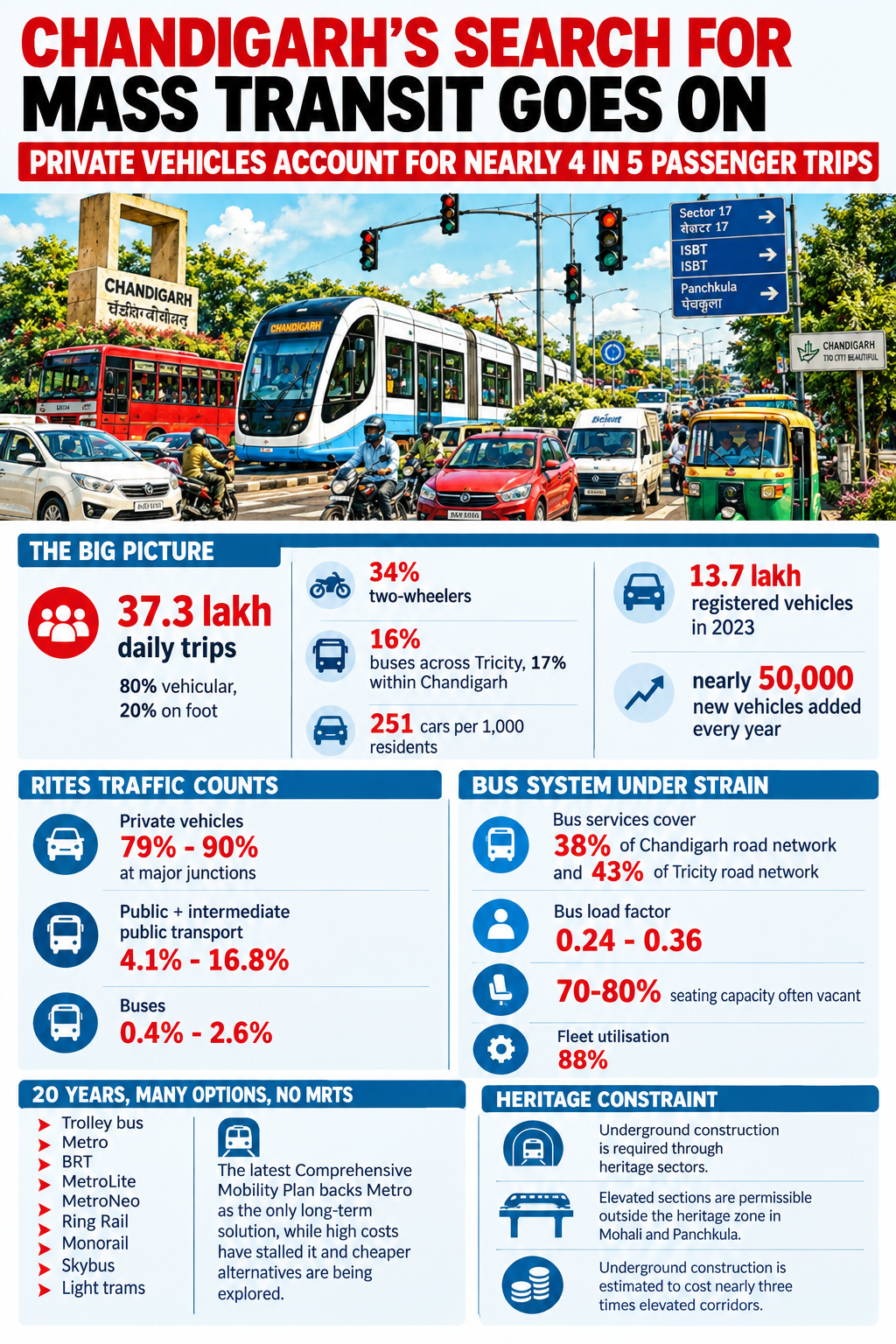
The cab crisis is only the latest symptom of a much larger mobility problem.Chandigarh and its neighbouring cities generate about 37.3 lakh trips every day. Around 80% are vehicular trips, while only 20% are made on foot. Two-wheelers alone account for 34% of trips, while buses account for about 16% across the Tricity and 17% within Chandigarh.At major junctions, private vehicles dominate the traffic mix, accounting for roughly 79% to 90% of traffic. At some locations, their share is even higher.At Budanpur Chowk, fast passenger vehicles account for 97% of traffic. At Gurdwara Chowk, private vehicles constitute 93%, while buses make up less than 1%. Even at ISBT-17, where bus movement is naturally higher, buses account for only around 2.5% of the traffic mix.The numbers explain why removing cabs can feel so disruptive: The city has not yet built a public transport system capable of making private mobility unnecessary.
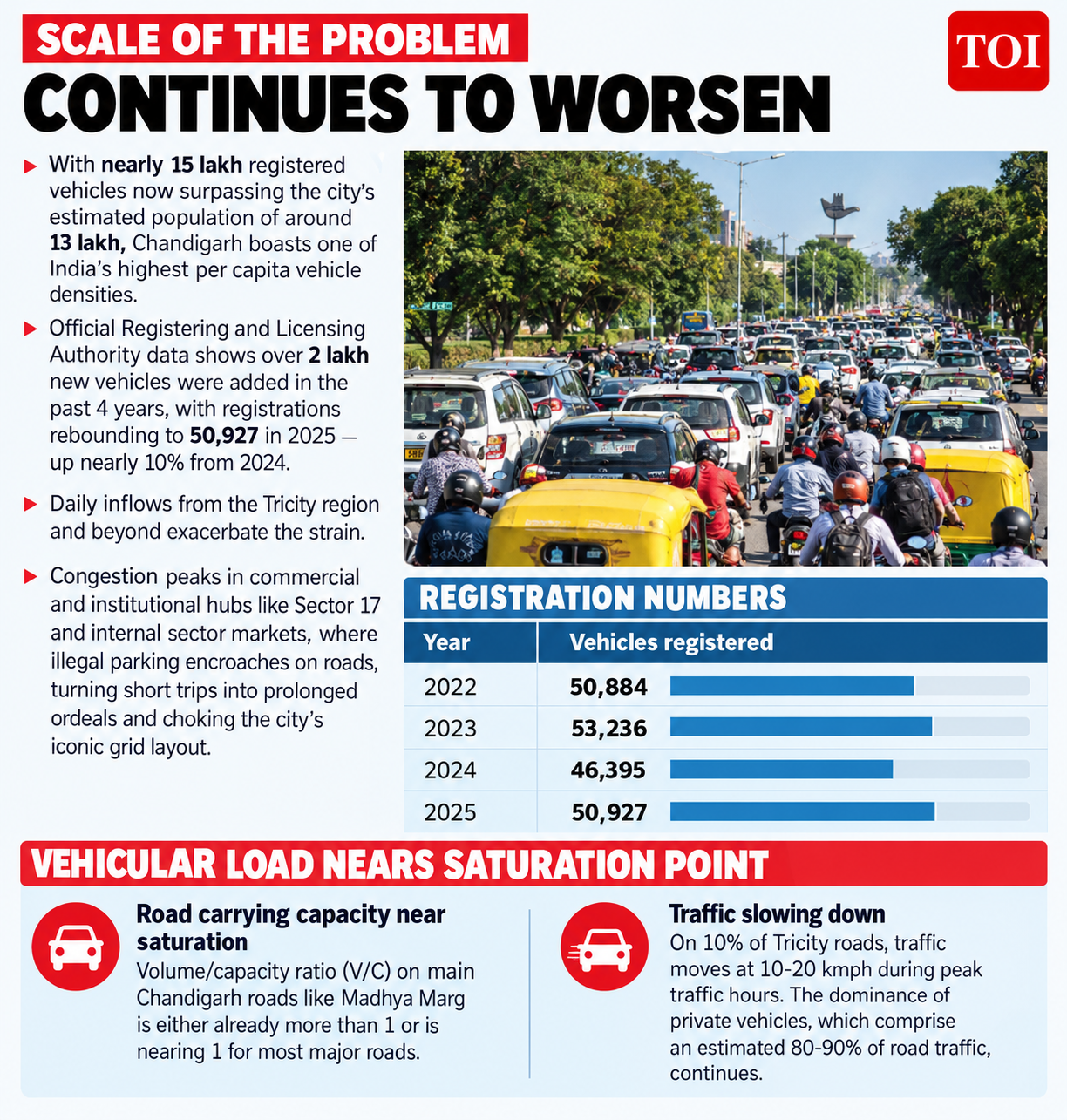
Nearly 15 lakh vehicles for a city of around 13 lakh people
Chandigarh’s vehicle ownership is exceptionally high.The Tricity has around 251 cars per 1,000 residents, while the registered vehicle fleet in Chandigarh crossed 13.7 lakh in 2023. The broader vehicle count has since approached 15 lakh, exceeding the city’s estimated population of around 13 lakh.Registrations have continued to rise:
- 2022: 50,881 vehicles
- 2023: 53,236
- 2024: 46,395
- 2025: 50,927
That means nearly 51,000 new vehicles were registered in 2025 alone.The road network, however, has little room for unlimited expansion. The Chandigarh Master Plan-2031 had already warned that congestion would worsen as personalised transport grew faster than public transport.The result is a city where owning or accessing a private vehicle increasingly becomes a necessity — which in turn creates more congestion, parking pressure and demand for alternatives such as app-based cabs.
The bus system has not been able to fill the gap
Chandigarh Transport Undertaking’s fleet has grown from just 30 buses in 1966 to more than 400, but bus usage has not kept pace with the city’s mobility needs.A CEPT University study cited in the background material found that bus services cover only 38% of Chandigarh’s road network and 43% of the Tricity road network.Many routes converge on ISBT-17, ISBT-43 and PGI, creating pressure on key corridors while leaving some areas inadequately connected.The frequency is another issue. No route offers bus frequencies below 10 minutes, while fleet utilisation is around 88%. Bus occupancy is also relatively low, with load factors between 0.24 and 0.36.In other words, Chandigarh faces the paradox of having a bus network that is not sufficiently attractive to draw people out of cars, even as its roads become increasingly crowded.Passenger surveys point to what commuters actually want: frequent services, safety, affordable fares, shorter travel times and better last-mile connectivity.
Two decades, multiple transit plans — and still no mass rapid transit
This is where Chandigarh’s mobility story becomes a story of plans that never quite became projects.For more than two decades, governments and planners have considered a series of mass-transit options.A 39-km electric trolleybus corridor linking Chandigarh, Mohali and Panchkula was proposed in 2001. It was eventually abandoned amid concerns including aesthetics and tree cutting.Then came Metro.Metro was incorporated into the Chandigarh Master Plan-2031, but the project was eventually shelved amid financial and political constraints.Later studies examined a range of alternatives — conventional buses, BRT, MetroNeo, MetroLite and Metro Rail.The latest mobility assessment concluded that conventional buses, BRT and MetroNeo would not be sufficient to meet projected future demand or faced right-of-way constraints. MetroLite was considered viable for a period but could reach saturation around 2054-55.Metro Rail emerged as the only option capable of handling projected passenger demand well beyond 2056.
What about congestion pricing?
If building new transport infrastructure is expensive and slow, another approach is to reduce the demand for cars.That is where congestion pricing enters the debate.The Economic Survey 2025-26 recommended that Indian cities consider targeted congestion pricing in dense business districts alongside demand-based parking management.International examples show that pricing road space can change travel behaviour. Singapore introduced an Area Licensing Scheme in 1975 and later moved to electronic road pricing. London introduced a cordon-based congestion charge that reduced traffic in its charging zone.Chandigarh’s own parking policy has already contemplated similar ideas, including congestion pricing in high-demand areas, technology-enabled parking management, differential rates, car-free days and vehicle-free zones.But implementation has proved politically difficult.A 2023 attempt to double parking fees for vehicles registered outside the Tricity triggered opposition from Punjab and Haryana and was eventually rolled back after the UT administration described it as biased.A congestion charge could face an even stronger backlash.A senior UT official cited in the background material said the idea may make sense theoretically but would be difficult to implement because of likely public and political resistance.Former Chandigarh mayor Anup Gupta, who had supported the 2023 out-of-Tricity parking fee proposal, also questioned whether the city had the public transport and parking infrastructure required to make congestion pricing workable.And that is the central problem.You cannot convincingly tell people to leave their cars at home unless the alternative is good enough.
Parking is another piece of the same puzzle
Chandigarh’s parking problem is inseparable from its transport problem.As more people depend on private vehicles, parking demand increases. As parking becomes difficult, vehicles spill onto roads. As road space gets consumed by parked vehicles, congestion worsens.The city’s parking policy has proposed several measures that could reduce pressure, including paid on-street parking, community parking, staff buses for government departments and companies, staggered timings for schools and offices, dedicated bus corridors and vehicle-free zones.Many of these measures, however, remain either unimplemented or insufficiently scaled.This leaves Chandigarh caught in a cycle:More private vehicles → more parking demand → more congestion → greater dependence on private vehicles.The cab ban has simply added another layer:Fewer app-based cabs → greater pressure on buses, autos and private vehicles.
Can regulation improve the system without hurting commuters?
There are two legitimate concerns on opposite sides.For the administration, aggregator rules exist for a reason. Insurance, driver training, fare transparency, vehicle eligibility and regulatory compliance cannot be optional.For drivers, promised protections such as insurance and welfare measures matter because they are the people actually operating the vehicles.For commuters, however, reliability matters too.The challenge for Chandigarh is therefore not merely to enforce the rules. It is to enforce them without leaving a mobility vacuum.If platforms are violating regulations, compliance has to be ensured. But if a large number of commuters depend on those platforms, the city also needs a credible transition plan.Otherwise, the immediate consequence of regulation could be greater dependence on private cars — precisely the behaviour Chandigarh has been trying to discourage.
The bigger question Chandigarh must answer
The cab suspension has brought an old question back into focus.What kind of transport city does Chandigarh want to become?The numbers suggest that Chandigarh needs better public transport. The cab crisis shows that commuters also need flexible, on-demand mobility.The parking crisis suggests that unrestricted private vehicle use cannot continue indefinitely.And the repeated failure of mass-transit proposals shows that waiting for one mega-project may not be enough.For now, however, the immediate reality is much simpler.A commuter standing at a bus stop in the rain does not care whether the problem is caused by a regulatory dispute, an outdated mobility plan or a stalled Metro project.They just need to get home.