









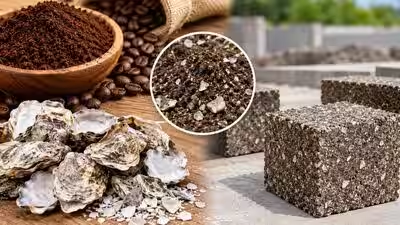
Waste coffee grounds and discarded oyster shells could be turned into a useful construction material. The mixture used spent coffee grounds (SCG) as its main filler, with oyster shells added to strengthen the granular structure and GGBS-based alkali-activated materials used as the binder. Because SCG particles are highly compressible, the researchers added oyster shells in two forms, as a ground powder and as crushed granules, to improve the granular structure. The mixtures were activated with either sodium hydroxide or a combination of sodium hydroxide and sodium silicate. According to research published in ScienceDirect titled ‘Strength characteristics of spent coffee grounds and oyster shells cemented with GGBS-based alkaline-activated materials’, examined how curing time, temperature, activator type, and oyster shell content affected performance. The mixtures generally became stronger and stiffer when oyster shells were added. The highest unconfined compressive strength was about 2.8 MPa.
How oyster shells could make spent coffee grounds more useful
Spent coffee grounds are highly compressible, which can limit their direct use in geotechnical applications. To improve their granular structure, the researchers added oyster shells in two forms : ground powder, referred to as OS.P, and crushed granules, referred to as OS.G. The two forms were mixed with SCG at different oyster shell-to-coffee-ground ratios and then cemented using GGBS-based alkali-activated materials. GGBS served as the precursor, while the mixtures were activated either with sodium hydroxide or with a combination of sodium hydroxide and sodium silicate.The researchers evaluated the mixtures through unconfined compression and slake durability tests, as well as mineralogical and microstructure analyses. These tests helped determine how the form and proportion of oyster shells influenced the mixtures’ strength and durability, and whether combining the two waste materials could produce a stronger granular fill for geotechnical applications.
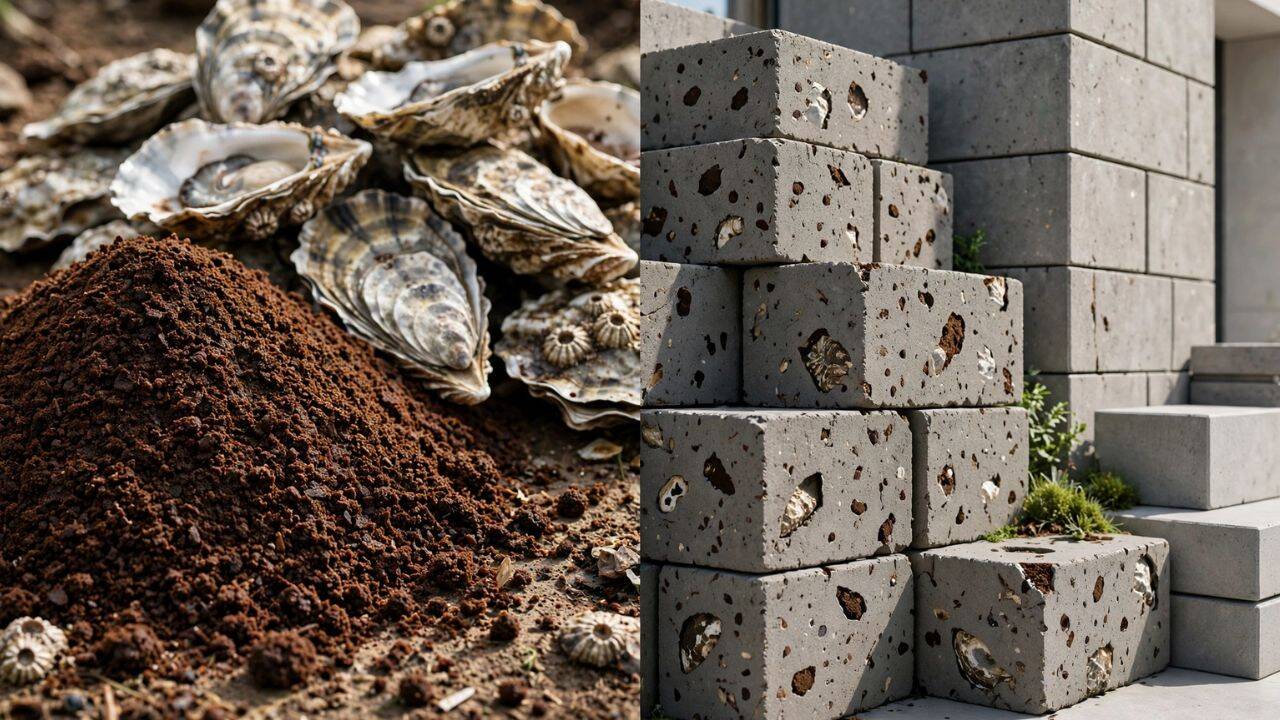
PC: AI Generated
How did oyster shells affect the strength of coffee grounds
Adding oyster shells generally increased the strength and stiffness of the cemented SCG mixtures, although their form and proportion influenced the results. At the same oyster shell-to-SCG ratio, the crushed-granular form generally produced greater stiffness than the powdered form and had a slightly lower unit weight. The highest unconfined compressive strength was approximately 2.8 MPa. However, adding excessive amounts of either OS.P or OS.G had the opposite effect, reducing strength and durability because the bonding between the SCG and oyster shell particles became weaker.Mineralogical and microstructure analyses found no chemical reaction among the SCG, OS.P, and OS.G particles, indicating that they acted as fillers. The C–S–H gel, meanwhile, was identified as the dominant binder in the cemented mixtures.
What affected the strength and durability of the mixture
Curing conditions played an important role in the development of strength. The researchers examined curing time, temperature variation, and the type of alkaline solution used to activate GGBS. Under the same curing conditions, the mixture activated with sodium hydroxide and sodium silicate achieved better strength than the mixture activated with sodium hydroxide alone. The researchers linked this performance to the sodium and silicate supplied by the combined activator. Temperature variation during curing strongly affected strength development as well. Durability results were encouraging as the samples maintained very high to extremely high slake durability regardless of the oyster shell type.
The best oyster shell mix still needs longer-term testing
The researchers identified different optimum oyster shell ratios depending on the form used. For powdered oyster shells, the optimum ratio was 0.3 relative to the weight of SCG, while the crushed-granular form had an optimum ratio of 0.5. Based on the overall results, the researchers proposed using crushed-granular oyster shells at 50% of the SCG weight for practical applications. However, the study did not establish the material as ready for widespread construction use. Its assessment focused on strength and durability, while several properties remain to be investigated. These include the water absorption of oyster shells, workability, shrinkage, and the mixture’s longer-term performance after extended curing periods of 90 days or one year.