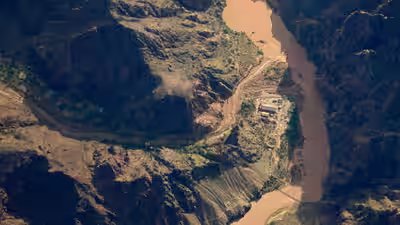



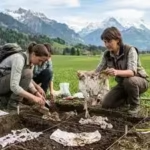





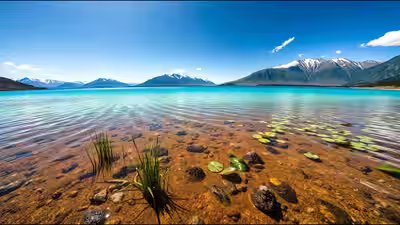
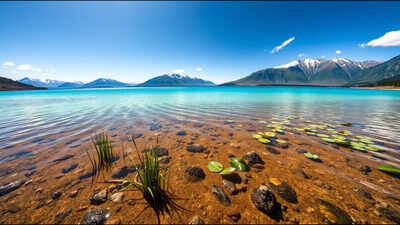
Caohai Lake, a highland lake in southwest China, began losing its underwater vegetation after 2016. By 2019, submerged plants covered less than 10 per cent of the lake, down from around 70 per cent just a few years earlier. The change was part of a wider deterioration in the lake, with murkier water and more phytoplankton taking the place of the clear, plant-filled conditions. Researchers wanted to see whether the lake could be pushed back towards its earlier state without removing most of its fish. Between February 2022 and July 2023, they removed about 55 kilograms of fish per hectare, equal to roughly 20 to 40 per cent of the lake’s fish biomass. The fish were not taken out at random. Researchers focused on benthic omnivores, herbivores and zooplanktivores that could eat plants, disturb the sediment or affect the animals that feed on algae. After the removal, underwater plants increased, and several other parts of the lake’s ecosystem changed with them.
Why researchers removed particular fish from Caohai Lake
The study, published in the Journal of Environmental Management titled Moderately intensive selective fish removal enhances biodiversity and promotes ecosystem restoration: a whole-lake experiment, stated that the fish removal was aimed at species that were putting pressure on the lake’s vegetation and food web. Researchers targeted groups including benthic omnivores, herbivores and zooplanktivores, rather than simply taking out as many fish as possible. Two species that had become dominant, Carassius auratus, the crucian carp, and Hemiculter leucisculus, declined significantly after the intervention. Other fish and benthic macroinvertebrates also became more diverse. The researchers linked the changes to the idea behind the Intermediate Disturbance Hypothesis, which holds that moderate disturbance can sometimes prevent a few species from dominating an ecosystem and leave room for more species to coexist. In Caohai, the aim was not to empty the lake of fish, but to reduce the species putting the most pressure on the existing plant community.
What happened to the lake after the fish were removed
The biggest visible change was in the submerged plants. Their coverage increased by 29 percent, while their biomass increased by 428 grams per square metre. At the same time, phytoplankton biomass fell by 6.7 milligrams per litre and chlorophyll-a concentrations dropped by 38.3 micrograms per litre. Water transparency also improved by 15 centimetres, allowing light to travel farther into the lake. Fish and benthic macroinvertebrate communities both recorded increases in alpha diversity. In other words, the changes were not limited to the plants growing back. The researchers saw shifts in several parts of the lake’s food web at the same time, along with improvements in measures of water quality.
How reducing fish pressure helped underwater plants return
The researchers used partial least squares path modelling to look at how the different changes in the lake were connected. Their analysis pointed towards reduced fish pressure on submerged macrophytes as one possible explanation for the recovery. Some of the fish removed during the experiment could graze on plants, disturb bottom sediments or alter the food web through their feeding habits. With fewer of these fish present, the plants faced less pressure and were able to expand. More vegetation can in turn help keep sediments in place and improve conditions for clearer water, while also changing the habitat available to other aquatic organisms. The modelling supports this chain of events, but the researchers did not claim that fish removal alone explains every change in the lake. Caohai had already been affected by several pressures, so the recovery cannot be reduced to a single factor.
Why the experiment could change how degraded lakes are restored
What makes the Caohai experiment interesting is how much changed after a relatively limited fish removal. Researchers removed roughly 20 to 40 percent of the lake’s standing fish biomass rather than carrying out a near-total fish cull. The intervention was followed by the return of more submerged vegetation, greater diversity among fish and bottom-dwelling invertebrates, lower phytoplankton levels and clearer water. That does not mean Caohai has been permanently restored. The study covered the intervention from 2022 to 2023, and the researchers say longer monitoring is needed to find out whether the changes will last. Fish populations can recover after removal, and the pressures that originally pushed the lake into a degraded state can return. For now, however, the experiment shows that a targeted reduction in fish can be followed by changes across an entire lake ecosystem, giving restoration managers another approach to consider for degraded plateau lakes.