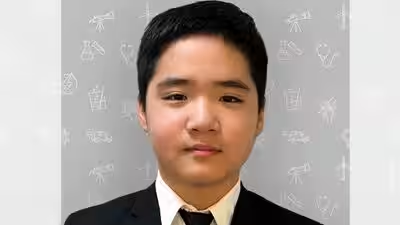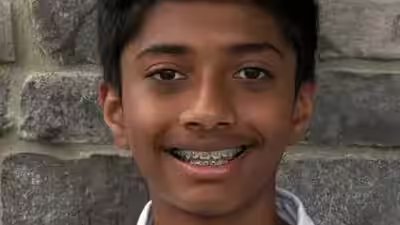







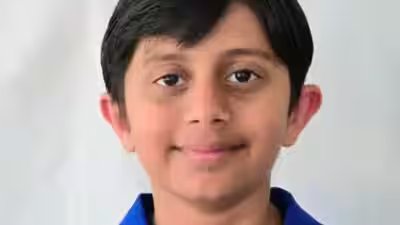
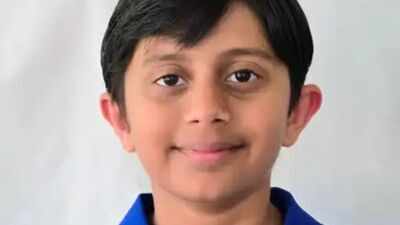
Prakhar Purohit, a student from North Carolina, has earned recognition for a science project with a unique yet simple-sounding idea of ‘making tiny batteries from dirty water.’ His project, titled ‘Tiny Batteries from Dirty Water,’ was selected as the 2026 North Carolina State Merit Winner in the 3M Young Scientist Challenge. The recognition places Purohit among students across the United States whose projects tackle different problems through science and technology. According to the Young Scientist Lab, the 2026 State Merit Winners have been announced as part of its annual challenge, which encourages students to work on real-world challenges that matter to them. Purohit’s project stands out because it connects two everyday concerns, dirty water and the need for small sources of electrical power, through a compact scientific idea.
What did Prakhar Purohit create
The project is called ‘Tiny Batteries from Dirty Water.’ This title captures the central idea in just a few words. Rather than treating dirty water simply as something that needs to be cleaned or avoided, the project explores it as part of a battery-making concept. The Young Scientist Lab does not provide a detailed explanation of the design, materials or testing process. Still, the idea is notable for the way it appears to combine an environmental problem with a need for energy.Small batteries are useful in many areas of modern life, particularly where tiny devices need a source of power. Purohit’s project takes that familiar technology and looks at dirty water as the fuel. The Young Scientist Lab describes its Young Scientist Challenge as a programme designed to give students from different backgrounds a direct connection to innovation. It encourages them to tackle real-world challenges that are important to them through hands-on learning tools. Purohit’s project fits naturally into that broader goal. It attempts to look at a common environmental resource in a different way and ask whether something that is normally considered waste or a problem could also have a useful purpose. That kind of thinking is at the heart of student science projects. Instead of beginning with a ready-made answer, a young researcher can begin with a question that seems simple but opens the door to experimentation.
How does dirty water become part of the idea
The most important point is that Purohit’s project is specifically centred on dirty water. The project presents dirty water as something with potential value rather than simply as a contaminant. That is an interesting shift in perspective. A material that might normally be associated with pollution becomes the starting point for an investigation into energy. For a student project, the concept also shows how environmental questions can overlap with engineering. Water quality and energy are often discussed separately, but Purohit’s project brings the two subjects together under one idea. It asks whether dirty water can play a role in producing useful electrical power on a very small scale. That question is enough to make the project memorable. For Purohit, the 2026 State Merit Winner recognition marks an important achievement in his young scientific journey. For readers, the project offers a reminder that interesting scientific ideas do not always begin with complicated equipment or enormous labs. Sometimes, they begin with looking at an everyday problem differently.
What does becoming a State Merit Winner mean
Purohit was named the 2026 North Carolina State Merit Winner by the Young Scientist Lab. His project appears in the organisation’s official list alongside State Merit Winners from other states. The list includes projects covering a wide range of subjects. Other 2026 winners are working on ideas involving smoke detectors, traffic lights, lead detection, robotic therapy, plant communication and environmental technology. Purohit’s project therefore forms part of a much wider collection of student-led ideas. Each project approaches a problem from a different direction, but together they show the variety of questions young scientists are willing to explore.