


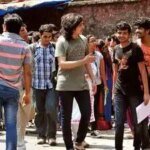





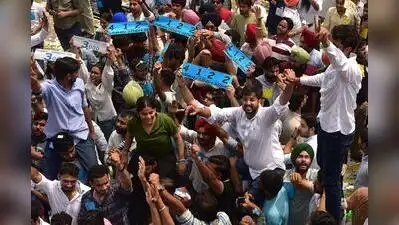

Chandigarh: For much of the year, Panjab University’s South Campus waits for long-promised development, better connectivity and answers to recurring safety and infrastructure concerns. This year, it does not even have a candidate of its own in the race for the PUCSC’s top post. Yet, come election season, the university’s largest vote bank suddenly comes alive with convoys, supporters, pamphlets flying through corridors and the now-familiar ‘thigh slapping’, as candidates turn the neglected campus into their biggest stage for a show of political strength.On Thursday, UIET was set for another round of campaign face-offs, with NSUI and SATH taking their campaigns to the South Campus. A day earlier, ABVP, ASAP and NSUI had already made their presence felt there. For candidates, UIET’s roughly 2,500 voters are reason enough. But elections at the institute have long been about more than just the vote. They are about being seen asking for it.Campaign pamphlets fly across corridors and, at times, are thrown down from the first floor by supporters. Groups move through the campus in numbers, turning every gathering into a statement of strength. And then there is the Moosewala-style ‘patt te thappi’- the thigh slap popularised as a signature gesture by the late Punjabi singer Sidhu Moosewala, which has found its way into the visual vocabulary of PU’s election campaigns.For a few hours, the contest is not simply about who has the better candidate. It is about who has brought more people, who is louder and who can claim the corridor.There is an irony to the annual political pilgrimage. For the rest of the year, South Campus has been waiting for attention to problems far more basic than election optics. The proposed Student Activity Centre and other elements of the long-pending development plan are yet to transform the campus, while waterlogging, poor lighting and patchy CCTV coverage remain recurring concerns. Security, too, has repeatedly come under scrutiny: outsiders have been seen scaling boundary walls and entering through vulnerable gates, even as students complain of inadequate monitoring. The concerns acquired a tragic urgency last month after a research scholar died following an alleged electrocution while crossing a waterlogged stretch on South Campus. Yet, come election season, the same campus that struggles to command sustained administrative attention suddenly becomes the place every student outfit has to be seen in.The same corridors that remain outside the centre of the university’s everyday administrative attention become essential for campaign strategy. A strong turnout there is not merely about the votes it can deliver; it helps build a narrative. A packed corridor can become evidence of popularity, a large group of supporters a claim of momentum.The irony is sharper this year because UIET has no candidate of its own in the contest. Its students will have no familiar face from the department on the ballot for president, vice-president, secretary or joint secretary. But its votes remain among the most coveted in the election.And so the show goes on. The Lyngdoh Committee guidelines may prescribe restraint in campaigning, but at UIET, the finer print can appear distant from the election-season spectacle. Pamphlets scatter, supporters gather and every group tries to leave behind the impression that it owns the moment.When the election is over, South Campus will return to its familiar wait- for development, connectivity and answers. Until then, however, it has become the one place nobody can afford to wait on.BOX-Porous security: Entry points have no checking, while the boundary wall has remained easy to scale at vulnerable stretches.Outsider access: repeated reports of people entering or attempting to enter the campus by scaling walls and through poorly monitored access points.Limited surveillance and poor lighting in parts of the campus have been flagged as security concerns.Waterlogging and electrical safety concerns have returned to focus following death of a research scholar a month ago.Security concerns have persisted despite the large student population after a murder in 2025.