









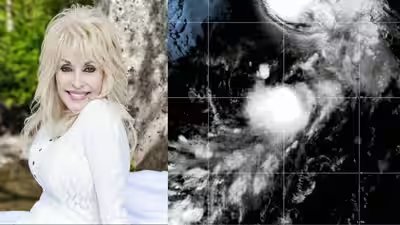
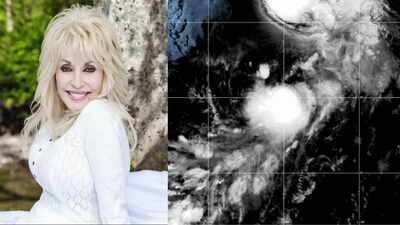
The death of country music icon Dolly Parton has created an unusual coincidence in the Atlantic: the next tropical storm to form there is set to be called Dolly. The timing is striking, but the overlap is entirely coincidental.Dolly had been on the predetermined 2026 Atlantic storm list years before Parton’s death. It appears on a list maintained under procedures established by the World Meteorological Organization (WMO) and was never chosen as a tribute to the singer.Atlantic storm names are drawn from rotating lists that are reused every six years unless a name is later retired. The system is established in advance so storms can be identified quickly and consistently once they reach the required strength, the news agency Associated Press reported.
A coincidence written into the hurricane list years ago
Unlike names chosen for commemorative events, tropical cyclone names are fixed well before a hurricane season begins.For the Atlantic, the WMO maintains predetermined lists of names that are used sequentially as qualifying storms develop. The names alternate between male and female, and the lists generally return on a six-year cycle unless individual names are removed.The system also serves a practical purpose. Giving storms distinct names allows meteorologists, emergency agencies, broadcasters and the public to follow individual weather systems more easily, particularly when several are active at the same time.
How a storm earns the name Dolly
Being next on the list does not mean the name Dolly is guaranteed to be used.For a tropical or subtropical cyclone to receive a name, it must reach tropical-storm strength, with maximum sustained winds of at least 39 mph (63 kph).If the next qualifying Atlantic system reaches that threshold, forecasters would assign it the next unused name on the 2026 list — Dolly.The name is therefore tied to the predetermined sequence of storms during the season, not to events involving any person who happens to share it.
The system that could put the name into use
The National Hurricane Center (NHC) is watching disturbed weather in the eastern tropical Atlantic, south of the Cabo Verde Islands, where conditions could support further development.The system would first need to become sufficiently organised to be classified as a tropical depression. Only if it subsequently strengthens to tropical-storm intensity would the name Dolly come into use.That outcome remains uncertain, but the name is next in line because the Atlantic has already used the first three names designated for 2026.Those were Arthur, Bertha and Cristobal. Arthur affected the US Gulf Coast in June, Bertha brought heavy rain to parts of Louisiana and Texas in July, and Cristobal became the season’s third named storm in August before weakening.Their progression leaves Dolly as the fourth available name on this year’s list.
When storm names disappear for good
While Atlantic storm-name lists normally return every six years, some names never come back.Names associated with particularly deadly or destructive storms can be permanently retired from the rotating lists. The practice prevents names strongly associated with catastrophic events from being used again in future seasons.That happened after the 2025 season with Melissa, a Category 5 hurricane that caused extensive destruction across the Caribbean and killed more than 90 people.Melissa was formally retired in 2026. When that list returns in 2031, the replacement name will be Molly.The process illustrates how storm names can acquire powerful associations only after they are used. Dolly, by contrast, remains simply the next predetermined name waiting on the 2026 list.
A quieter Atlantic season in 2026
The potential emergence of Dolly comes during a hurricane season that NOAA says is now most likely to finish with below-normal activity.In its updated August outlook, the National Oceanic and Atmospheric Administration (NOAA) placed the probability of a below-normal Atlantic season at 75%, up from 55% in its preseason assessment.NOAA now forecasts seven to 13 named storms for the full season, including two to six hurricanes and zero to two major hurricanes.El Niño is one factor behind that outlook. It tends to increase vertical wind shear over the Atlantic, making conditions less favourable for tropical systems to develop and strengthen.Whether the disturbance south of Cabo Verde develops far enough to become Tropical Storm Dolly is still an open question. The coincidence with Parton’s death may be remarkable, but the name itself was settled years before the events of this week.