








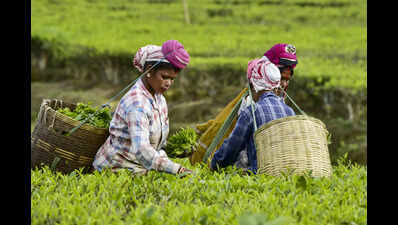
Dibrugarh: In a move that has triggered widespread concern among tea growers and industry stakeholders across Assam, the Tea Board of India has officially discontinued the Jorhat Tea Auction Centre (JTAC) — also known as the Jorhat e-Marketplace — with effect from April 1, 2026. A circular issued on March 26, 2026, by Samaresh Mondal, Controller of Licensing (In-charge), Tea Board India, confirmed the closure, citing the need for uniformity and rationalisation of regulatory oversight under a new pan-India digital auction framework.The circular stated that Tea Board has initiated the process of establishing a new web-based tea auction platform with integrated e-commerce operations on a Build, Own, and Operate (BOO) model on a pan-India basis, making the continuation of a separate auction model at Jorhat “no longer considered feasible.” All sellers and buyers have been advised to participate in the existing pan-India auction system under the provisions of the Tea (Marketing) Control Order, 2003.The closure has drawn sharp criticism from tea growers and industry stakeholders across Assam for being taken without adequate consultation, and is being seen as a significant blow to the state’s tea sector. Last year alone, growers sold approximately four million kg of tea through the Jorhat centre, making it the second largest auction platform in Assam after Guwahati.Industry voices have called the decision shortsighted. “Closing the only auction centre in upper Assam, which is the heartland of India’s tea production, without providing an adequate alternative is deeply unfair to thousands of small and large growers who depended on it,” Assam Bought Leaf Tea Manufacturer’s Association (ABLTMA) president Chand Kumar Gohain on Sunday said.Stakeholders are calling for the decision to be reconsidered, arguing that any rationalisation of auction infrastructure should account for production volumes and geographic realities, not just administrative convenience. Location is a key part of the argument being made by those opposing the closure. Most of Assam’s tea gardens are concentrated in upper Assam, making the Jorhat centre geographically far more accessible for a large proportion of the state’s growers than the Guwahati centre.The Jorhat Tea Auction Centre was launched in May 2020 as India’s eighth tea auction centre and Assam’s second, inaugurated by the then Speaker of the Assam Legislative Assembly and present Jorhat MLA Hitendra Nath Goswami. The implementing agency was mjunction Services, India’s largest B2B e-commerce company and a 50:50 joint venture promoted by SAIL and Tata Steel. Its launch was celebrated as a long-overdue recognition of the needs of upper Assam’s vast tea-growing community.The six contiguous districts of upper Assam — Golaghat, Jorhat, Sivasagar, Charaideo, Dibrugarh and Tinsukia — together produce approximately 450 million kg of tea annually. The closure of the Jorhat centre means that the growers of this vast belt must now depend solely on the Guwahati Tea Auction Centre (GTAC), which was established in 1970 and is one of the busiest tea auction facilities in the world.