












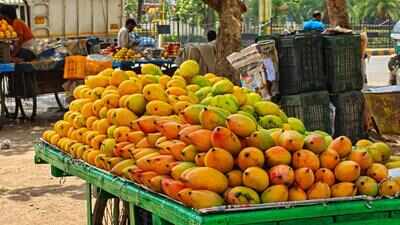
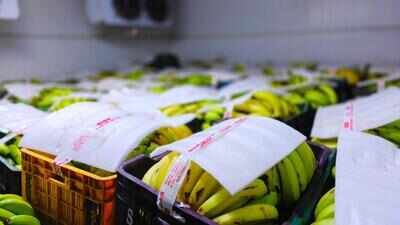

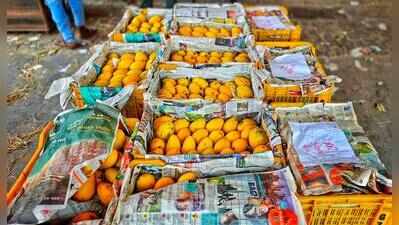
That mango on your table may look perfect, but it most likely hasn’t entirely been moulded by nature. By the time it reaches your kitchen, it may have been plucked early, packed in crates, transported across states, stored in heat-trapping rooms and hurried into ripeness with chemicals. Whether it’s papaya or banana or a summer delicacy like mango, there’s heavy artificial ripening behind many of the fruits that look fresh in the market, often using shortcuts.Earlier this year, Food Safety and Standards Authority of India (FSSAI) asked states and Union territories to intensify inspections at mandis, storage units and fruit markets over concerns about continuing use of banned calcium carbide for artificial ripening. The regulator stressed the use of ethylene ripeners as a safer alternative.A TOI ground check with fruit traders, wholesalers and commission agents in major mandis revealed what really happens before fruits land on your plate.Fruits are mostly picked before they ripenFruits sold in local markets usually arrive first at large wholesale mandis, where produce from farmers across different states is aggregated before being distributed to retailers. Most fruits meant for long-distance transport are plucked before full ripening — mangoes, bananas and papayas are often harvested at the mature-green stage so they can survive loading, travel and repeated handling.“At farm level, fruits are often plucked at a greener stage, sorted quickly, packed in crates or cardboard boxes and dispatched the same day,” said Shoaib Qureshi, a wholesaler at the Sahibabad Mandi. “If farmers wait for full natural ripening, much of the produce gets damaged before it reaches the city.”Many mangoes and papayas in NCR markets are currently arriving from southern belts such as Karnataka, Maharashtra and the Telangana-Hyderabad region. North Indian varieties from UP, Bihar and Bengal are still some weeks away.Once harvested, fruits are loaded onto trucks or parcel trains, with transit usually taking two to three days. Each shop typically receives 15 to 20 tonnes of fruit every two to three days, which is then ripened and supplied to local markets. In NCR, most consignments are routed through Sahibabad and Azadpur mandis. Since fruits are harvested early, traders need them to ripen by the time they reach wholesale markets — and that is where artificial ripening often enters the picture.The ripening agentsThere are two commonly discussed methods in the trade: calcium carbide, which is banned by FSSAI, and ethylene-based ripeners, which are legal but are governed by usage rules.Carbide — commonly called ‘masala’ in the trade — remains attractive in the illegal market because it is cheap and fast. A packet costs around Rs 90 and may be used across multiple consignments. Two to three small pouches are typically placed inside a stack of one quintal of mangoes or papayas, wrapped in newspaper and tucked into fruit piles. Crates are then covered with cloth or paper and placed in enclosed warm spaces. In summer, fruits may ripen in two to three nights; in winter, it can take four to five days. English newspapers are preferred due to the quality of the paper used.“Since the ban, carbide is generally not used by wholesalers at the mandi level. Instead, it is used by farmers at the point of picking, for fruits transported shorter distances. It is majorly used for mangoes, as they are produced in bulk,” said Mehboob, a mango trader.“Calcium carbide releases acetylene gas on contact with moisture. Acetylene acts similarly to ethylene — the natural plant hormone responsible for ripening — triggering softening, colour development and sweetness. However, the process is uneven and often forces fruits to ripen from the outside while leaving the inside underdeveloped. Because industrial-grade calcium carbide may contain harmful impurities such as arsenic and phosphorus, its use for ripening fruits is banned in India,” said Sarvesh Mishra, Noida food safety officer.Ethylene is considered the safer, approved alternative. Commercial ethylene sachets — colloquially called ‘Chinese puria’ — are porous packets activated by moisture and placed near fruit stacks. “Ethylene takes a little longer and costs more, but gives more even ripening,” said a trader at Noida Phase 2 mandi. “Large storage operators and organised retailers use it more.”Arrival at the mandiBy the time mangoes from southern states reach NCR mandis, many consignments are already 70-80% ripened. If carbide has been used, powder residue may remain on the fruit surface. Fruits are then washed, dried and repacked. “If more colour is needed, they are restacked for another day. Ripeness, appearance and shelf life directly affect pricing,” said one agent. Bright yellow mangoes often fetch more than greener lots, even if taste remains similar.Azadpur, Asia’s largest fruit and vegetable market, receives approximately 1,200 metric tonnes of mangoes daily. The mango season runs from Feb to August.Papayas usually arrive individually wrapped in newspapers. “Workers first unwrap them to check ripening stage. Papayas are generally transported without ripening agents — if there’s a transit delay, already-ripened fruits spoil faster. Workers rewrap them in fresh newspapers, stack them with ethylene sachets placed at intervals, cover the pile with sacks or cloth and leave it for three to four days,” said Rihaan Ansari, a papaya seller.Bananas require cold-room ripening. “Bananas arrive every two to three days from farms in Maharashtra, Telangana and Hyderabad. They are cleaned, placed in crates and stored in a cold room at around 16 degrees Celsius. Ethylene gas is released into the sealed chamber, without ventilation, for three days. By the fourth or fifth day, the bananas are ready and appear naturally ripened,” said Jai Prakash, a banana wholesaler at Ghazipur mandi and has been in the trade for 30 years.Storage and price playCold storage explains why mangoes appear in markets before peak season — early arrivals are stored in temperature-controlled units to stagger supply. Storing one crate for a month costs around Rs 50 on average. “That is why the first mangoes of the season are expensive. Once arrivals increase, rates fall,” said a trader. That seasonal shift also explains the changing varieties on shelves — from early Safeda and Totapuri to later Dasheri, Langra, Chausa and Himsagar.What buyers should watch forFood experts say consumers need not panic but should remain cautious. Fruits that are uniformly bright yellow outside but hard inside, carry a chemical smell, show powder traces or have unusual soft patches may have been poorly force-ripened. Washing fruits thoroughly, peeling where appropriate and buying from trusted vendors can reduce risk.“Smell the stem end first — it is the most reliable test. A naturally ripened mango carries a strong fruity aroma near the stem; carbide-ripened fruit usually has little to no smell, or a faint chemical odour,” said a senior food safety officer.Colour pattern also offers clues. Natural ripening begins near the stem and moves downward. A uniformly bright yellow mango across the entire surface is more likely artificially ripened. Carbide-ripened mangoes often turn soft in patches while remaining hard elsewhere, whereas naturally ripened fruit yields evenly to gentle pressure.How purity tests are done“Industrial-grade carbide contains arsenic and phosphorus, which leave traces on the skin. A simpler field test: silver nitrate solution turns white in the presence of acetylene gas released by carbide residue. Ethephon is trickier — it is legal in India up to 2 mg/kg on mangoes. For determining whether fruit was treated or naturally ripened, volatile aroma profiling is most telling — natural ripening produces a specific terpene fingerprint that forced ripening either skips or truncates,” said Ashwin Bhadri, founder and CEO of Equinox Labs.“Fruit samples are sent to laboratories across the city for testing. If any sample fails standards, the stock is traced back to the wholesaler and appropriate action is taken,” said the FSO.