









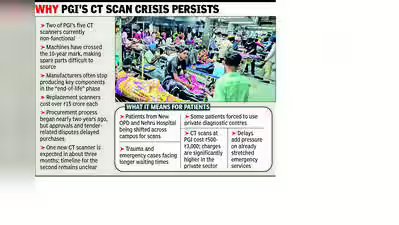
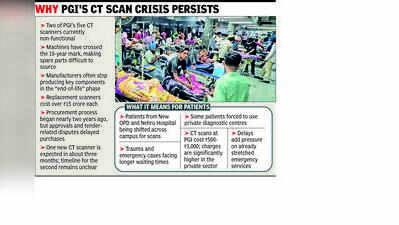
Chandigarh: The breakdown of two of PGI’s five CT scan machines, including units at the high-footfall New OPD and Nehru Hospital, is forcing hundreds of patients, including trauma victims, to endure delays and shuttle across the campus for critical diagnostic imaging.With the machines out of order, patients are routinely transported on stretchers and trolleys to other blocks for scans, creating bottlenecks and longer waiting times. Some are also opting for private facilities, where CT scans can cost several times more than at PGI. At the institute, scan charges range from ₹500 to ₹3,000 depending on the procedure.PGI did not respond to TOI’s queries on the status of the two machines.Faculty members and officials attribute the situation to ageing equipment and delays in procuring replacements. Diagnostic systems that cross the 10-year mark often enter an “end-of-life” phase when manufacturers stop producing spare parts, particularly expensive components such as X-ray tubes. Once comprehensive maintenance contracts expire, vendors generally limit support to best-effort repairs.Sources said procurement of replacement CT scanners, costing over ₹15 crore each, has been delayed by multiple rounds of approvals, financial scrutiny and tender-related disputes. Officials said one new machine is expected to be installed within three months, while the timeline for the second remains uncertain.“There are only a few major players in the CT scanner market. After specifications are finalised, competing vendors often raise objections and allege bias, leading to repeated reviews and delays,” an administrative officer said.Officials said the procurement process for the replacement scanners began nearly two years ago. “Tenders were invited, but the files did not move from the concerned departments,” an official said.Senior faculty members argued that premier referral institutes such as PGI require a procurement framework suited to their scale and workload. “What applies to newer AIIMS cannot be mandated for us. We have a daily footfall of over 10,000 patients,” a senior faculty member said.