









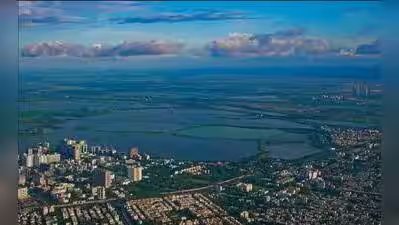

Kolkata: Exactly 25 years after the East Kolkata Wetlands (EKW) were declared a Ramsar site, a new report by the Society for Creative Opportunities and Participatory Ecosystems (SCOPE) warns that Kolkata’s most vital ecological infrastructure is being weakened by neglect, poor governance, and shrinking livelihood incentives.Spread over 12,500 hectares on the city’s eastern edge, the wetlands first received protection in 1992 when a PIL by environment action group PUBLIC led to a landmark judgment by Justice Umesh Chandra Banerjee, prohibiting any change in the land use of the wetlands from agricultural or fisheries purposes to commercial or residential use. On Aug 19, 2002, the EKW were officially declared a Ramsar site of international importance.But it is far more than a protected landscape. These wetlands receive Kolkata’s municipal sewage, treat it through fish ponds, vegetable farms, paddy fields and canals, and return value to the city in the form of low-cost sanitation, food and livelihoods. This is why late ecologist Dhrubajyoti Ghosh described Kolkata as an “ecologically subsidised city”.Wetland researcher and SCOPE project director Dhruba Dasgupta writes in the report, “Ramsar offers science-based, community-friendly guidance regarding wise use, but often the implementation of such guidance leaves a lot to be desired. A Ramsar tag should not be a licence for mass non-compliance.”The report finds that the core resource sustaining the ecosystem — municipal sewage — is no longer reaching fish farms reliably. Between Oct 2025 and Feb 2026, sewage levels at Bantala Lock Gate were insufficient to feed the Fishery Feeding Canal uninterruptedly. Downstream bheris are increasingly sewage-starved, forcing fish farmers to use supplementary feed, affecting water quality.SCOPE’s fieldwork also shows an ageing workforce, falling fish production, poor wages, youth migration into gig work, and growing pressure from real estate. Several farmers reported filling of canals and ponds for housing. The report warns that as sewage-based livelihoods decline, land becomes the more attractive resource, accelerating ecological destruction.The threats are also institutional. The EKW Management Authority exists, and the wetlands have a dedicated state law, but the report calls the legal framework weak and unclear. It demands a technical wing with engineers and fisheries scientists, better land records for Ramsar plots, canal excavation, bheri desiltation, repair of Lalkuthi Siphon, and revival of sewage water user associations.Dasgupta stresses that the future of the wetlands depends on listening to the communities that keep them alive. “After 25 years of recognition, that inclusivity and ecological understanding is what the grassroots community is again asking for,” she writes. “We need to understand their messages, their plight.”For Kolkata, the warning is stark: damaging the wetlands would mean undermining the city’s drainage, sanitation, food security and climate resilience at once.