









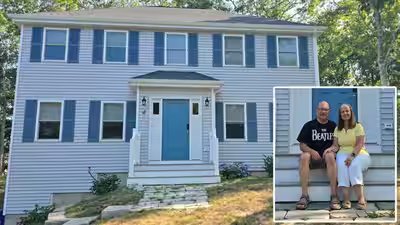
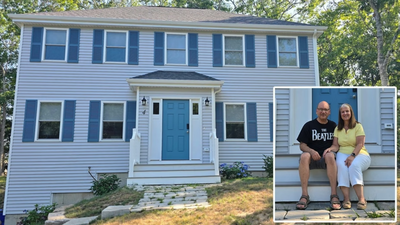
A Cape Cod couple moved into their newly built dream home in March 2025. Just one month later, Massachusetts officials told them that the state would take the property through eminent domain to make way for a replacement bridge. Marc and Joan Hendel are among 13 property owners in the Round Hill neighborhood of Bourne whose land was selected for the new Sagamore Bridge project. Public records reviewed by the Boston Globe show that by April, the state had taken 11 of the 13 properties. State filings show that Massachusetts had paid at least $4.8 million for six of the homes, more than their combined assessed value of $3.5 million.For the Hendels, however, the money does not make up for the disruption to their retirement plans. After several years living in the Midwest, the couple decided in late 2023 to move to New England to be closer to family in Boston and Connecticut.
Hand-delivered notice changes their plans
The couple bought land and signed a contract for a custom-built home in December 2023. They relied on their real estate agent to tell them about any possible problems with the property.Construction finished in early 2025, and the couple moved into the home in March.Four weeks later, a state official arrived with a legal notice saying that Massachusetts was taking ownership of their property.Joan Hendel recalled that they were shocked and did not know how to react. She said that although they have a strong marriage and normally communicate well, they could not find words that day.The Hendels also pointed to documents signed by the seller in 2023 that said the seller was not aware of any planned government taking of the property.State officials had held community meetings about the bridge replacement as early as June 2021. However, the Hendels were living outside Massachusetts at the time and did not know about the local meetings.
Aging bridges drive the project
Massachusetts officials say buying the properties is necessary to improve an important regional transportation route. The Sagamore and Bourne bridges are nearly 90 years old and together handle more than 38 million vehicle trips each year. They are the only road connections between Cape Cod and mainland Massachusetts.Luisa Paiewonsky, executive director of MassDOT’s Mega Projects Delivery Office, said that people depend heavily on the bridges.The US Army Corps of Engineers classified the existing bridges as “functionally obsolete” in 2020. Paiewonsky said planners chose a route that would require as few residential property takings as possible.She also acknowledged the impact on residents. Although the state provides compensation for homes and relocation costs and helps people find new housing, she said officials understand that losing a home is much more than a financial transaction. She said the state is working to treat affected residents with respect, professionalism, and compassion because of the disruption the project can cause.
Quick-take law adds to the pressure
Massachusetts is a “quick take” state. This means the government can take legal ownership of a property before the final amount of compensation has been agreed.The case has also raised questions about whether financial payments can truly cover the personal losses caused by forced relocation.A research report by the Pioneer Institute noted that courts have long recognized that a home can have special value to its owner. Losing a property can create emotional pain and moving-related stress that cannot be measured or fully repaid with money.The report also explained that government condemnation powers prevent individual property owners from delaying major infrastructure projects when a particular piece of land is needed.
Finding another home may be difficult
The Hendels face another problem: finding a similar replacement home on Cape Cod.Realtor.com data showed that Barnstable County had 1,402 homes listed for sale in July, with a median price of $946,000. New construction made up only 6.1 percent of the available homes. New homes also cost an average of $654 per square foot, compared with $530 per square foot for older properties.Joel Berner, a senior economist at Realtor.com, said Cape Cod remains a seller’s market because there are not enough homes compared with the number of buyers. He said buyers have few choices and that available homes are expensive. This makes new construction attractive, but also makes the loss of a newly built home especially difficult.Marc Hendel is also worried about the long-term financial effects of having to buy a larger replacement home. He said that if the state provides them with a bigger house, they could face higher property taxes for the rest of their lives. Those extra costs were not part of their retirement plans. He also questioned who would pay for the other unexpected expenses created by the forced move.Joan Hendel had planned to retire within two years. She said those plans are now on hold and described the situation as having seriously disrupted their lives. Along with the 13 homes, Massachusetts plans to acquire three commercial properties in Round Hill so construction of the new bridge can move forward.