









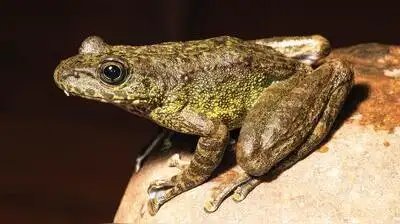
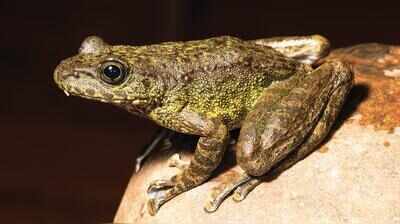
New Delhi: After 15 years of searching in the rocky streams and waterfalls of the Northeast and eastern India, SD Biju, the “frogman of India”, has found three species of leaping amphibians that are new to science.The team led by Biju, a professor at Delhi University’s department of environmental studies, found three species of Cascade Frogs in Tripura, Nagaland and West Bengal. The study also reports five Cascade Frog species from India that had previously not been recorded in the country.The findings, published in the Bulletin of the Museum of Comparative Zoology, are based on extensive fieldwork across the seven northeastern states by the professor and his team.Researchers documented more than 300 populations of Cascade Frogs and then used DNA analysis and detailed comparisons of adult frogs and tadpoles to establish that the three populations represented species new to science.Cascade Frogs belong to the genus Amolops, which has around 100 known species across Asia. They get their common name from their preference for rocky waterfalls and fast-flowing forest hill streams. Northeast India, where two of the three species were found, falls within the Himalaya and Indo-Burma biodiversity hotspots.The Tripura species, Amolops ammachi, or Ammachi’s Cascade Frog, was found in the Jampui Hills. It was named Ammachi after the late Padmini Varkey, a Kerala social worker and philanthropist who was fondly called “Ammachi”, Malayalam for mother. This medium-sized frog, about 80-mm long, has a light-brown body with olive-green patterns.Another species is the Amolops sendenyu, discovered in Nagaland and named after Sendenyu village, where it was found. The third, Amolops bella, was found in West Bengal. It was named bella — or the beautiful Cascade Frog — because of its green body that has yellowish-green or reddish-brown mosaic patterns.Professor Biju’s team included Gajaba Ellepola, AN Dikshit, Akalabya Sarmah, Radhakrishna Upadhyaya K, Karan Bisht, Tage Tajo, James Hanken and Sonali Garg. The study done by them traced the Amolops group’s evolutionary history, suggesting major diversification around 32 million years ago and multiple waves of movement across Asia, with the rise of the Himalayas playing an important role in shaping their present distribution.Biju said the work has helped clear up several identification problems in a difficult group of frogs. His work underlines how much the biodiversity of the Northeast remains undocumented. “Our study reaffirms that many Indian faunal groups remain poorly studied and contain undiscovered biodiversity,” the professor said.