









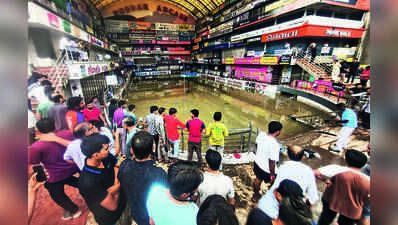
After four years of financial struggle, Mahesh Rathod, personal assistant to Bharat Ratna Lata Mangeshkar for 28 years, saw a sari business as a ray of hope for his family. He rented a shop in Parvat Patiya in late June and stocked it with saris procured from Banaras. But before he could start taking orders, floodwaters entered the shop on July 8, destroying 80% of his stock.“I am back to square one,” said Rathod, who has to support a family of seven in his native village Morangi, in Amreli district.Rathod is among the thousands of textile traders hit hard by two intense bouts of rain that lashed the state within a fortnight. Several industrial estates in Surat and Ahmedabad too were flooded, bringing manufacturing and allied sectors such as logistics, packaging and chemicals to a halt.On July 7, floodwaters entered industrial and residential areas in Surat after drainage lines overflowed and the Bhedwad creek swelled, forcing shutdowns across key textile belts. A second spell from July 22 again inundated areas around the creek, with waterlogging lasting up to four days.In Ahmedabad, flooding exposed the vulnerability of industrial estates on the outskirts. Several GIDC estates halted production as waterlogged roads cut off access to factories. Some units had more than 2 feet of water in them.Textile processing clusters forced to shut down twice in 15 daysPandesara GIDC, one of Gujarat’s oldest industrial estates and among India’s earliest textile processing hubs, witnessed the first closure in its 51-year history. Floodwaters entered factory premises during the first spell prompting units to halt operations, while the subsequent flooding and administrative orders led to another stoppage. The disruption deepened when the common effluent treatment plant (CETP), essential for processing activity, suffered major damage, triggering a wider operational crisis. Pandesara GIDC, established around 1975, has 129 textile processing units and about 500 other industrial units.
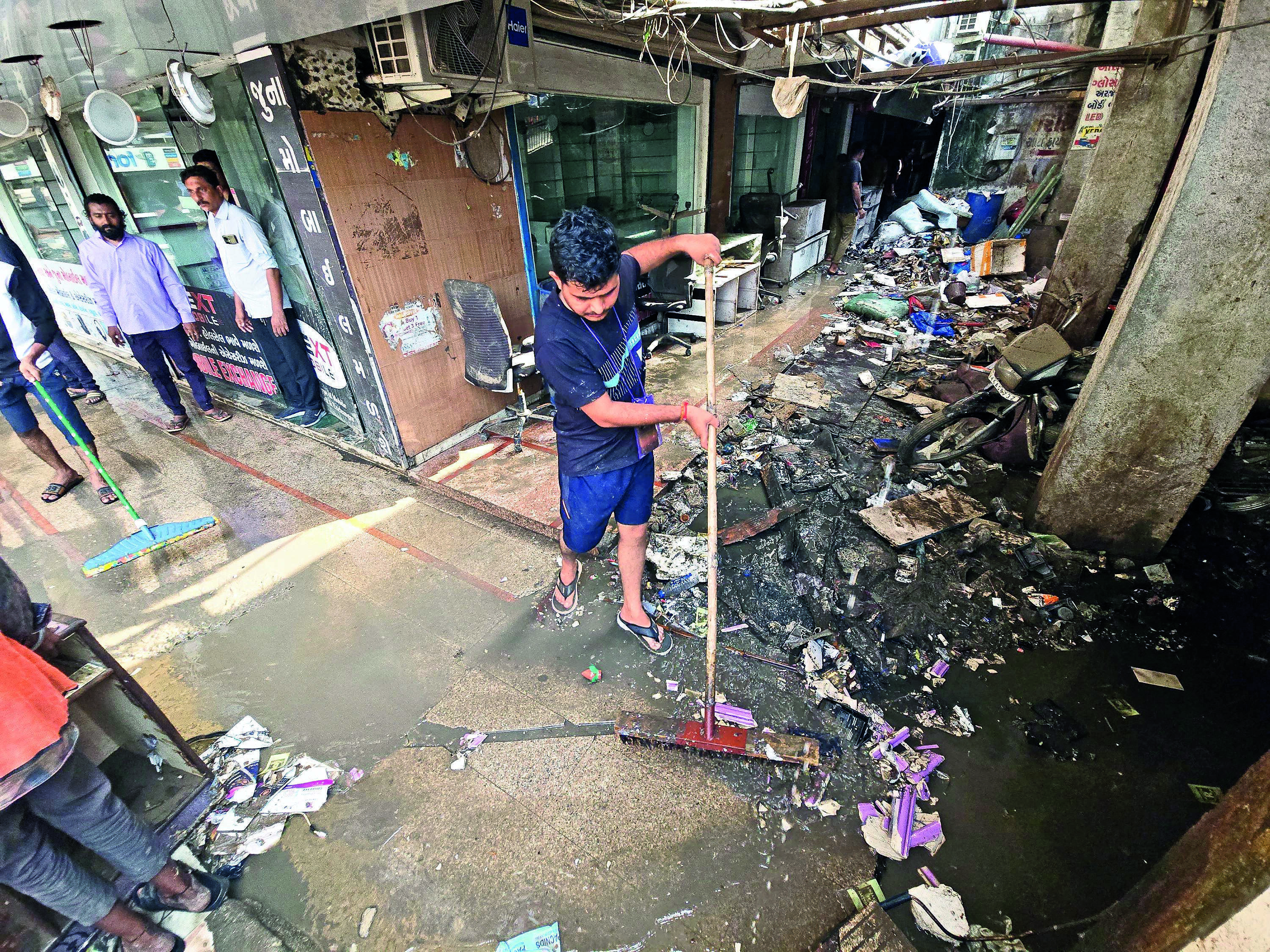
A worker cleans debris deposited by floodwaters in a Surat commercial building
A similar situation was reported from Kadodara GIDC, where flooding is an annual problem. Around 150 processing and textile units were forced to down shutters due to flooding and interruptions at the Palsana Enviro Protection Ltd CETP. During the first flood, the CETP was closed for a day; during the second, operations were halted for more than 60 hours as creek water affected the facility, resulting in extended closures for dependent units.Pharma hubs face longer recoveryIn Ahmedabad, the impact was particularly severe at PHARMEZ, the pharmaceutical Special Economic Zone near Changodar, which houses several export-oriented drug manufacturers. In regulatory filings, Zydus Lifesciences and Piramal Pharma said they had temporarily suspended operations at some manufacturing facilities as a precaution following heavy rainfall and flooding.Piramal said the facilities together account for less than 3% of its consolidated revenues and that the financial impact was still being assessed, while adding that the assets are adequately insured.A source familiar with the ground situation in the estate said, “Floodwaters of 3-4 feet entered several manufacturing units, affecting utilities, production areas and inventories. Once the water recedes, companies have to assess every piece of equipment, carry out repairs wherever required and validate systems before manufacturing can restart. It is not a matter of simply switching the machines back on.” The source confirmed that operations are far from resumption as companies assess the extent of damage to equipment, raw materials and work-in-progress. Industry insiders said the disruption could also delay time-sensitive export consignments, although the financial impact is yet to be quantified.“We had to keep the units closed for two and a half days as the creek’s level did not go down following the heavy rain. Since the effluent treatment plant was closed, no industry that discharges effluent can continue operation,” said an official at Palsana Enviro Protection Ltd.Loss of goods in textile trading hubsIn Surat’s textile trading district, the impact was widespread. Around 1,000 shops across nearly 30 markets were reported submerged. The worst-hit zones included the textile hub around Saroli and the Ring Road, where market complexes remained waterlogged and several basement shops reported heavy damage to stock. Traders said losses ran into crores of rupees and business activity had come to a near standstill, including in markets that did not flood but still lost multiple trading days. They said recovery could take at least a month due to lead times required to reorder, process, cut, stitch and pack specific fabrics. The disruption also hit seasonal preparations ahead of Raksha Bandhan, when markets typically see peak demand, with festival inventory reported damaged.
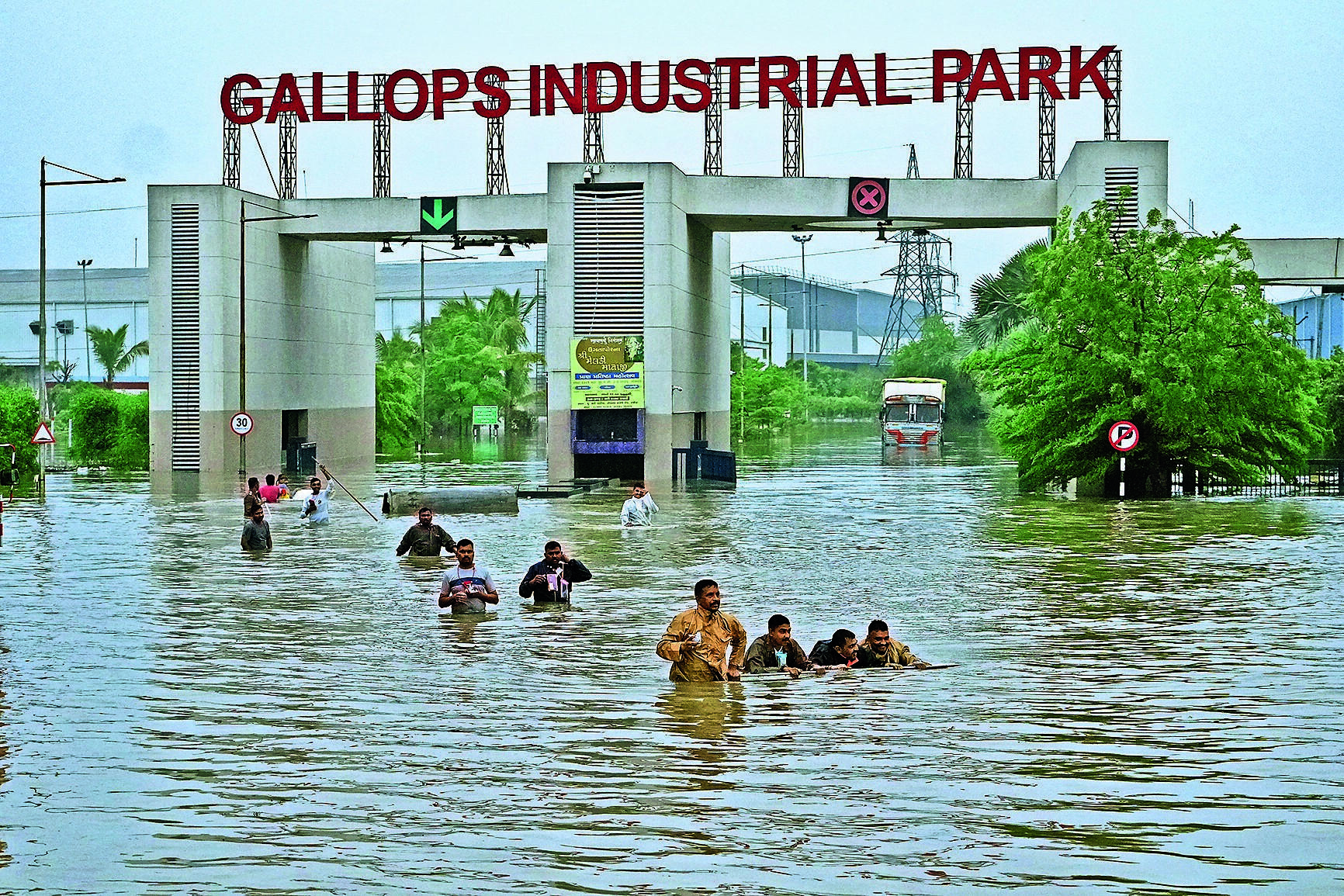
A severely flooded Gallops Industrial Park
Vijay Devkar, who had a shop in Sai Darshan market, suffered a loss of around Rs 70 lakh. “I have shifted business to the first floor in another building. A large stock was damaged ahead of the upcoming festive season. It will take me time to return to routine business,” Devkar told TOI.“The loss of material in the textile markets is huge. The festive season is just starting, and traders hope that flooding does not disrupt business again,” said Dinesh Katariya, secretary, Federation of Surat Textile Traders Association (FOSTTA).Transport severely impactedLogistics and transport in the wider region were also affected. In Vapi, dedicated truck parking lots were flooded, leaving hundreds of vehicles submerged for days. Transporters reported damage to goods in transit and waterlogging in warehouses in parts of south Gujarat which remained waterlogged for up to two days. Floodwaters entering industrial units in Vapi also caused significant damage, industry representatives said.
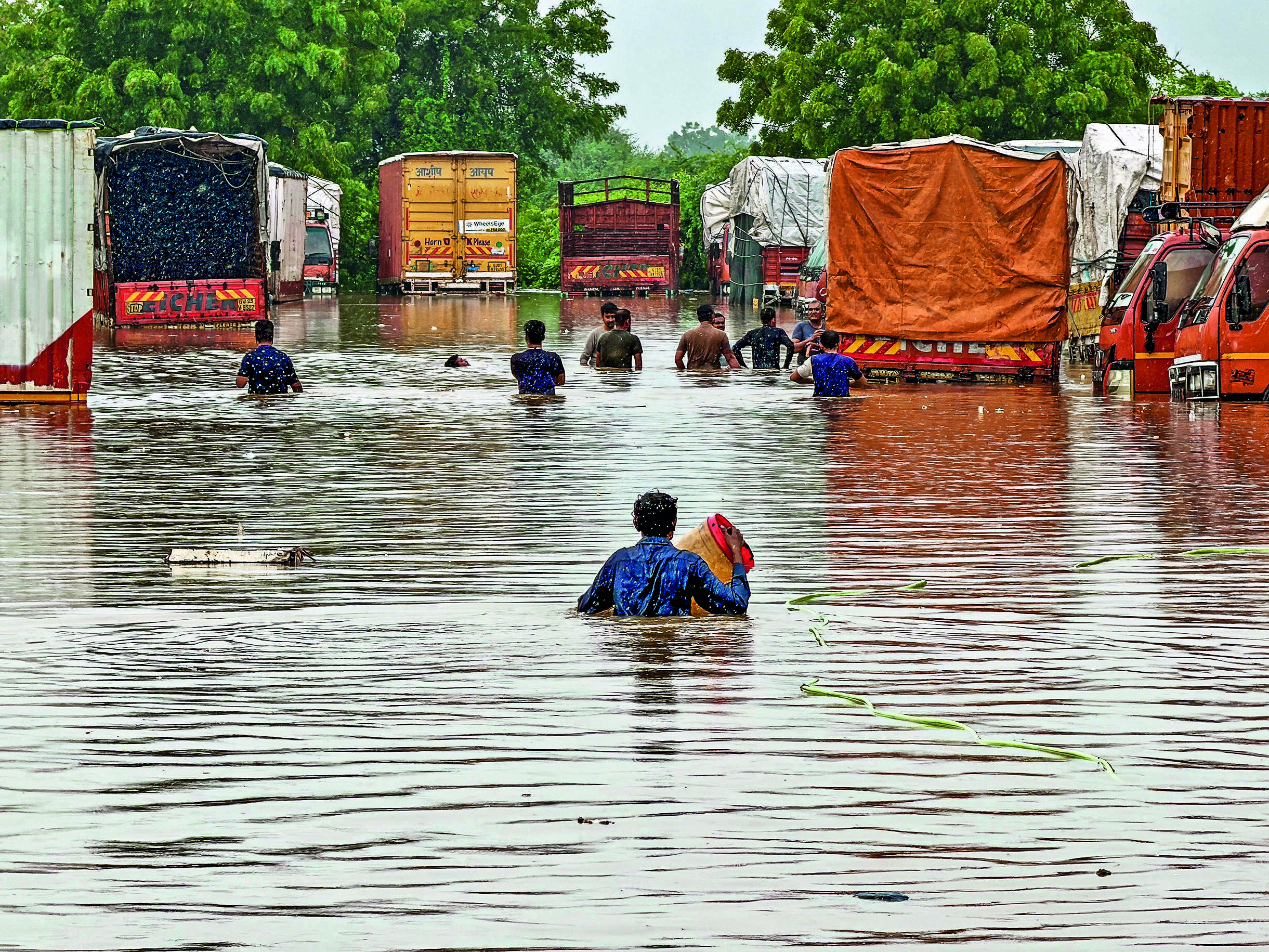
Hundreds of trucks remained submerged for days crippling supply chains
“For the first time in my 30-year career, I saw water in some industrial units. Trucks were half under water in a few parking lots in Vapi,” said Bharat Thakkar, vice-president, Akhil Gujarat Truck Transport Association.Blackouts prolong disruptionIndustrial estates in Changodar, Kerala and Sanand were cut off. Industrialists said prolonged power outages and utility failures kept factories shut for days after the rain stopped.In Kerala GIDC, floodwaters submerged a UGVCL substation, disrupting power from Friday to Sunday. Textile industrialist Rahul Shah said poor drainage has made flooding a recurring problem, with some factory premises, including pharmaceutical units, inundated by 3-5 feet of water.“Whenever power goes out suddenly, machines stop instantly, and it takes nearly three hours to resume production,” Shah said, adding that industries have repeatedly raised the issue without a lasting solution.In Sanand GIDC-II, waterlogging damaged underground power infrastructure and affected about 50 factories, according to the Sanand Industries Association. While most faced shutdowns for two to three days, 15-20 units remained closed for four days.A senior executive of a multinational manufacturing company said critical infrastructure remained damaged, with full operations potentially taking another two to three months to resume.The company estimated Rs 8-10 crore in asset damage, excluding production and delivery losses.SURAT RELIEF PACKAGECoverage: 7 categories, including lorries, handcarts, cabins and small/large shopsApplications received: 3,857 Financial assistance & loan subsidyAssistance: Up to Rs 1 lakh for affected businessesLoans: Subsidised loans of up to Rs 30 lakh to restart operationsInterest subsidy: 7% annually for three years on loans up to Rs 30 lakhCap: Even for higher loans or longer tenures, subsidy is capped at 7% on Rs 30 lakh for 3 years