







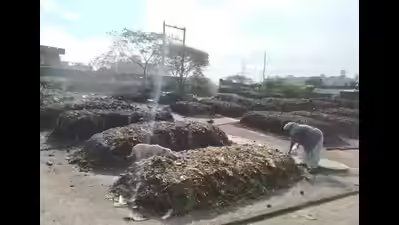
Chennai: Greater Chennai Corporation (GCC) plans to expand composting infrastructure to strengthen solid waste management across the city. A 1,000-tonne windrow compost plant will be set up on 20acres of biomined land at Perungudi dump yard under a public-private partnership model.In north Chennai, two additional composting plants, each with a capacity of 50 tonnes a day, will be established in Manali at a cost of 15 crore. Officials said the projects would enable scientific processing of wet waste and reduce pressure on landfills. The Perungudi facility is expected to serve the southern parts of the city, where the volume of biodegradable waste has steadily increased in recent years.“The windrow composting method, which involves decomposing organic waste in long rows under controlled aeration, will significantly reduce the amount of wet waste reaching landfills,” a senior GCC official said. “The compost generated can be used for horticulture, landscaping and agricultural purposes, contributing to a circular waste management system.”“The initiative at Manali is part of the corporation’s broader strategy to decentralise waste processing and minimise dependence on landfill sites. Chennai generates over 6,000 tonnes of solid waste every day, with a substantial portion comprising biodegradable material,” the official added.By expanding local composting capacity, the city aims to improve collection efficiency, lower transportation costs and reduce environmental impact.The projects also form part of efforts to modernise waste management infrastructure, promote sustainable disposal practices and enhance resource recovery. Experts welcomed the move, noting that decentralised composting is critical for cities grappling with mounting waste. “Large-scale composting facilities help divert organic waste from landfills, cut methane emissions and extend the lifespan of dumping grounds,” said R Sundararajan, an environmental expert.