






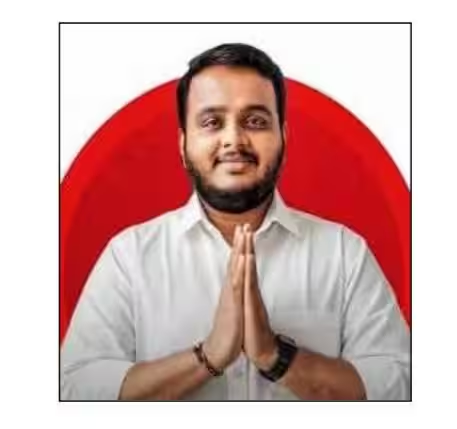
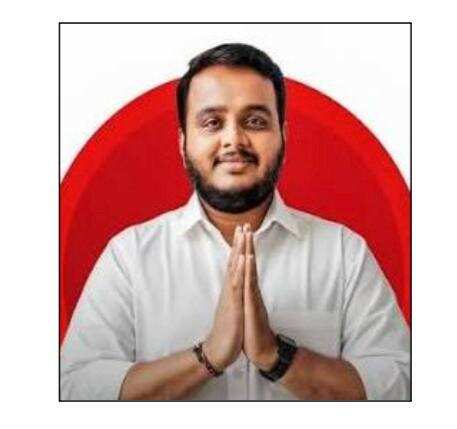
Pune: Chintakayala Vijay’s rise to the Rajya Sabha from Andhra Pradesh, where he was elected unopposed in June this year, is rooted in grassroots politics. Specialised governance education paved the way towards a political career, and TDP’s padayatras and youth wing activities helped him take on major leadership roles.A TDP leader and the party’s state general secretary, Vijay is an alumnus of the Master in Political Leadership and Governance programme at MIT School of Government, along with holding a master’s degree in political management. Formal education in political leadership, governance and public policy is emerging as a new career pathway for young people seeking to work in politics and public administration. The growing number of specialised programmes is creating opportunities beyond electoral politics, including legislative research, political consulting, campaign management, policy analysis, constituency management and government relations.Vijay said, “My journey began with grassroots political mobilisation and organisational work, including the TDP’s padayatras and youth wing activities, before I moved into a larger leadership role.” His recent entry into Parliament has put the spotlight on a relatively new career pathway in Indian politics: formal education in political management, governance and public policy alongside conventional party work.MIT School of Government, which completed 21 years, was among the early institutions in India to offer a structured programme specifically for aspiring political leaders. Its alumni include people working as elected representatives, political strategists, legislative assistants, campaign professionals and grassroots leaders. The institute’s own alumni records list Vijay as part of its MPG-06 batch.Rahul V Karad, executive president of MIT World Peace University, said the purpose of such programmes was to expose young people to the functioning of democratic institutions.“Governance today requires people who understand constitutional values, policymaking and public systems. Experiential learning and exposure to legislative processes can help young people make more informed contributions to public life,” Karad said.The curriculum in such programmes typically moves beyond political theory to include constitutional studies, public administration, legislative procedures, campaign management, political communication, policy research, field exposure gender and others. This is also creating roles for students who may not themselves enter electoral politics.The expansion of the sector is visible in Pune’s higher education landscape. Ajeenkya DY Patil University has recently started its School of Governance and Public Policy and launched ‘Loknetri’, an initiative with the Shweta Shalini Foundation aimed at preparing women for leadership through education and training.Ajeenkya DY Patil, chairperson of the university, said, “The new school would focus on strengthening women’s participation in nation building through education and training. He also pointed to artificial intelligence as a factor that would change the nature of jobs and create demand for new skills in governance and public life.”The Loknetri initiative is being positioned specifically as a platform for women aspiring to leadership. Shweta Shalini, president of the Shweta Shalini Foundation, said greater participation of women in political decision making required not only representation but also confidence and preparation.“The aim is to provide women with the opportunity and confidence to take up leadership roles,” Shalini said.The development points to a widening scope for governance education. Political analyst Subhash Karnik said, “Vijay’s transition from a governance classroom to the Rajya Sabha therefore represents one route, rather than the only outcome, of such education. The larger change is that political work is increasingly being viewed as a field requiring specialised skills, alongside grassroots experience and public engagement.”Maharashtra MLAs Hemant Ogale and Sumit Wankhede offer two more examples of formal governance education complementing political experience. Ogale, Congress MLA from Shrirampur and a former national office-bearer of the Indian Youth Congress, holds a Master’s in Political Leadership and Government from MIT School of Government, along with an MBA from PUMBA, SPPU. Wankhede, BJP MLA from Arvi, also holds a master’s in Political Leadership and Government from MIT-SOG, and spent over 16 years working with Devendra Fadnavis, gaining experience in administration, policy coordination and political affairs, before entering electoral politics in 2024. Together, their trajectories show how such programmes can complement different routes into public life, whether through grassroots political organisation or administrative and policy work.