









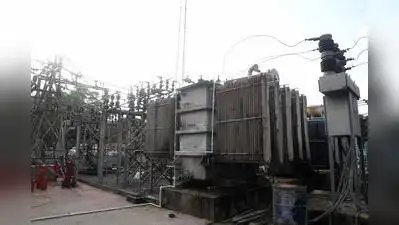
Gurgaon: Continuous rain that prompted the district administration to advise work from home also triggered repeated power outages across the city, disrupting business operations and official work.An analysis of DHBVN data shows the city’s high-voltage 33kV network remained largely stable, with no trippings reported, while the 11kV distribution network supplying residential societies witnessed 191 trippings and 239 interruption events across 1,261 feeders. Gurgaon-1 and 2 together recorded 13 breakdowns lasting over an hour, with the longest outage stretching five hours 10 minutes due to cable damage.As offices advised staff to work from home, residents complained that repeated outages interrupted virtual meetings, broadband connectivity, lifts and water supply, forcing many to rely on backup power. Data suggests that while the city’s higher-voltage distribution network withstood the heavy rain, vulnerabilities in the last-mile distribution network continue to disrupt electricity during every major spell of monsoon rainfall.Gurgaon-1 operates 46 operational 33kV lines and Gurgaon-2 has 40, together forming the city’s backbone transmission system. On the day of heavy rain, neither circle reported a 33kV line tripping, though Gurgaon-I recorded two breakdowns lasting over an hour — the longest on the 33kV Signature Global line, fed from the 220kV Sector 95 substation, which remained affected from 1.05am to 4.30am (three hours 25 minutes) due to a company-end fault. Gurgaon-2 reported no 33kV breakdown.The picture changed significantly at the 11kV level, which directly supplies electricity to neighbourhoods and group housing societies. Gurgaon-1 circle operates 528 feeders and Gurgaon-2 has 733, taking the city’s total to 1,261. These feeders recorded 191 tripping incidents, associated with 239 interruption events Friday.While utilities restored supply quickly in most cases — the average restoration time was about two minutes — prolonged breakdowns continued to inconvenience residents. Gurgaon-1 reported six breakdowns lasting over an hour, and Gurgaon-2 reported seven.The longest outage was on the 11kV Ghillawas-DS feeder in Gurgaon-1, where cable damage disrupted supply from 3.40am to 8.50am — five hours and 10 minutes. In Gurgaon-2, the 11kV Kanagarka-DS feeder remained affected for two hours and 26 minutes due to another cable damage incident. Maintenance records show the Ghillawas feeder was last serviced on June 5, and the Kanagarka feeder on July 24.Officials attributed most faults to rainwater ingress into cable joints, damaged underground cables, insulation failures, tree branches touching conductors and local equipment failures — issues that intensify during prolonged spells of heavy rain.For professionals working from apartments along Golf Course Extension Road, New Gurgaon, Dwarka Expressway and other residential clusters, repeated outages disrupted office work even where internet services remained functional.“My office asked everyone to work from home because roads were flooded. But we had three power cuts before lunch. The inverter supported only basic lights, while broadband and laptops kept shutting down during long outages. Client meetings had to be postponed,” said Rohit Sharma, a software engineer living in Sector 79.“It became impossible to attend back-to-back video conferences,” said Priya Mehta, a finance professional residing in Sector 65.Several RWAs said the interruptions also affected lifts, water pumps and mobile networks in high-rise societies, forcing residents to depend on diesel generators for extended periods.Power engineers maintained that restoration teams remained in the field throughout the day and that most faults were rectified as quickly as conditions allowed. Residents, however, said recurring feeder failures have become a familiar feature of every spell of intense rainfall, underlining the need for stronger underground cable protection and preventive maintenance ahead of the monsoon.