







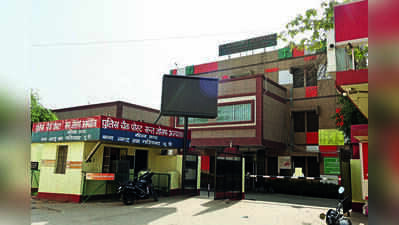
Ghaziabad: “Where would a father take his dying child to a hospital or a police station?” asks the father of a four-year-old girl who died after two hospitals refused to treat her even as she bled heavily after being sexually assaulted in Nandgram on March 16.The child died without treatment that night, on the way to the district hospital, a tragedy that was brought to Supreme Court’s notice through a petition from the father and has since been in jurisprudence as a headline case of cold medical apathy.“She died in my arms,” the child’s father, a daily wager, told TOI. “She was the youngest of my three children.” The trial against the main accused — a neighbour who allegedly lured the child with a treat, carried her to a nearby ground, raped her and bludgeoned her with a stone — is yet to begin.“Hospitals and doctors are meant to save lives. In our country, doctors are regarded as gods, yet they flatly refused to save my child. She was in severe pain and bleeding from several parts of her body, but doctors still declined to provide treatment,” he said.The case drew the sharpest of reactions from Supreme Court. In its first hearing on April 10, a bench of Chief Justice Surya Kant and Justices Joymalya Bagchi and Vipul M Pancholi said the case not only revealed a diabolical offence but also exposed an approach by the two private hospitals — Khajan Singh Manvi Health Care and St Joseph’s Hospital — that was “completely indifferent, inhuman, and insensitive”.After a court-instituted special investigation team (SIT) found credence in the charge that both hospitals had refused immediate treatment to the grievously injured child, Supreme Court asked the two hospitals to voluntarily compensate her parents. On July 17, it warned the hospitals that if they failed to pay the compensation voluntarily, it would impose costs that would have a “chilling impact”. On Aug 7, the court said it would consider issuing ‘must treat’ guidelines for hospitals in rape cases. The two hospitals have, meanwhile, told the court they will donate Rs 12 lakh to the girl’s family.
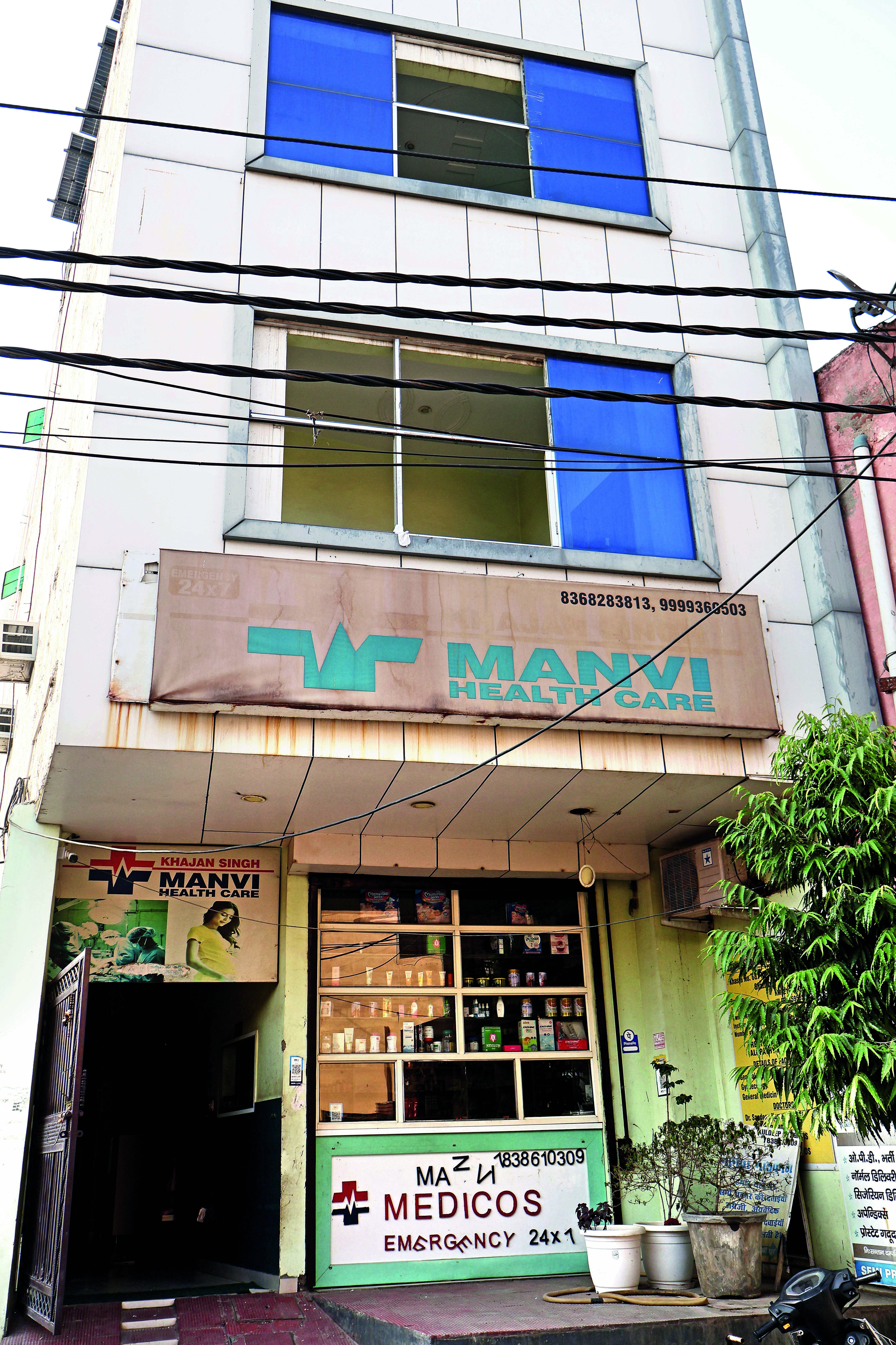
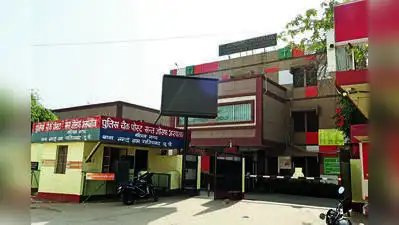
Khajan Singh Manvi Health Care Centre, where the child was first rushed to
The court gave a doctor, accused of refusing the child admission at one of the hospitals, a rap on the knuckles when he pleaded that he was only a Bachelor of Ayurvedic Medicine and Surgery (BAMS) practitioner with no wherewithal to treat such a patient. The bench said no doctor worth his salt would refuse treatment to a minor seriously injured because of brutal sexual assault. “What kind of doctor are you? If you cannot give medical assistance to a grievously injured child, do not prefix ‘Dr’ before your name. If you had any sensitivity, you would have facilitated her father to enable the child to get emergency medical care,” the bench said.In its July 30 hearing, the bench also observed that the hospitals had shown a complete lack of sensitivity and utter negligence in treating the injured child because she belonged to a poor family.The girl’s father told TOI the court should make an exemplary case so that no hospital refuses treatment to a patient. “No father should have to go through what I did. I stood there begging them, saying that my child was still alive, and asking them to please treat her. But they refused. My daughter kept bleeding, and they did nothing. She died in my arms, and I could not save her. It was the system that failed me,” he said.Ghaziabad chief medical officer Dr Sachin Vaishya said every healthcare facility is legally and ethically bound to provide immediate life-saving treatment in emergencies. “The first responsibility of any hospital is to provide basic life support to an emergency patient without waiting for any procedure or medico-legal intervention. Saving a life should always be the foremost priority,” he said.The legal obligation stems from Supreme Court’s landmark 1989 judgement in Pt Parmanand Katara vs Union of India, which held that preservation of human life is of paramount importance and that every doctor, whether in a govt or private hospital, has a professional obligation to provide immediate medical aid without waiting for police formalities or other legal procedures.Section 397 of the BNSS mandates that all public and private hospitals must immediately provide free first aid or medical treatment to survivors of specific violent and sexual crimes, and inform the police without delay.Despite this, hospitals still turn away patients or insist on a prior police case, citing systemic anxieties, bureaucratic habits and logistical loopholes. Doctors and hospital administrators fear being aggressively interrogated by police or repeatedly summoned to court as material witnesses, and insisting on an FIR upfront becomes a way to push the structural red tape on to police first.Crimes like sexual assault and accidents are classified as medico-legal cases (MLCs), requiring hospitals to document chain-of-custody forensic data. Any procedural errors before police arrive can expose them to accusations of mishandling evidence. Some private facilities also fear the cost of emergency surgery or intensive care for patients brought in without family or financial clearance.“Although the rules mandate that hospitals provide immediate basic life-saving support in emergency cases, many still hesitate due to fears of medico-legal complications. If healthcare workers are trained in basic life support but are unable to apply those skills promptly in emergencies, it defeats the very purpose of the training,” Ghaziabad additional chief medical officer Amit Vikram Singh said.Dr Shivkumar Utture, chairperson of Indian Medical Association’s medical students network, said medicine is a noble profession and the first duty of every doctor is to save a life. “Whenever a critically injured patient arrives, the hospital must immediately provide basic emergency care. The life-saving measures cannot be delayed because of police formalities or medico-legal concerns,” he said.While TOI’s attempts to reach both hospitals for comment on Supreme Court’s observations went unanswered, Shara Ashraf Prayag, a child rights activist who helped the father file his petition and accompanied the SIT on its visits to both hospitals, said Khajan Singh Manvi Health Care — where the child was rushed within 15 minutes of being found — did not administer basic first aid before referring her elsewhere.She said St Joseph’s, where the girl was taken about 20 minutes later, is a well-equipped charitable institution, “but the doctors there refused to treat the child”. She noted that a police post stood directly outside the facility, so cops could have been summoned within minutes had the medico-legal angle been a genuine obstacle.Lalit Goyal, a spokesperson for St Joseph’s, had earlier told TOI that the child was brought in by her attendants and remained in the emergency department for under five minutes, during which staff began assessment procedures and informed doctors, who were on their way to the unit. “However, before the examination could be conducted and treatment commenced, the attendants expressed concerns regarding the availability of adequate facilities and decided of their own accord to transfer the child to another healthcare facility,” he had said.Goyal claimed hospital staff had noted how critical her condition was, and said the absence of an ambulance or medical supervision during the subsequent transfer may have worsened her condition.