








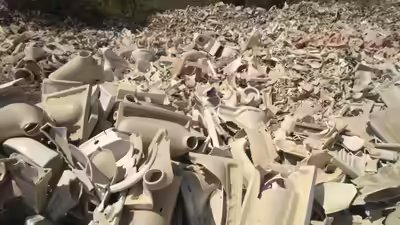
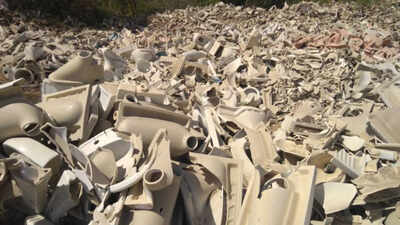
Things end up in landfills for a reason — no one has figured out how to make money from them. Metals rarely reach a dump. They have resale value, so an entire economy exists to recover every last kilo. What gets left behind is the material with no price tag and no buyer: fly ash, torn textiles, wilted marigolds, and plastic no one will touch.But almost none of it is actually worthless. Fly ash can partially replace cement and improve concrete’s performance in the right mix. Banana pseudostems contain cellulose that can make paper. Ceramic factory rejects don’t biodegrade for centuries, which is exactly what makes them the perfect raw material for recycled clay. Crop stubble, if decomposed instead of burned, produces richer manure than anything that comes in a bag. Farmers burn the stubble because no one offered them a better option.It was perhaps never a waste problem. It was a potential business hiding inside a nuisance — and it took a different kind of courage to find it. The courage of betting your career on waste when the safer path is a job offer and a steady salary. Thirteen startups across Gujarat and beyond made that choice — founded by people the waste sector never expected. Among them — a psychology graduate who builds bullet-tested construction blocks. An NID designer who recycles ceramics. A biotechnologist who left her PhD to make paper from banana stems. Call them redeemers.What industry left behindAditya Shukla drove past Ahmedabad’s Pirana landfill every morning until he couldn’t ignore it anymore. “I stopped seeing a landfill as a dump and started seeing a feedstock,” he says. “A resource in the wrong place.” His startup, co-founded with Sudhir Shukla, turns plastic, construction debris, and industrial byproducts into polymer composites that are three times lighter than concrete precast, with smaller carbon footprint.Abhishek Chhazed’s startup in Bharuch produces cement-free concrete from fly ash and steel slag. It also claims to emit 75 per cent less carbon. Instead of building factories, he supplies his technology to existing manufacturers. When a contractor dismissed his material as factory garbage, Abhishek pointed out that the man’s own concrete already contained fly ash and that no one had bothered to tell his clients. The contractor signed a trial order.
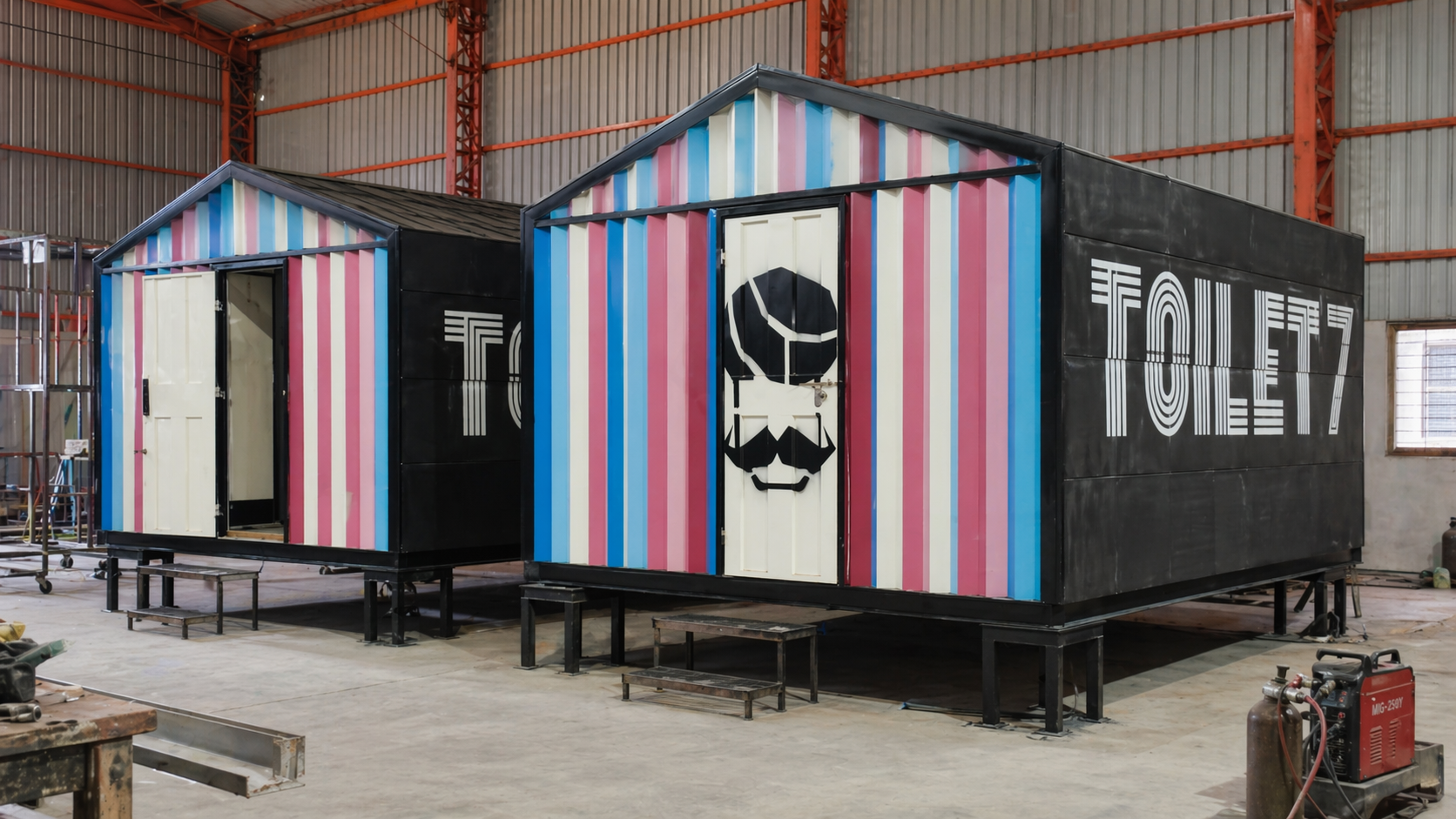
Nihar’s startup engineers industrial waste into an interlocking building material
Nihar Agarwal, trained in psychology and education rather than engineering, pushed the logic furthest: “It was never about the idea. What we really ended up building was a way to manufacture at scale.” Her startup in Halol engineers industrial waste into an interlocking building material that assembles without cement, mortar, or water. The construction blocks are bullet-tested, she says.Shashank Nimkar’s logic came from an unlikely place — archaeology. Ceramics don’t biodegrade for centuries. We excavate ancient sites and find intact clay utensils. That permanence is why ceramic factory rejects are so hard to dispose of — and exactly what makes them too valuable to throw away, he says. His startup crushes those rejects and blends them with fresh clay to create a mix. Potters and manufacturers use the mix, which contains 60% recycled waste. Manish Kothari, 57, the eldest of the 13 entrepreneurs, developed silica plastic blocks — foundry dust mixed with plastic waste — and then made a choice most founders wouldn’t. He refused to patent it. He says, locking up an environmental solution — which helps foundries become energy efficient — behind intellectual property, defeats the purpose he built it for. “Profit is not bad,” he says, “but unreasonable profit takes away your ethics.”Dignity of labourRiddhika Bhandari spent 15 days rag-picking in Ahmedabad’s slums before launching her startup. “The question going through my mind was — why? What is the compulsion for women to pick somebody else’s waste?” She collected textile waste from households, workshops, and factories — sanitized and segregated it — and handed it back to the same women who once picked it off the streets.They now stitch it into bags, pouches, and lifestyle products using Kantha embroidery, turning discarded fabric into handcrafted pieces that last decades. No external funding. No loans. Entirely self-sustaining from product sales. Her parents in Indore did not know what she was doing.
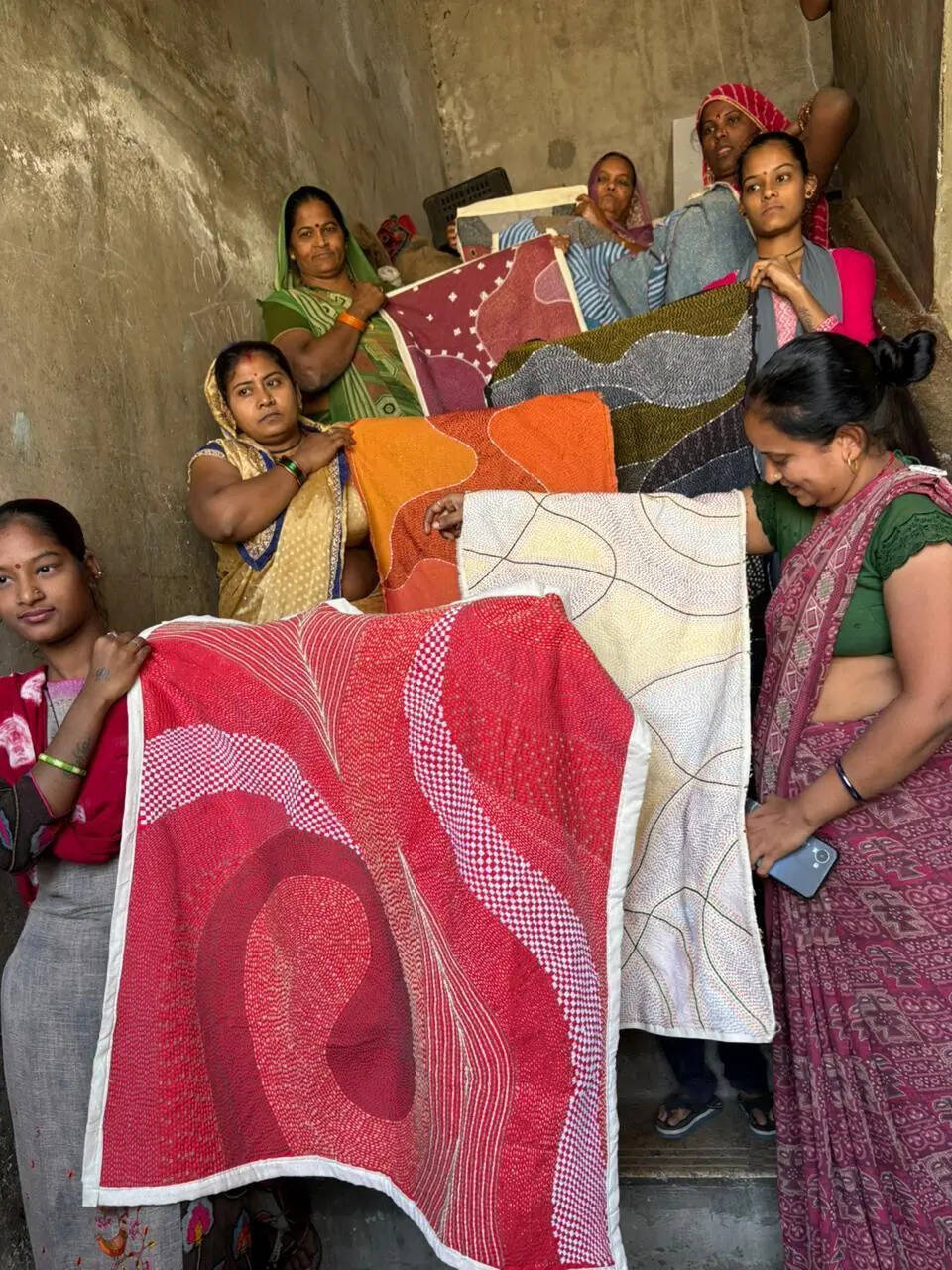
Riddhika Bhandari’s enterprise transforms discarded waste into lifestyle products
They only found out through newspaper articles. When they visited her centre at Ramapir no Tekro, they cried. The venture that started with seven women now employs 120. Pranav Gupta and Renu Pokharna from Ahmedabad observed that urban India’s surplus and the urban poor’s scarcity existed just a few kilometres apart. They built a circular marketplace: weekly bazaars where migrant workers buy pre-owned clothes for as little as 10 rupees, city bazaars for young thrifters, and a platform, where women upcycle what can’t be resold. Even the last scrap becomes a hand-stitched quilt.“For a customer, dignity doesn’t come from receiving,” Gupta says. “It comes from being able to choose.”What grew backRitu Jain first encountered paper made from elephant dung at her father’s printing press in Surat. The elephant dung idea wasn’t scalable, but the concept that paper could be made without cutting a single tree stayed with her. She found her raw material closer to home: banana pseudostems that South Gujarat’s farmers discard after every harvest, and cotton waste from Surat’s garment workshops.
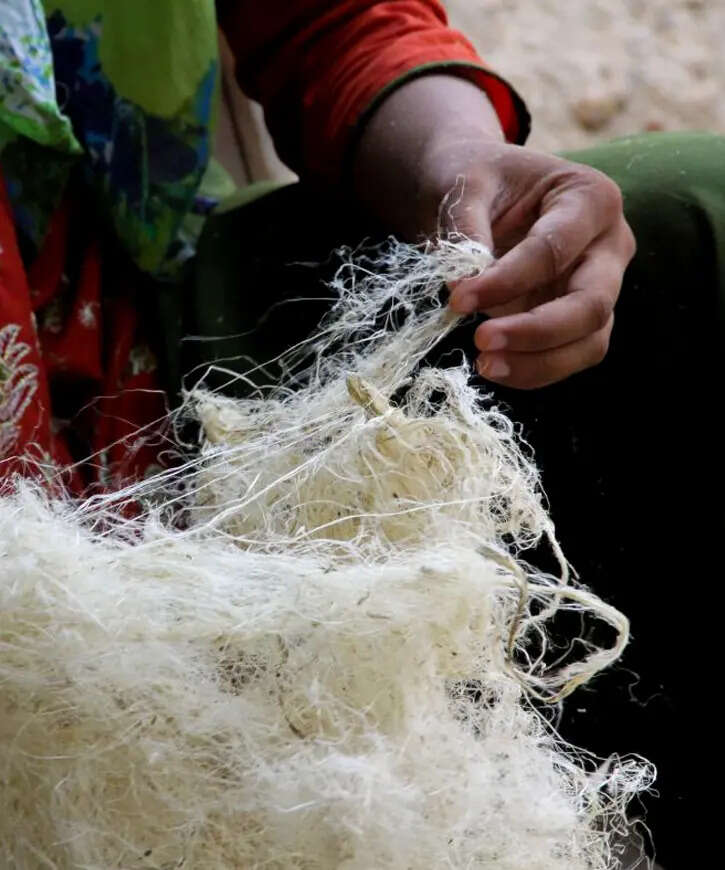
Ritu Jain’s venture makes banana-fibre paper
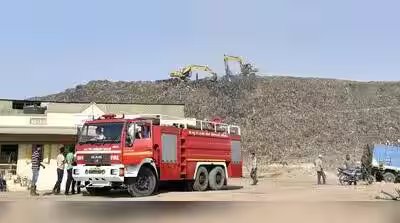
She now makes banana-fibre paper — wood-free, chemical-free, water-resistant and archival. She has kept her first imperfect sample in a drawer. “Paperdom is the most scientific work I have ever done,” says Jain, who left her PhD at IIT Bombay to “connect with life”.Jayesh Raninga spent 13 years in the pesticide industry, watching fields lose fertility and stubble burn. His microbial decomposer converts crop residue into manure in 30 days, with 50 grams doing what competitors need a kilogram to do. Last year alone, farmers used it across 10,000 acres of land, he says. Fuelled by convictionWhen Sunil Mahapatra first came to Ahmedabad, he saw what he thought was a hill. It was a landfill. He wanted to turn organic waste into fuel. But for a mechanical engineer, choosing waste over a conventional career invited ridicule. People called him “kachra seth” — the garbage man. His father, a contractual labourer, never once pressured him to find a safer path. He built a startup and pivoted it four times: from composting units to waste services to biogas to Bio-CNG, each model born from the limits of the last. The startup’s co-founder, Vikas Mishra, left a position at Pfizer to join him. Today, the startup employs 200-plus people, holds seven patents, and processes 100 tonnes of organic waste daily.Shashank Noronha spent nine years in Mumbai making liquid cleaners before realising the absurdity: these products are 90 per cent water. Sustainability, he admits, “was not the core aim on day one” — reducing logistics costs was. The result: a 10-gram biodegradable tablet, 30 per cent cheaper than existing options. Today, his startup operates a logistics network across Ahmedabad, Anand, Vadodara, Valsad, and Gandhinagar.What the gum unstuckBinish Desai was 16 when he left his home in Valsad with just Rs 600, driven by a curiosity that had begun years earlier. When he was 11, chewing gum stuck to his trousers, and he pressed a scrap of paper onto it, noticing how firmly they bonded. That sparked a bigger question: if gum and paper could form something solid, what else could be created from materials people threw away?

Binish’s startup now has 170+ products across 200-plus waste types. Temple flowers become decor. POP idols become study tables
He built his first house from waste bricks for Rs 27,000. Then, 20 patents later, he didn’t build a product line — he built a library. His startup now has 170+ products across 200-plus waste types. Temple flowers become decor. Plaster-of-Paris Ganesha idols become children’s study tables. During Covid, he set up a skill centre in Bhiwandi’s red-light area. When he bought the first product made there, the woman who crafted it was in tears. “She called it her first honourable income,” he says.The quiet multiplierKetul Patel doesn’t make anything from waste. In Dharavi in 2017, he realized that what looked like informal chaos was a deeply organized economy. His startup helps circular-economy startups do what they’re often worst at: finding markets, building partnerships, and making the business case to buyers who don’t yet trust recycled materials. There is a line that Aditya Shukla uses when people ask what kept him going after Covid destroyed his first attempt — the deal that collapsed, the employees who left, the nights in bus stations with no team and no plan. “Courage,” he says, “was the one resource I never ran out of.” Waste, it turns out, was always the wrong word.Reimagining an opportunityAll 13 startups featured above are profiled in “From Waste to Wealth: Start-ups Turning Trash into Treasure in and around Gujarat”. At its heart, the book conveys that waste is not the end of a lifecycle but the beginning of a new value chain. “We spent months in the field because we believe that stories of transformation can spark new ideas,” says Dr Bindiya Soni, professor at AIMIS-MBA, who has authored the book with assistant professor Dr Komal Shukla. Their work shows waste not as an environmental liability, but as a billion-dollar economic opportunity. “While academic discussions on waste management are increasing, there is a void in documenting genuine stories from Gujarat, where businesses are now strategically integrating sustainability into their DNA,” says Dr Soni. The documentation serves as a critical blueprint for the future, they say.