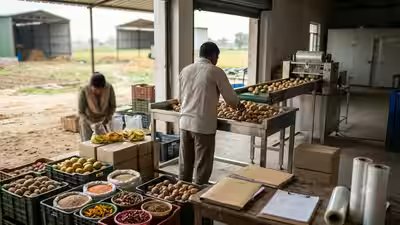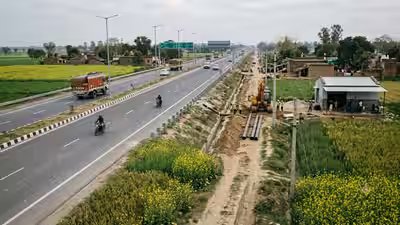








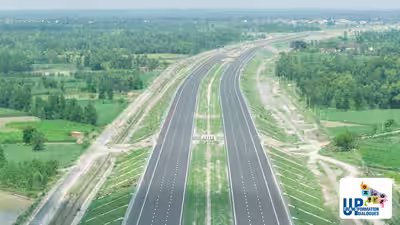
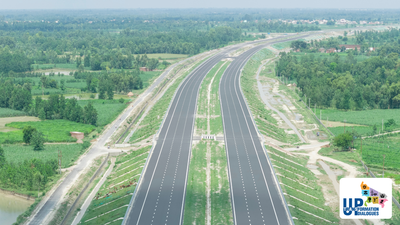
Number of Expressways developed and built by Yogi government not only augmented the connectivity, but also added to the social milieu, economic development and the growth of respective region.Over the last nine years, Uttar Pradesh has emerged as India’s undisputed leader in expressway development, creating one of the country’s largest high-speed road networks hence aptly named as ‘Expressway state’ of the country. What makes this transformation remarkable is that these expressways are not merely transportation corridors; they have become powerful engines of economic growth, connecting previously underserved districts with major markets, industrial centres, airports and logistics hubs. Today, around 35 odd districts are directly connected through operational expressways, bringing unprecedented opportunities for investment, employment, tourism and agricultural prosperity.The state’s strategy has been to use expressways as catalysts for balanced regional development rather than concentrating growth in a few metropolitan centres. By linking western, central, eastern and Bundelkhand regions, the government has laid the foundation for a more integrated and competitive state economy.The Ganga Expressway, stretching nearly 594 kilometres from Meerut to Prayagraj, represents the most ambitious example of this vision. Passing through districts such as Meerut, Hapur, Bulandshahr, Amroha, Sambhal, Badaun, Shahjahanpur, Hardoi, Unnao, Rae Bareli, Pratapgarh and Prayagraj, it has dramatically reduced travel time between western and eastern Uttar Pradesh. What once required nearly eleven hours can now be completed in about six hours. More importantly, the corridor is being developed as an industrial and logistics belt, with warehousing facilities, manufacturing units and investment proposals worth thousands of crores expected to generate employment across multiple districts. For farmers, the expressway offers quicker access to wholesale markets, reducing transportation costs and post-harvest losses.The Agra-Lucknow Expressway has transformed the economic geography of central Uttar Pradesh. Connecting Agra, Firozabad, Mainpuri, Etawah, Auraiya, Kannauj, Kanpur Nagar, Unnao, Hardoi and Lucknow, it has significantly improved connectivity between the state capital and western Uttar Pradesh. The corridor has encouraged industrial investments while benefiting agricultural districts through faster transportation of vegetables, potatoes, milk and other perishable commodities. Better connectivity has also enhanced tourism by linking Agra’s world-famous monuments with Lucknow’s cultural heritage and further connecting visitors to eastern Uttar Pradesh.The Purvanchal Expressway has become a lifeline for eastern Uttar Pradesh. Connecting Lucknow with Barabanki, Amethi, Sultanpur, Ayodhya, Ambedkar Nagar, Azamgarh, Mau and Ghazipur, it has brought districts that were once considered geographically isolated much closer to the state’s economic mainstream. Industrial parks, logistics centres and new commercial activities are emerging along the corridor. The expressway has also played a significant role in boosting religious tourism to Ayodhya, while providing textile centres such as Mau and agricultural districts like Azamgarh and Ghazipur with faster access to larger domestic markets.Perhaps no region has experienced a more profound change than Bundelkhand through the Bundelkhand Expressway. Covering Chitrakoot, Banda, Mahoba, Hamirpur, Jalaun, Auraiya and Etawah, the expressway has addressed one of the region’s biggest developmental challenges—poor connectivity. Bundelkhand’s agricultural produce, stone industry and handicrafts can now reach markets far more efficiently. Improved access has also enhanced tourism to religious destinations like Chitrakoot while encouraging industrial investment in a region that historically lagged behind the rest of the state. The expressway’s integration with the Agra-Lucknow Expressway has connected Bundelkhand directly to Delhi and the National Capital Region.The Yamuna Expressway continues to serve as one of the state’s busiest economic corridors. Passing through Gautam Buddha Nagar, Bulandshahr, Aligarh, Hathras, Mathura and Agra, it has accelerated urbanisation, industrialisation and tourism. The emergence of the Noida International Airport at Jewar has further increased the strategic importance of districts along this route. Manufacturing units, logistics parks, electronics industries and real estate developments are rapidly expanding, while religious tourism to Mathura and Vrindavan and international tourism to Agra continue to receive a major boost.In eastern Uttar Pradesh, the Gorakhpur Link Expressway has further strengthened regional connectivity by linking Gorakhpur with the Purvanchal Expressway through Sant Kabir Nagar, Ambedkar Nagar and Azamgarh. This shorter but strategically important corridor has substantially reduced travel time between Gorakhpur and Lucknow, improving access for businesses, educational institutions and healthcare services. It also strengthens trade links with neighbouring Bihar and Nepal.Several districts enjoy the unique advantage of being connected by more than one expressway. Districts such as Lucknow, Agra, Meerut, Gautam Buddha Nagar, Unnao, Ambedkar Nagar, Etawah, Azamgarh and Auraiya are emerging as multi-modal growth centres because of their strategic location within the expressway network. These districts are attracting greater industrial investment, logistics facilities and commercial development than ever before.The impact extends well beyond transportation. Improved connectivity has encouraged private investment in hotels, restaurants, fuel stations, warehouses and logistics parks. Land values have appreciated in many districts, while new employment opportunities have emerged in construction, manufacturing, transport and service sectors. Educational institutions and healthcare facilities have become more accessible, improving overall quality of life.Agriculture has also witnessed substantial gains. Farmers are able to transport fruits, vegetables, milk and other perishable products to urban markets much faster, helping them secure better prices while reducing wastage. Lower logistics costs have improved the competitiveness of Uttar Pradesh’s agricultural produce, supporting the state’s ambition to become a major food processing hub.The expressway network is also laying the groundwork for future industrial expansion. Integrated Manufacturing and Logistics Clusters, industrial nodes and warehousing zones planned along these corridors are expected to attract significant domestic and global investments. Upcoming projects such as the Vindhya Expressway and other proposed corridors will extend these benefits to even more districts, ensuring that economic growth reaches previously underdeveloped regions.Uttar Pradesh’s expressway revolution demonstrates how modern infrastructure can transform entire regions rather than merely reducing travel time. By connecting districts to markets, industries, airports and tourism destinations, these high-speed corridors have become powerful instruments of inclusive development. As the network continues to expand, expressways are set to play an even greater role in achieving balanced regional growth and supporting Uttar Pradesh’s aspiration of becoming a trillion-dollar economy.