







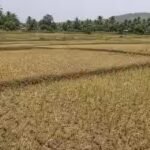


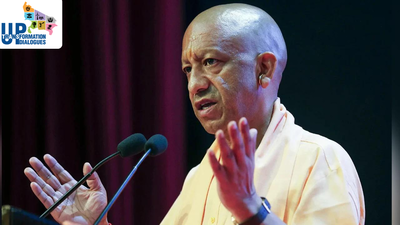
Located along the India–Nepal border in eastern Uttar Pradesh, Bahraich has long been defined by its fertile agricultural plains, rich Terai forests, and cultural heritage. Yet for decades, this border region was equally characterized by deep-seated poverty, inadequate infrastructure, limited industrialization, and weak social indicators.Recognizing these historical bottlenecks, NITI Aayog included Bahraich in its Aspirational Districts Programme in 2018, initiating a multi-sectoral push toward outcome-driven governance and localized development.In July 2026, Uttar Pradesh Chief Minister Yogi Adityanath highlighted this ongoing transformation, noting that Bahraich has evolved from an ‘Aspirational District’ into an ‘Inspirational District’. While this phrasing reflects state assessments rather than a formal reclassification by NITI Aayog, it underscores a tangible shift in the region’s overall development trajectory. Through targeted investments across infrastructure, agriculture, human capital, and eco-tourism, Bahraich is converting its frontier location into a strategic economic asset.The primary catalyst behind Bahraich’s emergence is a rapid upgrade in physical infrastructure. Positioned adjacent to Nepal, the district serves as an essential transit corridor for cross-border trade, freight movement, and regional logistics. Road connectivity has been significantly enhanced through highway widening, better district roads, and expanded rural feeder routes. A major milestone in this effort came with the Union Cabinet’s approval of the four-lane, access-controlled Barabanki–Bahraich section of National Highway-927. This key project is expected to reduce travel time between Bahraich and major administrative hubs to nearly one hour. In doing so, it improves freight routing, boosts tourism access, and lowers transport costs for local produce, integrating remote agrarian communities directly into broader commercial networks.Agriculture continues to be the foundation of Bahraich’s economy, but the sector is undergoing a steady shift from subsistence farming toward market-oriented value addition. Central to this transition has been the expansion of Farmer Producer Organisations. These collectives aggregate smallholder farmers to improve bargaining power, lower input costs, and provide direct access to larger commercial buyers. Farmers are increasingly moving beyond traditional crop rotations into high-value horticultural commodities, including controlled-environment mushroom cultivation and scientific turmeric farming.Furthermore, the introduction of localized cold-storage units and scientific crop residue management has curbed post-harvest losses while creating secondary income streams. Rural livelihoods have been further strengthened by women’s Self-Help Groups, which have expanded into bamboo handicrafts, micro-food processing, and direct agricultural marketing to establish sustained employment and financial independence among rural women.Sustained economic growth relies heavily on progress in primary healthcare and basic education, both of which are core metrics monitored under the Aspirational Districts framework.Bahraich has focused on strengthening primary health centers, boosting institutional deliveries, and expanding childhood immunization coverage. Enhanced last-mile monitoring by frontline health workers has led to measurable improvements in maternal care and early childhood nutrition indicators across remote border villages.In the education sector, government schools have undergone substantial physical and operational upgrades through state initiatives like Operation Kayakalp. Classrooms have been equipped with fully functional sanitation complexes, reliable drinking water, stable electricity access, and digital learning tools. Real-time monitoring systems have been put in place to track student enrollment and daily attendance. These structural improvements have helped lower dropout rates and created a far more conducive environment for primary education across the district.Beyond agriculture and core public services, Bahraich has deepened its local economy through expanded financial inclusion and vocational training. The expansion of rural banking networks, digital payment systems, and skill-development programs has equipped local youth to establish micro-enterprises outside traditional farming. At the same time, the district is leveraging its unique cultural and natural assets to build a viable eco-tourism and heritage economy. Sites like the Dargah of Ghazi Saiyyad Salar Masud draw significant pilgrimage traffic, while the Katarniaghat Wildlife Sanctuary, with its dense forests and river ecosystems, positions Bahraich as an emerging eco-tourism destination within Uttar Pradesh’s broader tourism landscape.Historically, border districts have faced distinct developmental challenges related to geographical isolation and administrative delivery. Today, however, Bahraich’s location along the Nepal border is increasingly viewed as a distinct commercial advantage. Improved law and order, transparent digital governance, and upgraded border infrastructure have combined to create a safer and more efficient environment for trade and regional logistics.Bahraich’s evolution illustrates the impact of focused development strategies that combine infrastructure expansion, agricultural modernization, healthcare improvements, and human capital investments.While long-term challenges related to large-scale industrialization and youth employment remain to be fully addressed, the district’s progress demonstrates how sustained monitoring and targeted public policy can improve outcomes in historically underdeveloped regions. By continuing to build on its infrastructure and local resources, Bahraich has set itself on a clear path toward becoming an important center of inclusive and sustainable growth in eastern Uttar Pradesh.