









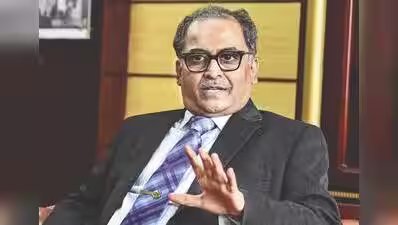
The current financial year 2026-27 will mark a milestone for Chennai-headquartered Indian Overseas Bank (IOB) as it prepares to announce dividends after a gap of 12 years. TN contributes to one third of the business, and makes up a third of the state-owned lender’s 3,526 branches. In an interview, MD and CEO Ajay Kumar Srivastava spoke about the bank’s growth, expansion and new initiatives in TN. Excerpts:Q: Why will FY27 be a landmark year for IOB?A: The last financial year in which we paid a dividend was 2013-14. Since 2015, the bank had been under prompt corrective action (PCA). Several accounts turned into non-performing assets (NPAs), and the bank suffered losses for 18 consecutive quarters until Dec 2019. As a result, the quarterly losses accumulated on the balance sheet. By March 2020, the accumulated losses had reached approximately Rs 20,000 crore. If accumulated losses remain on the balance sheet, a bank is not permitted to declare a dividend. So, this regulatory requirement prevented us from declaring dividends despite the bank performing very well over the last three to four years. The accumulated losses were wiped out in April, or during the first quarter of the current financial year, after the share premium adjustment.Q: What does the resumption of dividend payouts mean for shareholders?A: Many of our investors and shareholders have been regularly asking when the bank would be able to declare dividends. They would say that their investment was not yielding any returns. I think this will address those concerns, provide comfort, and generate greater investor interest in the bank’s shares.Q: Tamil Nadu’s annual credit plan (ACP) for FY27 has been fixed at more than Rs 10.9 lakh crore, marking a 12% y-o-y increase over the previous year’s ACP of Rs 9.8 lakh crore. How do you see the increase reflecting on the priority sectors?A: Tamil Nadu is a very forward-looking state. If you look at the state’s credit-deposit (CD) ratio, it is in excess of 100%. So, a lot of lending happens here, particularly to MSMEs.Q: How do you view the MSME sector in the current year, particularly in TN, in terms of credit exposure?A: In Tamil Nadu and other parts of the country, MSME growth is strong and we do not see any lack of demand. This is because several Union govt-sponsored schemes are available. We have been receiving proposals even from tier-2, tier-3 and tier-4 cities and towns this year. We have MSME-focused branches in TN. Another initiative is creating sector-specific clusters, such as the textile cluster near Coimbatore and the automobile cluster in Sriperumbudur near Chennai. There are seven to eight such clusters in the state and nearly 40 across the country. For each cluster, we have designed tailor-made products based on its requirements. Each cluster covers one or two districts, and all MSME units engaged in that particular activity within the cluster area are eligible. These units get easier access to credit at nominal interest rates and lower processing fees. Compared with regular loans, the sanction terms under the cluster scheme are also more liberal, and we are seeing good traction.Q: What are IOB’s growth initiatives in TN this year?A: We have taken several initiatives, one of them being cluster financing for MSMEs. We have 15 regional offices in TN. Two new regional offices came up at Nagapattinam and Tirupur last fiscal, and another in Tiruvallur in April this year. All branches under Tiruvallur regional office are located within the district. Normally, each regional office oversees branches spread across two to four districts. We expect to open more regional offices by Dec or Jan, depending on the number of branches. In Q1FY27, we opened 30 branches. Another 160 branches are planned across India during the current financial year. Of these, around 30% to 35% will be in TN.Q: How does Tamil Nadu fit into IOB’s expansion plans?A: We have a total of 3,526 branches, of which one-third are located in Tamil Nadu. The state is flourishing and its people are progressive. The govt supports industry, and banks also find it very comfortable to lend here. There is a healthy credit and repayment culture. Our branches are confident about lending because the money is safe, and productive assets are being created.