







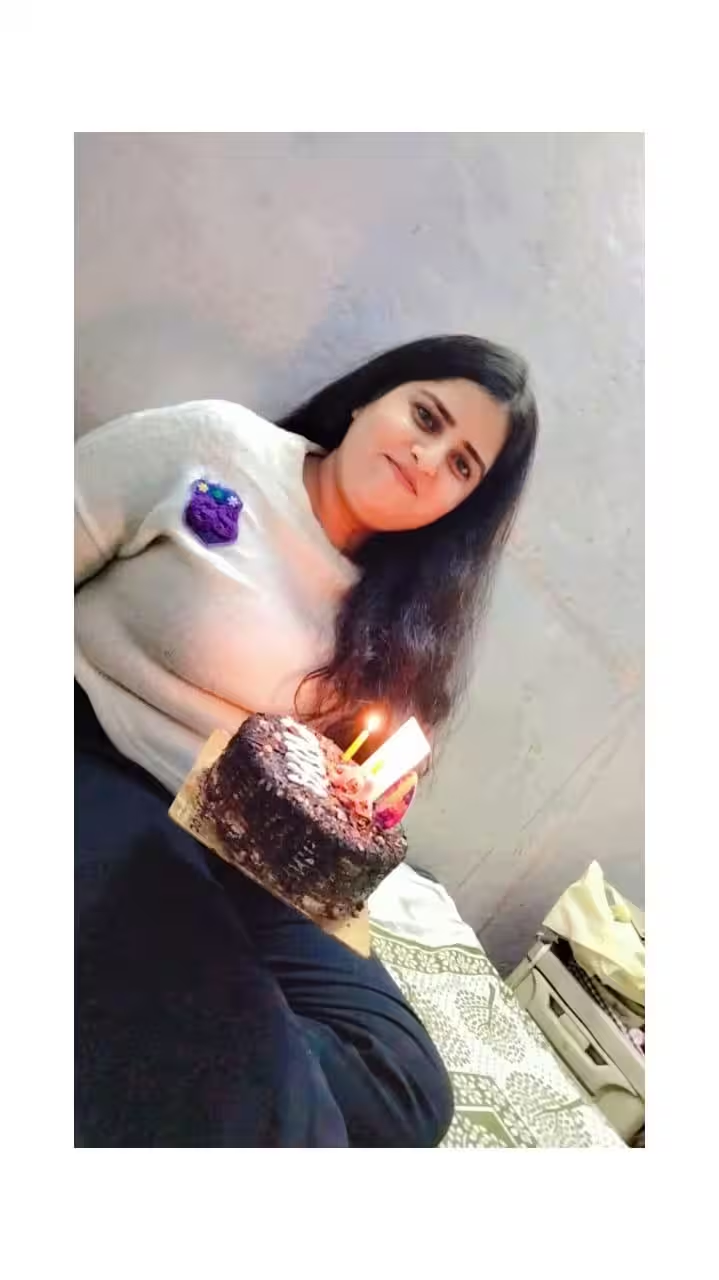
New Delhi: For a week, Priyanka Yadav’s family waited outside her hospital room, hoping the 26-year-old would recover from the severe head injuries she suffered in a road accident while returning from a trip to Nainital.The Ghaziabad resident, who worked as an executive in the HR department of a private company in Noida, had been battling for life since the accident. When doctors declared her brain dead, her family was confronted with one of the hardest decisions of their lives.“Watching Priyanka’s condition deteriorate every day was heartbreaking. We knew we couldn’t save her. Then we thought, if her organs could save someone else’s life, why shouldn’t we? Our sister was gone, but through her organs someone else could live. That is what gave us the strength to say yes,” her elder brother Abhishek Yadav told TOI.The family donated Priyanka’s kidneys, liver, heart valves and corneas, giving several patients awaiting transplants a second chance at life.On Saturday, they were among 38 donor families honoured by the Organ Retrieval Banking Organization (ORBO) at AIIMS Delhi for choosing organ, tissue and whole-body donation despite their personal loss.Priyanka’s family was among several honoured for transforming personal tragedy into hope for patients awaiting transplants. The family of 23-year-old Sagar, who died after his motorcycle skidded on the road, said donating his kidneys, liver, heart valves and corneas reflected the kind of person he had always been, someone who was always willing to help others.Addressing the ceremony, AIIMS director Prof Nikhil Tandon said every organ donation offers a new lease of life to patients with end-stage organ failure. “To take such a decision in the midst of personal grief is a noble act that grants new life to many and stands as a testament to human compassion,” he said, urging people to overcome myths surrounding organ donation.Prof Aarti Vij, professor in-charge, ORBO, said every successful organ donation requires seamless coordination among donor families, transplant coordinators, treating physicians, transplant teams, forensic authorities, laboratory services and the police.She said ORBO has instituted mandatory notification of every death at AIIMS, enabling coordinators to identify potential donors round the clock. The organisation has also trained 1,356 resident doctors and 1,463 critical care nurses in organ donation protocols and regularly conducts public awareness campaigns.This year, ORBO also honoured four people who had pledged to donate their bodies during their lifetime, recognising another form of donation that supports medical education and research.AIIMS observed Organ Donation Fortnight from July 14 to Aug 1 with public awareness campaigns, school competitions, organ pledge drives and training programmes to encourage more families to come forward for organ and tissue donation.