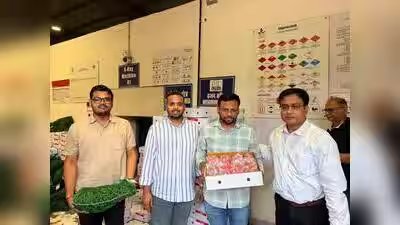









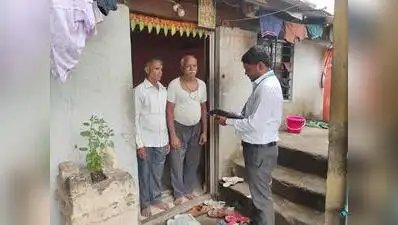
Pune: When a National Statistical Office (NSO) field investigator recently visited a gated housing society in Kothrud for a household survey, security personnel blocked his entry until his identity could be verified. Wary of rising cyber fraud, residents—unaware of the Centre’s statistical exercises—were hesitant to share information, fearing a potential impersonation attempt.Currently, approximately 10,000 households across nine districts under the NSO’s Pune Regional Office are being surveyed for India’s first-ever National Household Income Survey (NHIS), which commenced in April. NSO officials stated they had submitted formal notification letters regarding the exercise to the Pune Collector, the Pune Municipal Corporation (PMC) Commissioner, and city police commissioners in early March.“There is an urgent need for greater public awareness. People are naturally cautious due to the rise in cybercrime. We encourage citizens to verify our identity, but once satisfied, we urge them to cooperate. These surveys are critical for official statistics and national policymaking,” an NSO official told TOI.The survey is being conducted across nine districts: Pune, Ratnagiri, Solapur, Sangli, Satara, Dharashiv, Kolhapur, Ahilyanagar, and Sindhudurg. Both rural and urban households are included in this year-long exercise, which will continue until March next year.The NSO, functioning under the Ministry of Statistics and Programme Implementation (MoSPI), is currently conducting a wide range of surveys in Maharashtra. These include household surveys such as the periodic labour force survey (PLFS), the national household income survey (NHIS), all India debt and investment survey (AIDIS), situation assessment survey (SAS) of agricultural households, and migration particulars survey.Other NSO-led operations include annual survey of industries (ASI), annual survey of unincorporated sector enterprises (ASUSE), annual survey of incorporated service sector enterprises (ASISSE), and rapid survey of functional cooperatives (RSFC). Officials added that data is also being collected for the consumer price index (CPI), wholesale price index (WPI), index of industrial production (IIP), urban frame survey (UFS), and improvement of crop statistics (ICS) scheme.Despite the scale of these operations, many urban residents remain unaware of them. “We are familiar with the Census, but we are completely in the dark regarding these other surveys. Without prior information, how can we allow surveyors into our societies?” questioned a Kothrud resident.Officials said these surveys are sample-based, using scientific methods to select specific villages, urban blocks, and households. While every district is not covered simultaneously, the combined data generates representative statistics for the entire state.The PLFS provides India’s official employment estimates, while the NHIS and AIDIS track income patterns and household debt. Enterprise surveys generate industrial statistics, and price collection helps the government measure inflation and calculate GDP.Officials said the field investigators never ask for Aadhaar numbers, bank passwords, OTPs, PINs, or other confidential credentials. They clarified that all information collected is kept strictly confidential, is never shared with other departments, and is used solely for statistical purposes.To streamline the process, the NSO coordinates with district collectors, commissioners, and the police. Field investigators also inform local police stations before starting work in a neighborhood. “Wherever required, housing societies are informed in advance and necessary permissions are obtained before surveys begin,” officials added.Every authorised surveyor carries an official government identity card and, where applicable, an authorization letter. Citizens can verify the credentials of survey teams by contacting the NSO regional or sub-regional office or by visiting the MoSPI website before participating. Officials said requests for verification have increased in recent years; they welcomed such caution but urged citizens to cooperate once satisfied, as reliable official statistics depend on public participation.