









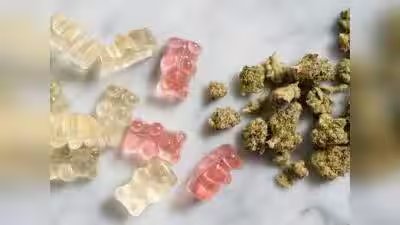

Hyderabad: Cannabis-infused gummies, oils and other products marketed as ‘wellness’ supplements by online platforms have come under the scrutiny of Elite Action Group for Drug Law Enforcement (EAGLE) and the Narcotics Control Bureau (NCB), triggering questions over whether licences and online prescriptions cited by sellers can shield such sales from action under narcotics, excise, drug and food safety laws.The focus on these platforms emerged during an investigation by the Rachakonda Narcotics police station under the Narcotic Drugs and Psychotropic Substances (NDPS) Act. Police said an accused in the case revealed that he had stopped procuring ganja physically and had instead begun purchasing ‘weed gummies‘ through an online platform.EAGLE director Sandeep Shandilya said the agency had written to the NCB seeking action against such websites. Raising concerns over prescriptions allegedly issued remotely to customers, he said: “How can somebody sitting in Delhi prescribe to a person sitting in Hyderabad.” He added that the products would need to be scientifically examined to determine whether they contained tetrahydrocannabinol (THC), the principal psychoactive compound in cannabis.Gummies ordered onlineThe FIR names Samala Prithviraj, 28, an artist, and Mohammed Yaheyaullah, 22, a student. According to investigators, Prithviraj told police that he came across an advertisement for weed gummies while watching Instagram reels and subsequently placed two orders through a website.To avoid linking the deliveries to his residence, he allegedly used the address of a nearby shop. Police said payments were made through different unified payments interface (UPI) modes, leaving a digital transaction trail.According to the investigation, Prithviraj received his second order on May 13. The parcel allegedly contained 15 gummies worth around Rs 2,500, of which he consumed 12 before being apprehended. Police subsequently conducted an ABON urine drug detection test. Investigators said he also disclosed that he had been consuming ganja for the past seven years and claimed the habit began while working with a film production team.Licensing claims under scrutinyThe Delhi-based platform mentioned in the case advertised gummies containing cannabis extract concentrations of 5%, 7.25%, 9.26% and 13%. One of its products listed cannabis extract, water, pectin, citric acid, cola flavour and fructooligosaccharide sweeteners among its ingredients. Another gummy listed cannabis extract and berry flavour, while a ‘stress buster‘ oil claimed to contain 800 mg of major cannabinoids, 13.3% cannabis extract and medium chain triglyceride oil.The seller claimed to possess an Ayush manufacturing licence, a free sale certificate and a state excise licence, in addition to compliance with Schedule E-1 regulations. These claims could not be independently verified.T law has wider definitionLegal experts say the legality of such products cannot be determined solely by describing them as cannabis leaf extracts or Ayurvedic formulations.Advocate Khasim Basha Wali pointed out that under the NDPS Act, ‘ganja‘ refers to the flowering or fruiting tops of the cannabis plant and excludes seeds and leaves when they are not accompanied by the tops. The law also covers charas, separated resin, hashish oil, liquid hashish and mixtures or beverages prepared from these substances.However, the Telangana Excise Act, 1968, adopts a broader definition, covering leaves, small stalks and flowering or fruiting tops of the Indian hemp plant, including bhang, siddhi and ganja, as well as charas and preparations derived from them.“Leaves and small stalks, which are excluded from the NDPS definition of ganja when they are not accompanied by flowering or fruiting tops, are expressly included in the Telangana Excise Act’s definition of an intoxicating drug,” Basha Wali said.He noted that while several high courts have ruled that bhang or cannabis leaves not accompanied by flowering tops fall outside the NDPS definition, that does not automatically make such products lawful. The plant material used, THC levels, manufacturing process, prescriptions, licences and compliance with state excise and drug regulations would all require scrutiny.Several websites operating from cities such as Patna and Gurugram market bhang tablets, cannabis leaf powder, gummies, chocolates, cookies, oils, pills and cannabidiol-based products for sleep disorders, stress, anxiety, pain management and appetite-related issues. Some claim NDPS compliance or state-issued Ayurvedic licences.The Food Safety and Standards Authority of India permits hemp seed food products within prescribed THC and cannabidiol limits, but does not allow cannabis leaf, flower or resin-based edibles through the hemp seed food route. The ministry of Ayush has also clarified that it does not approve individual Ayurvedic medicines or companies and that manufacturing licences are issued by state or Union Territory licensing authorities.Investigators are now examining whether the products contain flowering tops, fruiting tops or resin extracts covered under the NDPS Act, leaf-based material regulated by the Telangana Excise Act, or only hemp seed ingredients permitted within food safety norms.