








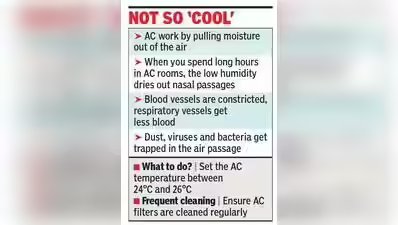
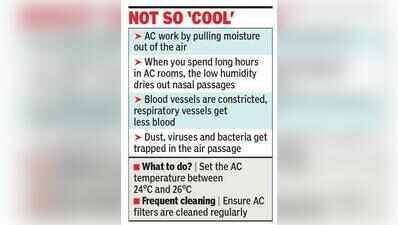
Kolkata: Patients across age groups have been showing symptoms of ‘shock to the respiratory defence system’ this monsoon, a condition triggered by frequent changes in ambient temperature due to the fickle weather and long periods in air-conditioned rooms. These have combined to weaken the immune system of a significant number of Kolkatans, say physicians.As a result, they are frequently falling prey to cough, cold and fever, often leading to breathing distress and severe chest congestion, said physicians.The term “shock to the respiratory defence system” refers to the sudden impairment of the body’s natural mechanisms for filtering, warming and clearing the air we breathe.This typically happens when moving abruptly between dramatically different microclimates, said Charnock Hospital head of pulmonology, Soumya Sengupta. Charnock Hospital has received a steady stream of patients with viral fever and Influenza A that spiralled into respiratory issues.“A sizeable section of these patients faced temperature fluctuations, partly due to the weather, which has been changing from humid to moist almost every day due to frequent rain,” said Sengupta.He added that initial symptoms are fever and cough, which are manageable for most.Air conditioners function by removing moisture from the air. The upper respiratory tract acts as a natural climate control and filtration system, said Sayan Chakrabarty, infectious diseases physician at Manipal Hospitals.Manipal Dhakuria has been receiving around a dozen viral fever patients a day at the OPD. “Many are falling ill since they are moving into AC interiors after having sweated outdoors and the body fails to cope up,” said Chakrabarty.He added that while adults are having low temperature and severe body ache, children are suffering from a high fever for about a week.A common mistake many people make is entering heavily air-conditioned rooms while still drenched from rain or with sweat-soaked clothes after being outdoors, said Abhishek Kolay, consultant pulmonologist of BP Poddar Hospital.