








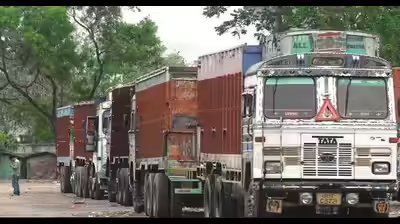
Chennai: The year 2025–26 marked a turning point for the medium and heavy commercial vehicle (M&HCV) market, with the truck segment not only staging a strong recovery after two sluggish years but also seeing volumes return to—and surpass—pre-Covid levels for the first time in the post-pandemic period.While the passenger carrier segment of the M&HCV category had already crossed pre-Covid levels in FY24, the truck segment crossed FY19 volumes only in the last fiscal. Total medium and heavy-duty truck sales stood at about 3.56 lakh units in FY26, compared with 3.51 lakh units in FY19. Truck sales grew by 16% in FY26, while the bus segment reported a marginal decline.After FY19, the segment faced headwinds as the transition to BS-VI emission norms increased truck prices, while axle-load norm revisions reduced the effective fleet requirements.Overall, M&HCV wholesale volumes reached 4.23 lakh units in FY26, including bus volumes of 67,149 units, surpassing the pre-Covid peak of 3.91 lakh units in FY19 (which included 39,604 bus units), according to SIAM data.“The recovery has been supported by steady GDP growth and supportive government policies, including increased infrastructure spending and the rollout of GST 2.0. Rising freight movement and improved highway infrastructure have also lifted vehicle utilisation. In addition, improving financing availability and healthier transporter sentiment have helped demand normalise,” said Rajesh Kaul, vice president & business head – trucks, Tata Motors. Among key players, segment leader Tata Motors reported medium and heavy-duty truck volumes of about 1.77 lakh units in FY26 (1.81 lakh units in FY19). The second-largest player, Ashok Leyland, posted volumes of 1.07 lakh units in FY26 (1.16 lakh units in FY19). However, VECV—the Volvo-Eicher joint venture—saw its truck volumes (across both Eicher and Volvo brands) surpass pre-Covid levels, with total sales of 62,012 units in FY26, compared with 40,456 units in FY19. “Having grown at 13% in FY26, M&HCV volumes are expected to normalise to mid-single-digit growth in FY27. GST rationalisation continues to support affordability and replacement demand, while core drivers, including infrastructure execution and freight activity, remain intact,” said Poonam Upadhyay, director, Crisil Ratings. On the outlook, Kaul cautioned that the ongoing West Asia conflict could create near-term uncertainties, particularly around commodity and crude oil prices, as well as currency fluctuations. Upadhyay added that the direct impact of the conflict on domestic M&HCV demand is likely to be limited. However, if it persists and fuel prices rise, it could pressure fleet operator economics and influence procurement decisions.