










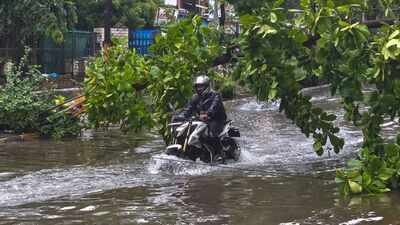
Every monsoon, Mumbai residents hear the same warning from the India Meteorological Department (IMD) and the Brihanmumbai Municipal Corporation (BMC): High tide expected. Heavy rain possible. When the two forecasts coincide, officials gear up for flooding, gridlock, and disruption to suburban train services.But what makes this particular combination so troublesome?The answer is a simple but powerful scientific principle: rainwater can only escape the city if the sea lets it go. At high tide, the Arabian Sea effectively closes the city’s drainage outlet when huge volumes of rainwater attempt to escape.Here’s how the lethal overlap operates.Mumbai is basically a giant bowl that drains into the sea. Mumbai is a narrow coastal city built on reclaimed islands, unlike inland cities. Much of the city’s rain water is drained away through hundreds of storm water drains, nullahs and rivers, before eventually reaching the Arabian Sea.Under normal conditions, gravity does the work. Water naturally flows downhill to the sea. But this system depends on one condition – the sea level outside must be lower than the water in the drains. When that condition is removed, so is the city’s natural drainage.
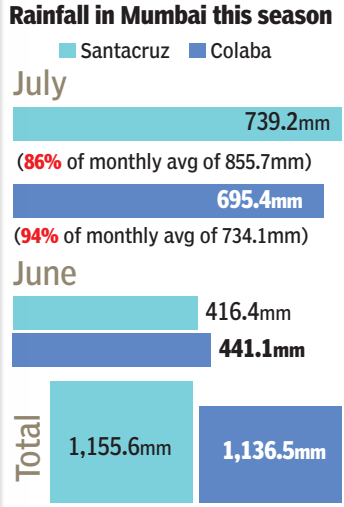
Step 1: The drains fill with heavy rainDuring the southwest monsoon, intense convective clouds have the potential to dump extraordinary amounts of rain over Mumbai in a very short span of time.These storms are usually not like steady, gentle rain:50-80 mm per hour 100-150 mm within 3 hoursMajor events with over 200 mm in a single dayEvery litre of this water ends up straight onto roads, into gutters and down stormwater drains. The water in these drains usually ends up in rivers and creeks and finally in the sea.Step 2: High tide blocks exits.Mumbai’s geography is its biggest weakness, and this is where it comes into play. Most stormwater drains empty directly into the Arabian Sea at outfall points.At high tide, especially above about 4.5 metres depending on the location, the water level outside these outfalls rises dramatically. If the sea level is higher than the level of the water in the drain, gravity can no longer push the stormwater out. In effect, the sea becomes a wall. The drains are still full of rainwater, but now they have no way of discharging it.Step 3: The water starts to back upAs soon as the drainage network is without an outlet, the whole system starts to fill up like a blocked sink.It happens fast:Roads drain and collect runoff.Stormwater drains clog up.Nallahs sluggish.Rivers swell.Water backs into streets.First, low-lying neighborhoods flood.The flooding could last even after the rain stops until the tide goes down and the drainage starts again.
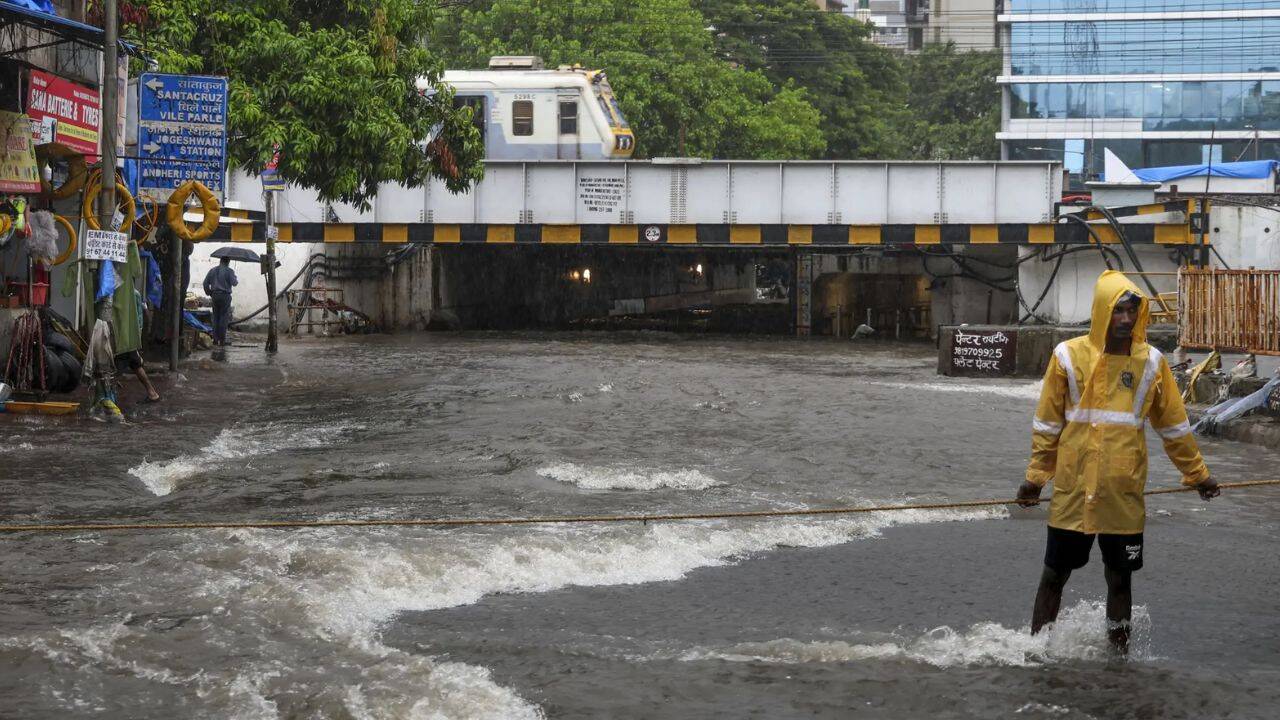
Why pumping stations are not the solutionMumbai built a number of major pumping stations in sensitive areas, after the deadly floods on 26 July 2005. These pumps move water at high tide by mechanically pushing it out to sea. But pumps can only do so much.Each pumping station can only pump a limited amount of water per second. During cloudburst-like rainfall, water often enters the drainage network faster than it can be pumped out of it. If the rainfall intensity is more than the pumping capacity, flooding is unavoidable.The cloudburst factor Not every rainstorm causes the shutdown. Sudden convective cloudbursts are the most dangerous phenomena. These are formed when warm, moist air rises rapidly. This creates huge thunderclouds that pour huge amounts of rain onto a very small area.Within minutes, there is a huge rush of water into the drainage network. Drains may receive the same amount of rainfall in one or two hours as would be received over a period of six hours.The perfect stormThings come together a few times in Mumbai and it shuts down. Picture it as a four-part formula:Heavy rain + high tide + blocked or overloaded drains + Low-lying neighbourhoods = Significant urban flooding.Take away one factor, and the effect is often far less serious.Here is an example:Low tide, heavy rain, and it usually drains away much quicker.Widespread flooding at high tide rarely requires heavy rain.Heavy rain is less disruptive if drainage is clean and efficient.Flood-resilient neighborhoods stay safer, even during heavy rain.
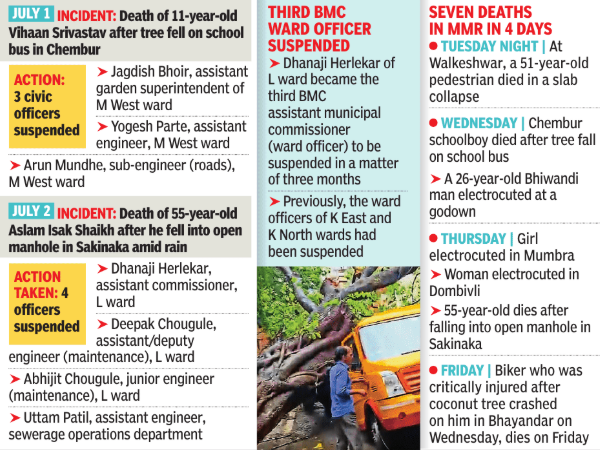
Why are some days of the month riskierAuthorities pay close attention to tide charts for a reason. High tides can be predicted. The Moon’s gravity causes ocean tides.Every new moon and full moon, the Moon and Sun line up in their gravitational pull and create spring tides. These are the highest tides of the month. The name, of course, does not refer to spring, but to the tide “springing forth.” These times often lead to tides exceeding 4.5 metres along the Mumbai coast.Disaster managers know that the risk of flooding rises sharply when very heavy monsoon rainfall is predicted at the same time. This is why IMD forecasts are routinely verified against tide tables before issuing public advisories.The odds are increasing due to climate changeScientists say the combination of heavy rain and high tides could get more destructive in the future. Warmer oceans put more moisture into the atmosphere, raising the odds of short-duration, high-intensity rainfall.But higher sea levels also mean that future high tides will begin from a higher baseline. This leaves less space for rainwater to drain naturally. The combo can worsen flooding in vulnerable coastal neighbourhoods even without record-breaking rainfall.
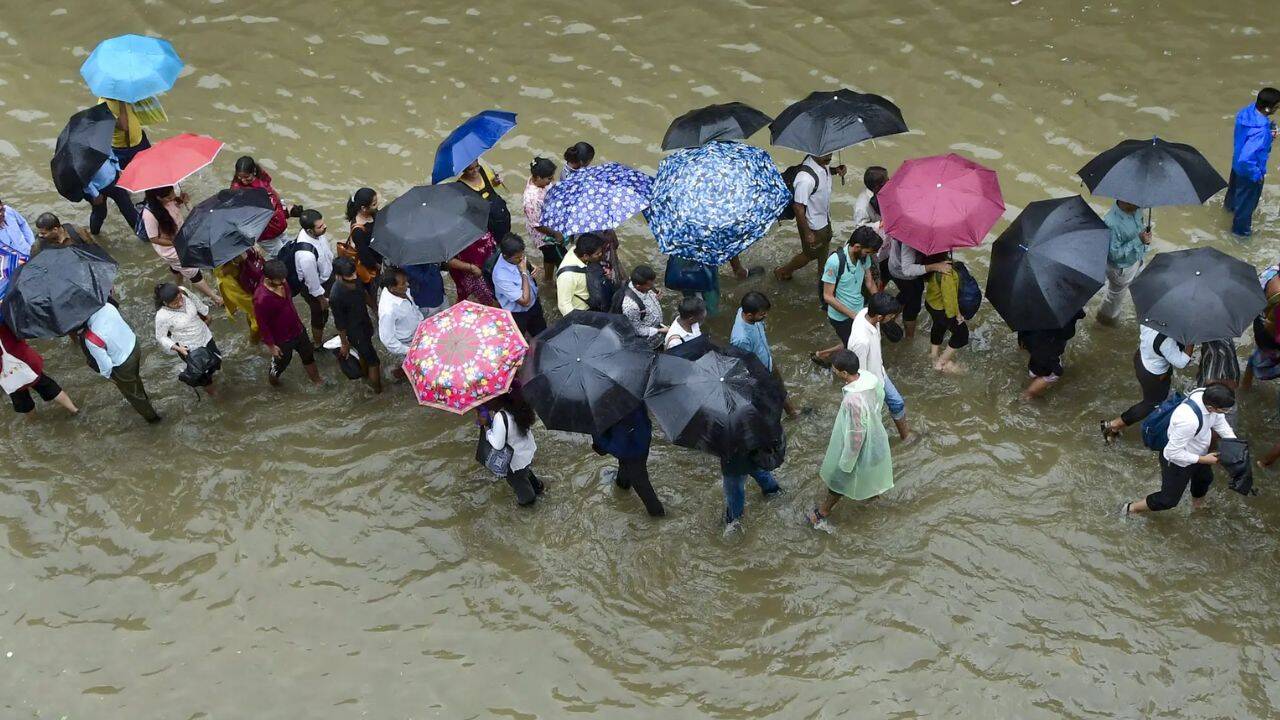
Is Mumbai immune to these shutdowns?There is no way to reduce all flood risk in a low-lying coastal megacity. But the flooding can be made less severe.Experts recommend: Expansion of high-capacity pumping stationsUpgrade the storm water drainage system.Clearing drains, nullahs and rivers of silt and waste before monsoon.Preserving mangroves and wetlands that temporarily hold surplus water.Real-time rainfall radar, tide monitoring and flood modelling to predict which neighbourhoods will be flooded hours in advance.The problem is the city gets hit by a heavy rain at high tide and the drainage “exit” is blocked at the same time as huge amounts of water are trying to get out. Add ageing infrastructure, clogged drains, low-lying terrain and dense urban development, and you have the familiar monsoon shutdown.So, Mumbai’s flood alerts are never just based on rain forecasts. It is not just the most important question each monsoon is, ‘How much rain will fall?’ but ‘When it does, what will the tide be?’